600V DC from 12V DC Source

Ian0

Joined Aug 7, 2020
13,132
so from that I get that you don't see reluctance sensors as reliable. What about all of the other places in a car that use them? Like VSS, anti lock brakes, cam and crank sensors? And like I said to the TS HEI modules can be used with points for ignitions that don't have a large enough distributor body.
The point I was making was mainly about the shape of the waveform. An optical sensor gives a reasonably nice square edge, but the variable reluctance gives a distorted sinewave, with an amplitude that varies with frequency - it just makes the job that much more difficult to determine when to fire.

As for reliability - the only fault my car has developed in is 7 years managed to light up every yellow light on the dashboard - ABS, all-surface-progress-control, autonomous-emergency-braking, stability control and some more that I can't remember. The cause - failed wheel rotation sensor
 

MisterBill2

Joined Jan 23, 2018
27,576
The benefits of the incuctive pickup are that it is rather immune to a build up of oil film on the sensor, and that it will work very well with a lower battery voltage. Those may not be a problem in any race car, but the vehicles that don't get such care may do better with the magnetic sensor.
And while the magnetic waveform is a rather distorted sine wave type, ir is the same shape all of the time. Very predictable.
 

shortbus

Joined Sep 30, 2009
10,050
An optical sensor gives a reasonably nice square edge, but the variable reluctance gives a distorted sinewave
GM tried a optical sensor distributor, didn't take them long to stop making motors with them. The normal internal blowby of an engine gets in places you wouldn't even think it could, and stopped the optointerupter from working.
 

Thread Starter

MGPERF

Joined Jun 8, 2021
77
The point I was making was mainly about the shape of the waveform. An optical sensor gives a reasonably nice square edge, but the variable reluctance gives a distorted sinewave, with an amplitude that varies with frequency - it just makes the job that much more difficult to determine when to fire.

As for reliability - the only fault my car has developed in is 7 years managed to light up every yellow light on the dashboard - ABS, all-surface-progress-control, autonomous-emergency-braking, stability control and some more that I can't remember. The cause - failed wheel rotation sensor
1623790326895.png
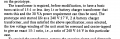
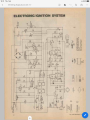
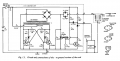
I found a much more complete schematic, the only thing I can't get an exact fit on is the transformer. This is the closest thing I could find. It matches the authors description just with 20 va vs. 30 va do you think it would keep up with a low RPM 4 cyl like my MG or is there another issue entirely with a smaller transformer?
1623790483394.png
 

Ian0

Joined Aug 7, 2020
13,132
That's just a mains transfomer, and this circuit runs at what was considered a "high" frequency in its day - 13kHz.
I would be thinking of
https://uk.farnell.com/ferroxcube/cph-etd29-1s-13p/bobbin-etd29-1-section-13pin/dp/178506?st=etd29
and
https://uk.farnell.com/pro-power/ecw0-80/wire-0-8mm-copper-enamelled-125m/dp/1230984?st=enamel wire
(though I don't think I'd be paying that much for the wire)
I'm getting quite interested in making one of these even though the car isn't on the road at the moment. I'd go for a UCC2808-based power supply, regulated output voltage and designed to give full voltage from a 9V supply - so it can deliver a nice big spark at 800rpm even with the battery cranking the engine - it won't need to delivery full power at that time, as power requirements vary with speed, but it will need to give maximum output voltage.
I've never been a big fan of self-oscillating (Royer) power supplies, much preferring something driven with an IC.
The triggering circuit looks respectable, even though I'd probably leave out the rev limiter.

(Perhaps I should use the SG3524, because it's been around so long that it's contemporary with a 1979 MG, but probably a bit too recent for my Rapier)
 

MisterBill2

Joined Jan 23, 2018
27,576
Now I wonder why so much spark is required. rag race engines running very rich at idle do tend to foul plugs fast, and they seem to be on the verge of lean at 6000++ RPM, but a normal street engine should not foul plugs that fast unless there is a lot of oil blowby happening. At one point a fuel system person in a development lab asked for a one amp 10,000 volt spark source for igniting an extremely lean mix. He was able to get 100mA from a drag-race style CD system. The original request could probably have run the engine on pure spark!
So the question again is how much spark is really needed? At some point it will be enough to jump through the plug wires and hit any grounded metal within an inch. THAT is when new plug wires are needed.
 

Thread Starter

MGPERF

Joined Jun 8, 2021
77
That's just a mains transfomer, and this circuit runs at what was considered a "high" frequency in its day - 13kHz.
I would be thinking of
https://uk.farnell.com/ferroxcube/cph-etd29-1s-13p/bobbin-etd29-1-section-13pin/dp/178506?st=etd29
and
https://uk.farnell.com/pro-power/ecw0-80/wire-0-8mm-copper-enamelled-125m/dp/1230984?st=enamel wire
(though I don't think I'd be paying that much for the wire)
I'm getting quite interested in making one of these even though the car isn't on the road at the moment. I'd go for a UCC2808-based power supply, regulated output voltage and designed to give full voltage from a 9V supply - so it can deliver a nice big spark at 800rpm even with the battery cranking the engine - it won't need to delivery full power at that time, as power requirements vary with speed, but it will need to give maximum output voltage.
I've never been a big fan of self-oscillating (Royer) power supplies, much preferring something driven with an IC.
The triggering circuit looks respectable, even though I'd probably leave out the rev limiter.

(Perhaps I should use the SG3524, because it's been around so long that it's contemporary with a 1979 MG, but probably a bit too recent for my Rapier)
That's just a mains transfomer, and this circuit runs at what was considered a "high" frequency in its day - 13kHz.
I would be thinking of
https://uk.farnell.com/ferroxcube/cph-etd29-1s-13p/bobbin-etd29-1-section-13pin/dp/178506?st=etd29
and
https://uk.farnell.com/pro-power/ecw0-80/wire-0-8mm-copper-enamelled-125m/dp/1230984?st=enamel wire
(though I don't think I'd be paying that much for the wire)
I'm getting quite interested in making one of these even though the car isn't on the road at the moment. I'd go for a UCC2808-based power supply, regulated output voltage and designed to give full voltage from a 9V supply - so it can deliver a nice big spark at 800rpm even with the battery cranking the engine - it won't need to delivery full power at that time, as power requirements vary with speed, but it will need to give maximum output voltage.
I've never been a big fan of self-oscillating (Royer) power supplies, much preferring something driven with an IC.
The triggering circuit looks respectable, even though I'd probably leave out the rev limiter.

(Perhaps I should use the SG3524, because it's been around so long that it's contemporary with a 1979 MG, but probably a bit too recent for my Rapier)
I bought that transformer as it matches the authors descriptions in some ways. Could I use? If not oh well only 20$ 1623868786340.png
 

Ian0

Joined Aug 7, 2020
13,132
3A4AEFB3-6354-4EE1-9468-8CC5B8EDD3EE.png
This is the ETI design, and it includes a voltage regulating circuit, which reduces the duty cycle. However, it also uses the ignition coil primary as the output inductor of the SMPSU; so during the capacitor-charging part of the cycle, the coil primary will see a 200V squarewave. Does anyone else who has been following this thread think that will be a problem? I.e.what will be happening on the coil secondary, when there is a squarewave on the primary?
 

MisterBill2

Joined Jan 23, 2018
27,576
If the primary has a 200 volt square wave then the secondary will have close to a much higher voltage square wave. That is how transformers work. At times insulation breakdown happens, and so some understanding of the insulation is needed.
 

Ian0

Joined Aug 7, 2020
13,132
If the primary has a 200 volt square wave then the secondary will have close to a much higher voltage square wave. That is how transformers work. At times insulation breakdown happens, and so some understanding of the insulation is needed.
Well, there’s possibly a sparking plug connected to it, depending on the position of the rotor arm in the distributor.
 
Last edited:

MisterBill2

Joined Jan 23, 2018
27,576
The output voltage has two different conditios, first, with only a small bit of capacitance and a large shunt resistance, until the arc strikes, and then a very low negative resistance as the arc is conducting.
The main advantage of using a capacitor discharge sytem is the very fat rise time of the spark voltage. It can usually fire fouled plugs. A much faster rise time than a normal witched 12 volt system.
 
Last edited:

Danko

Joined Nov 22, 2017
2,169
Yikes! Reminds me of the B&W horror movies from the 1930's with Jacob's ladder and flashing generators.
Seems so.
The output voltage has two different conditigos, first, with only a small bit of capacitance and a large shunt resistance, until the arc strikes, and then a very low negative resistance as the arc is conducting.
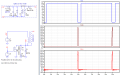
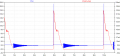
Diagram #71 intentionally shows output voltage without sparking gap.
ADDED:
Circuit #71 works with spark plug:
1625166121177.png
 
Last edited:

shortbus

Joined Sep 30, 2009
10,050
The output voltage has two different conditios, first, with only a small bit of capacitance and a large shunt resistance, until the arc strikes, and then a very low negative resistance as the arc is conducting.
The main advantage of using a capacitor discharge sytem is the very fat rise time of the spark voltage. It can usually fire fouled plugs. A much faster rise time than a normal witched 12 volt system.
And the big reason not to use a CDI is the short sparking period, much shorter than either a Kettering type or especially an HEI type. MSD only works because of what is in it's name, Multiple Discharge Ignition. If you don't incorporate that into the CDI it will not work very good.

CDI/MSD sounds good on paper, but in real life driving/racing it is the last thing you do to an engine for performance. Ignition is a following not a leading type of change for performance.
 

MisterBill2

Joined Jan 23, 2018
27,576
The CDI system can fire a much larger air gap and thus deliver a lot more heat energy. So that larger ball of pasma from the park energy does lat longer.
 

Ian0

Joined Aug 7, 2020
13,132
Seems so.

Diagram #71 intentionally shows output voltage without sparking gap.
ADDED:
Circuit #71 works with spark plug:
View attachment 242587
I'm impressed that you can model a spark gap!
What I was curious about is the effect that the waveform from the SMPSU would have on the output from the coil, as the SMPSU output is routed through the coil to charge the capacitor. When the SMPSU is running at full duty cycle, then the output from the rectifier will be almost DC, with short gaps during the dead time, but what happens when the duty cycle reduces and the output becomes more like a squarewave? Does it produce a load of spurious sparks at the plug?
 

shortbus

Joined Sep 30, 2009
10,050
The CDI system can fire a much larger air gap and thus deliver a lot more heat energy. So that larger ball of pasma from the park energy does lat longer.
Must work like that on planet Michigan. But not in the real world. So you can go from 0.035" gap to 0.045" gap big whoopee. All of the literature from people who do this for a living, disagree with the planet Michigan reports.

From what your saying holding a lit match to a piece of paper and then quickly blowing it out works better than taking that same match and holding it there until the paper catches fire.

It still comes down to people that do this stuff, hot rodding, high performance motor building don't change the ignition system as the first method of getting the higher performance, it's way down on the list of changes to a motor, it's not a magic bullet to better performance.
 

MisterBill2

Joined Jan 23, 2018
27,576
Must work like that on planet Michigan. But not in the real world. So you can go from 0.035" gap to 0.045" gap big whoopee. All of the literature from people who do this for a living, disagree with the planet Michigan reports.

From what your saying holding a lit match to a piece of paper and then quickly blowing it out works better than taking that same match and holding it there until the paper catches fire.

It still comes down to people that do this stuff, hot rodding, high performance motor building don't change the ignition system as the first method of getting the higher performance, it's way down on the list of changes to a motor, it's not a magic bullet to better performance.
Mine worked quite well with a 0.15" gap. And it did produce quite a fireball.
 

shortbus

Joined Sep 30, 2009
10,050
Mine worked quite well with a 0.15" gap. And it did produce quite a fireball.
bullshit meter.jpg
Maybe, just maybe in the open air, but under combustion chamber conditions?? How did you get it to increase the spark time period? I trust this guys opinions been there did that, you I don't trust so much, I've seen to many of your answers.
 
Top