Much more info needed in order to assist!
What/where is the 600v supply coming from?
If this from the service Co. then sounds like you are also located in Canada ?
What is the equipment?
Sounds like you require a transformer?
oops I see you mentioned DC !
If you are using the 3ph 600v wall power. How is the 600v delivered, what is the current demand of the system?
Much more info need than two lines of a OP !!
Much more info needed in order to assist!
What/where is the 600v supply coming from?
If this from the service Co. then sounds like you are also located in Canada ?
What is the equipment?
Sounds like you require a transformer?
oops I see you mentioned DC !
i saw the same but find it suspicious that DC would have those exact levels... those are common voltage levels for AC.
EDIT... so it was AC... then you need to know if this is single or three phase and what power. with that you can choose suitable transformer. can you post nameplate of the lathe?
i saw the same but find it suspicious that DC would have those exact levels... those are common voltage levels for AC.
EDIT... so it was AC... then you need to know if this is single or three phase and what power. with that you can choose suitable transformer. can you post nameplate of the lathe?
yes, three phase.
the machine doesn't buy yet, like to know how much auxiliary work will be.
also, saw the shop unit mostly equipped 600vac box (transform?), why?
Thanks
well... the actual voltage is based on national standard....
when it comes to 3phases:
most of the world uses 400V
parts of Brazil use 440V
the US uses 460V (or 480V) or sometimes 230V (or 240V).
in Canada that is 575V phase to phase... (or 600V).
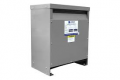
so if you are in Canada, yes, your facility will normally be fed by 600V. but often one would add transformers to be able to use US machines for example. so transformers that step down from 600V to 240V or 480V are very common.
So you are faced with a problem that has repeatedly existed, US machines imported to Canada!.
600v is a Canadian standard supply voltage.
If a 230/440 machine tool then it is going to be 3ph most likely.
You are having to either convert the m/c or have a 600v -460 transformer installed.
well... the actual voltage is based on national standard....
when it comes to 3phases:
most of the world uses 400V
parts of Brazil use 440V
the US uses 460V (or 480V) or sometimes 230V (or 240V).
in Canada that is 575V phase to phase... (or 600V).
so if you are in Canada, yes, your facility will normally be fed by 600V. but often one would add transformers to be able to use US machines for example. so transformers that step down from 600V to 240V or 480V are very common.
So you are faced with a problem that has repeatedly existed, US machines imported to Canada!.
600v is a Canadian standard supply voltage.
If a 230/440 machine tool then it is going to be 3ph most likely.
You are having to either convert the m/c or have a 600v -460 transformer installed.
nope...do not connect 400VAC load to 600VAC mains. that is a sure way to destroy things.
increasing supply voltage also increases current... (so delivered power is a square function).
converting machines is costly and requires skill that you do not have.
selecting correct transformer is much simpler.
btw. it is not necessary to get individual transformer for each piece of equipment. one transformer (correctly sized) could power many machines.
nope...do not connect 400VAC load to 600VAC mains. that is a sure way to destroy things.
increasing supply voltage also increases current... (so delivered power is a square function).
converting machines is costly and requires skill that you do not have.
selecting correct transformer is much simpler.
btw. it is not necessary to get individual transformer for each piece of equipment. one transformer (correctly sized) could power many machines.
and that is why i mentioned to not even think about converting machine... Basic lathe may be a simple machine but modern ones are not. In general there is more to it than you want to know... and i have yet to see where this is a more economical option. but that is ok if you need science project and don't mind hiring engineering service.
if the equipment is UL approved (anything out of US should be) and you are just adding transformer, you still need field inspection for the installation but only for the transformer, not the machine.
but when you are to modify equipment, any approval of the machine would be void. then the machine itself would need to go through CSA inspection. and depending on what you get there (and who the inspector is) this can be quite expensive (practically always is) because then you would also need to worry about bunch of other things that are not yet on your radar... like SCCR rating... but that practically goes away if load (your machine) is behind transformer since transformer acts as a bottleneck for fault currents.
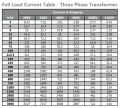
on the other hand selecting transformer is pretty straight forward.... just need to match few things:
1. the primary voltage (we already know it is 600V)
2. the secondary voltage (480V for example)
3. power (must be sufficient for rated load but normally one can also use higher power if needed)
4. correct environmental protection... in most shops transformer could be air wented, specially when mounted on the wall so debris cannot get to it (dust, water, metal chips, whatever).
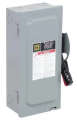
5. add 600V fused disconnect (this can be bought cheap from any electrical supplier and will meet the standards, Eaton or whoever).
6. any licensed electrician can wire it (use correct taps, ground secondary,...)
7. get field inspector (ESA/CSA/Entela/QPS/...) to bless it and apply sticker.
What HP are the motors? and rating of the machine?
In some rare cases it can be economical to convert to lower voltage or even 1ph
e.g. Servo's often are 1ph fed, lower voltage.
Spindle motor changed. It is often suprising how much can be 120v or 240 on a machine tool.
So IOW, determine the main reason or section requiring 440v.
I have done this on the odd occasion,
Try and get more info on the machine design and ratings.
Obtain the VA rating.
Oops, I see 30HP spindle!
Another question if CNC!
Is this a brand new machine, or is used? purchased by auction or shop sale?
The reason I ask is, I have been contacted a few times over the years, where those that have purchased used machinery in auctions or shop-closing sales etc.
When purchased, it is often overlooked to ask for the copy of machine parameters. which are generally battery backed up in the machine. and when in the event that the parameters have to be re-loaded, and the back up material is missing, the machine is dead in the water!
If this is a CNC M/C from a reputable manuf. they are often available on file.
But in the case of an individual retrofitter, or from a Co. now deceased, the M/C reverts back to a lump of iron without them!
It costs a considerable amount for myself or someone, to reverse-engineer and restore the M/C to its working condition!
Any supply installation has to be inspected to ensure covered by the local Electrical code. CEC etc. And licensed personnel
P.S. The OP has not been back since the original post!
In my area being licensed means having paid quite a few hundreds of dollars to the local city hall bunch, and having a fair idea as to what you are doing. It does not by any standard require serious competence.
and that is why i mentioned to not even think about converting machine... Basic lathe may be a simple machine but modern ones are not. In general there is more to it than you want to know... and i have yet to see where this is a more economical option. but that is ok if you need science project and don't mind hiring engineering service.
if the equipment is UL approved (anything out of US should be) and you are just adding transformer, you still need field inspection for the installation but only for the transformer, not the machine.
but when you are to modify equipment, any approval of the machine would be void. then the machine itself would need to go through CSA inspection. and depending on what you get there (and who the inspector is) this can be quite expensive (practically always is) because then you would also need to worry about bunch of other things that are not yet on your radar... like SCCR rating... but that practically goes away if load (your machine) is behind transformer since transformer acts as a bottleneck for fault currents.
on the other hand selecting transformer is pretty straight forward.... just need to match few things:
1. the primary voltage (we already know it is 600V)
2. the secondary voltage (480V for example)
3. power (must be sufficient for rated load but normally one can also use higher power if needed)
4. correct environmental protection... in most shops transformer could be air wented, specially when mounted on the wall so debris cannot get to it (dust, water, metal chips, whatever).
5. add 600V fused disconnect (this can be bought cheap from any electrical supplier and will meet the standards, Eaton or whoever).
6. any licensed electrician can wire it (use correct taps, ground secondary,...)
7. get field inspector (ESA/CSA/Entela/QPS/...) to bless it and apply sticker.

 Facebook
 Google
 GitHub
 Linkedin