3 HP 3 phase motor problems

Thread Starter

loewem

Joined Jan 25, 2016
6
IMG_0033.JPG IMG_0066.JPGIMG_0302.JPG

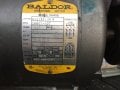
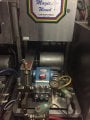
I am stuck with a problem that I have with a baldor electric motor. The motor drives a cat 310 water pump for a self service car wash bay. The motor is wired to start when someone puts money in a meter and turns a mechanical switch to certain positions. The motor was also wired to bypass the meter box via a toggle switch at the motor. The problem started a few months ago when i flipped the toggle switch and heard a loud pop.

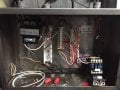
I started to look at the components, which I didn't fully understand at the time. After disconnecting and turning off power I removed the 24 volt motor contactor/relay overload. The pole for leg 1 that connected the contactor to the relay overload was burnt and the plastic was melted. I bought the same contactor/relay overload from grainger and wired it up. The contactor would not engage, so I checked the 24 volt transformer and it was only providing 12 volts. I bought the same transformer wired it up and the contactor would engage, but the relay overload would trip within 10 seconds. I checked all connections including grounds with no luck. I removed the motor and took it to a motor shop and it tested fine. Took it back, wired it up and ran it without a load. It would run without tripping and would draw ~7.5 amps each leg in to the contactor and out from the relay overload. Ran it for at least 20 minutes. I changed out the cat 310 pump with a recently refreshed pump (new valves, seal kit and crank case oil seals). Installed a new pully and belt on the pump and a new hose and pressure regulator on the pump. Thinking that the pump might be putting the motor under too much of a load. Fired it up and it ran great for about 10 minutes when I noticed that the motor was very hot. Shut it down and the next day I started it up and checked the amperage on each leg which was ~12.5 for each leg. If I calculated amperage correctly 12.5 is the full load amperage. 10 is the running load amperage. (Please excuse me if I don't explain this well or misuse terminology. Most of what I am describing I've learned over the past couple of years while working at the car wash....that would be a good title for a song.). I checked the amps on my other motors and they are drawing ~10 amps under load. Next I bought a new motor......same make and model. Motor would run for about ten minutes without getting excessively hot and would trip the relay overload. I installed a new cat 310 water pump...same result. I pulled a contactor/relay overload from a properly working motor....same result. I plugged the motor into an outlet for a properly working motor.....same result. I bought a new plug and wire.....same result. I bought extra wire and rewired from the relay overload to the motor....same result. I took the wire to the motor and wired it directly to the relay overload for a properly functioning motor....same result. I changed out the water supply hose. I used a hose that was feeding a properly functioning motor/pump. I tried a new hose, three high pressure guns/wands, different nozzle sizes and dropped the pressure via the regulator significantly. I also took the toggle switch out of the equation and wired the transformer directly to the contactor/relay overload.

I am stumped and seem to have exhausted my internet and youtube search options. Any thoughts, ideas, empathy would be greatly appreciated.

Btw - the voltage is 208 and the breaker is 20 amps with 12 guage wire. My friend suggested a 30 amp breaker, but I don't want to run new wire and More than anything I want to know the answer! At this point I'm hoping that it isn't something really simple. If it is, oh well. I've learned a lot.

Thank you
 

Dodgydave

Joined Jun 22, 2012
11,395
So just to summarise....

Motor trips out on contactor and overload.

New contactor and overload replaced.

Still trips out?

Motor replaced.

Still trips out?

Swap the motor with a working one from another unit.

Still trips out?

What happens if you run the motor without a load, what current does it take?

Is the motor wired in Star or Delta?
 
Last edited:

LesJones

Joined Jan 8, 2017
4,511
Is there an over pressure relief valve that could have gone out of adjustment. Have you checkd that there is no partial blockage on the high pressure side of the pump. The pump looks like a swashplate pump so it probably does not matter which way it is rotating but it is probably worth checking that the motor is rotataing in the same direction as the other units in case there is something unusual about the pump.

Les.
 
Last edited:

JUNELER

Joined Jul 13, 2015
183
Hi,
since it is 3 phase wired is it properly oriented the 3 lines in a proper way.
Because if wrong orientation it generate a motor out of synchronization rotation and getting hot
and a high amperage that will trip the overload protector.
Verify the wiring again its the only reason since all component now are almost new.
 

MaxHeadRoom

Joined Jul 18, 2013
30,589
I had a similar situation on installing a new 10hp 3ph pump for a parts wash tank, the customer complained of nuisance tripping of the O/L.
Everything checked out fine, so after a call to the manuf. it was suggested that the because the pump outlet was wide open with such a short distance from pump to discharge it caused high current (high load) , after reducing the outlet a pipe size, the problem was cured.
Max.
 
Last edited:

Thread Starter

loewem

Joined Jan 25, 2016
6
I had a similar situation on installing a new 10hp 3ph pump for a parts wash tank, the customer complained of nuisance tripping of the O/L.
Everything checked out fine, so after a call to the manuf. it was suggested that the because the pump outlet was wide open with such a short distance from pump to discharge it caused high current (high load) , after reducing the outlet a pipe size, the problem was cured.
Max.
Hopefully I'll capture all questions and provide a response. This last thought is interesting. When this all started I was using a much smaller discharge line that connected the pump to the 3/8 pressure hose. Now I'm going directly out via a 3/8 quick connect fitting. I will check that out.

The summary is correct. Running the motor without a load I get 7.5 amps all around. Star vs Delta is new to me, but based upon my understanding from a google search it is wired Delta.

I don't know of a pressure relief valve of any sort, but that doesn't mean that one doesn't exist. I will check to make sure of this. I have checked all of the fittings to make sure there is no blockage and I am pretty sure that all are clear.

I'm certain that the wiring is correct. I've checked, double checked and triple checked against the other pumps and a few pictures that I took when I started working on this. I will check again though....wouldn't surprise me if I made the same simple mistake multiple times. The motor is running in the same direction as my other motors.

Thanks for the responses....I feel unstuck now.
 

MaxHeadRoom

Joined Jul 18, 2013
30,589
What is the nature of the pump? If an impeller style, opening the output side loads the pump, similar to the effect you see on a typical vacuum cleaner, block the output and the rpm's go way up because you have removed the load.
Max.
 

cmartinez

Joined Jan 17, 2007
8,737
it was suggested that the because the pump outlet was wide open with such a short distance from pump to discharge it caused high current (high load)
I'm struggling to understand what you've just said (I have no doubt that it's true). Do you mean that the motor was pumping water too freely (at high rpm's), and thus it caused it to consume too much current? Restricting the pump's outlet a bit added a little load to the motor and thus slowed it down a bit? ... I don't get it... 3ph motors run synchronously, right?
 

LesJones

Joined Jan 8, 2017
4,511
A centrifugal pump will take LESS power if the output is restricted. Max's example with a vacuum cleaner is one you can try yourself. If yoy bloch the hoes you will hear the motor speed up as there is less load on it. The opposite is true with positive displacement pumps. Blocking the outlet on these puts more load on the motor. I believe the pump on the pressure washer to be the positive displacement type known as a swashplate pump. These have a number of pistons.

Les.
 

MaxHeadRoom

Joined Jul 18, 2013
30,589
I'm struggling to understand what you've just said (I have no doubt that it's true). Do you mean that the motor was pumping water too freely (at high rpm's), and thus it caused it to consume too much current?
A impeller water pump running with no restriction on the outlet (and inlet) will run at full load, just like the vacuum cleaner analogy.
Reducing the output orifice will help to restrict the rate of flow and relieve the load.
A gear pump is the opposite.
Max.
 

cmartinez

Joined Jan 17, 2007
8,737
A impeller water pump running with no restriction on the outlet (and inlet) will run at full load, just like the vacuum cleaner analogy.
Reducing the output orifice will help to restrict the rate of flow and relieve the load.
A gear pump is the opposite.
Max.
I'm sure you're right. And I do understand the vacuum pump analogy. But I don't understand why... a 3ph electric motor will run synchronously, even when no load is applied, won't it?. Are you referring to single phase induction motors instead?
 

MaxHeadRoom

Joined Jul 18, 2013
30,589
Well an induction motor runs Asynchronously actually.;)
The current in such a 3ph motor will obviously depend on load, what actually happens the slip frequency increases proportional to load.
Slip is the difference between the applied freq. and the resultant induced frequency in the rotor, this difference will obviously increase with load (lower rpm.s).
Therefore the higher the slip, the higher the current.
Also a induction motor can never run at synchronism, (without some added trickery).
Notice the OP's motor is 1725 rpm Not 1800 as it would if synchronous.
Max.
 
Last edited:

MaxHeadRoom

Joined Jul 18, 2013
30,589
It is not unloaded, that is the point, Logical thinking may cause one to think that if the output of an impeller pump is unimpeded the load will be low, but this is at its highest.
IOW the Mechanical condition it is operating under presents a very high load, so the slip difference is at a value that causes O/L to trip.
I go back to the Universal vacuum motor analogy where the same thing occurs and one can experience the unloading effect from the sound.
Max.
 

Thread Starter

loewem

Joined Jan 25, 2016
6
Hi,

Thanks for the responses. They were all very helpful. I tried some additional things over the weekend. While I think that I have eliminate the issue being about the motor or the pump now. I think that the suggestion about the water outlet being too big is on the right track. I wasn't able to test out that suggestion yet, but I was able to eliminate the motor and the pump as being the issue. I took the motor and set it up on a properly function pump stand. Worked fine for 1/2 of yesterday, so I moved the pump to that same stand both the motor and pump continued to work fine.

When I was trying to resolve the electrical problems (really don't want to tell you what I think the issue was) I had to remove some fittings on the pump in order to remove the motor. I'm thinking I messed up the pump configuration. So, I'm going to make sure that I have the same pump configuration before trying the motor and pump out again. I would have done it yesterday, but I need a couple of new fittings and a specific length of hose that won't collapse with suction.

I will let you know how it goes to close the loop on this. Again, thanks for the helpul responses.

BTW - thinking back I'm pretty sure that they only problem with the initial set up was that the transformer went bad. I think that if I had replaced the transformer before I replaced the motor contactor/relay overload the motor and pump would have continued to work correctly. But, I wouldn't have learned anything new about electric motors and electricity.
 

Tonyr1084

Joined Sep 24, 2015
9,744
What made me wonder was the description of the toggle switch being flipped and a sudden pop. First though inspired was to think that something was wired wrong. It WAS working before the toggle switch was flipped, so I tend to think the problem was electrical. Of course, when putting things back together if you got the wrong fittings installed, yeah that can add to the problem.

Vacuum analogy: My thoughts on why the motor spools up when you block the intake: Vacuum means low air pressure. The lower the pressure (greater vacuum) the faster air moves. Venturi effect. High velocity air has low pressure. Same is true of low pressure weather systems and wind associated. Also, when you block the air intake on the vacuum, the lowered pressure (thinner air) means less load on the motor - hence, the RPM rises. But HEY! I'm no expert on the subject, this is just my opinion based on stuff I think I learnt.
 

cmartinez

Joined Jan 17, 2007
8,737
What made me wonder was the description of the toggle switch being flipped and a sudden pop. First though inspired was to think that something was wired wrong. It WAS working before the toggle switch was flipped, so I tend to think the problem was electrical. Of course, when putting things back together if you got the wrong fittings installed, yeah that can add to the problem.

Vacuum analogy: My thoughts on why the motor spools up when you block the intake: Vacuum means low air pressure. The lower the pressure (greater vacuum) the faster air moves. Venturi effect. High velocity air has low pressure. Same is true of low pressure weather systems and wind associated. Also, when you block the air intake on the vacuum, the lowered pressure (thinner air) means less load on the motor - hence, the RPM rises. But HEY! I'm no expert on the subject, this is just my opinion based on stuff I think I learnt.
My take on why this happens is simpler. With air flowing freely through the vacuum, the motor is running with a load (it's actually pumping air) applied to it. With the vacuum's intake plugged, air ceases to flow, and hence a substantial amount of mechanical load is removed from the motor. So the motor revs up.
 

MaxHeadRoom

Joined Jul 18, 2013
30,589
The vacuum pump and fluid pump are identical, With the example in #5 it showed a water pump, when the outlet is choked down, the amount or weight of water the pump has to operate on is reduced, therefore the current is reduced.
In the case of the vacuum, the amount or mass of air the fan has to operate on is reduced, and with a universal motor lowered current is accompanied by higher rpm.
Care has to be taken with a vacuum cleaner type as overheating occurs rapidly as the air also cools the motor.
Max.
 

Tonyr1084

Joined Sep 24, 2015
9,744
Here is a PDF on the subject.
Good article, and I buy into what's being said. However, something the article lacked (in my opinion) is a name brand. What's the authority? Anyone can write anything and publish it. Whether others listen or not may depend on knowing the author. Proctor & Gamble, or Underwriters Laboratory.

I'm not challenging the article, I'm just asking who wrote it. What's the source?
 
Top