2N3055's in parallel and heat

ronv

Joined Nov 12, 2008
3,770
@ronv, thank you.
For the 3.3A application, using two 2N3055 is enough, if the current count LM317 in then 2N3055 is not that much, my power supply(made by Kit) used uA723 and 2N3055x2 (4A), each 2N3055 flows through 2Amax, here if LM317 flows through 300mA then each 2N3055 only flows through 1.5A.
What is your input voltage? probably not 52 volts.
 

ScottWang

Joined Aug 23, 2012
7,501
What is your input voltage? probably not 52 volts.
The input voltages of my power is 36V-0V-36V, if considering the voltage cross on Vce then maybe could check the 2N3055 has Vceo=100V as the attached file, this one doesn't like the normal Vceo=60V, in parallel with more 2N3055 only useful for current, but not for voltage, if just using 2N3055 and they should be in series with two 2N3055 and it will be useful for higher voltage.
 

Attachments

ronv

Joined Nov 12, 2008
3,770
The input voltages of my power is 36V-0V-36V, if considering the voltage cross on Vce then maybe could check the 2N3055 has Vceo=100V as the attached file, this one doesn't like the normal Vceo=60V, in parallel with more 2N3055 only useful for current, but not for voltage, if just using 2N3055 and they should be in series with two 2N3055 and it will be useful for higher voltage.
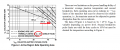
I would worry about this.
upload_2016-11-22_21-38-24.png
 

ScottWang

Joined Aug 23, 2012
7,501
I would worry about this.
View attachment 115790
According to my experience from the Kit(uA723, 2N3055x2 4A, 50Vout dc), the current of transformer is only can providing 2.5Amax dc and no fan, even I used the Imax 2.5A, but the power never die, according to the diagram that you uploaded, when the Ic exceed 1A, the Vce still could bear 55V, so if you don't using it all the time on Vmax, it should be ok as mine, if you still worried about the Vceo then could try the component that I uploaded, but I never used the type Vceo=100V before, I only used the type Vce0=60V, it look like a new kind of product, but I'm not sure how long does it appearing on the market, I just found the components during these days.
 

Thread Starter

John Potter

Joined Sep 24, 2016
51
You really are great. I am sorry to be so ignorant. I don't speak your language - just good old English.

The transformer :-
http://www.farnell.com/datasheets/1829278.pdf
Top of page 7 :- MCTA160/18

May I put things in laymen's terms.
I have 4 wires on the output side of this transformer.
If I wire the end of one winding to what I believe is the start of the second winding I get 36V.

Basically the same as running 2 x 18V X 4.44A transformers in series.
The outer winding of one transformer output to the inner winding of the second transformer output.
I know this works.

The reason I used the term 'centre tapped' was I assumed the end of the first 18V coil meets the start of the second 18V coil.
As if the middle of a 36V winding has been brought outside.

I asked CPC Farnell if I could do this and what Amps I would get. The answer was yes - 36V at 4.44A in series and 18V at 8.88A in parallel.
The photo above shows the transformer with these outputs run at 18V x 8.88A in parallel.

I then decided to go the 36V x 4.44A route.
As I don't have a 36V load I ran 3 x 12V 50W halogen bulbs in series on the end briefly. Fine.

It was at this point I realised why most linear power supplies don't go beyond 30 odd Volts and a low current. Heat.
It took quite a while to find the LM317AHVT - 60V. Only it was called the LM317HT - which no longer seems to exist or maybe never did.
I have 4 x LM317AHVT's.

The transformer is rated at 160VA. Had I gone the 36V only route I would have considered 4 x 2N3055's at roughly 40W each on 4 insulated heat sinks metal to metal with compound and a high flow fan. This seemed quite reasonable after watching the videos near the top of this thread and reading various articles, Forums and circuits.

This transformer can supply 18V x 4.44A (one output winding used) or 36v x 4.44A both output windings connected in series.
I don't need the 18V x 8.88A option.

It does seem from your comments that I should be able to use this transformer in 0V - 18V and 0V - 36V ranges. Providing I select the right range I should be able to lower the heat output considerably.
2 x 2N3055's should be OK then ScottWang?. I think a thermal cut out though in case I select the wrong range. I don't think they would like 80W 'up em' for too long.

One last thing. It seems very confusing if one looks at the rating of the 2N3055. How can you rate a device at 15A and 115W which cannot under any practicable circumstances handle that power. Are they Dixon's 'music power' ratings.

I expect many of you have been 'at it' for years. I'm in about my second month.
I didn't even know what a TO - 3 was or it's case was a connection called the collector. (seems a silly idea as they get hot - don't mind me I'm just an old fashioned engineer)
I had also forgotten 1.4141 - OOPS!
I don't think I have had this much fun since I built 3 kit cars. I wish I hadn't caught that falling Escort engine though, basically that's why I'm here.

Thanks again so much to you all. It must be quite difficult and frustrating to come down to my level.
 

ScottWang

Joined Aug 23, 2012
7,501
May I put things in laymen's terms.
I have 4 wires on the output side of this transformer.
If I wire the end of one winding to what I believe is the start of the second winding I get 36V.
If the voltage as 0V,18V, 0V, 18V and then you have to connected the first 18V and second 0V together as the middle pin(centre tapped):
0V,18V-0V,18V, so the middle pin is 18V-0V as 18V and the right 18V will be as 36V, the left 0V still the same 0V.

One last thing. It seems very confusing if one looks at the rating of the 2N3055. How can you rate a device at 15A and 115W which cannot under any practicable circumstances handle that power. Are they Dixon's 'music power' ratings.
You can see the graph table in #23, Tc=25°C, 25°C is the standard room temperature, but when the current flows the components and then the heat generating and the temperature is increasing, how much temperature will be raising that it depends on how much current flows through the component, so the components can't keep working at 25°C in many situations, but the manufacturers used 25°C to shown their best conditions for their components, now you know why ...

I expect many of you have been 'at it' for years. I'm in about my second month.
Great, you are a good student, if you keep doing that, you will be getting better soon, and don't thinking that you are too old, just continuing to learn, to grow up more Synapses and Nerve plexus, you just like the people going to the jungle now, it seems everything is confusing, but if you just treat yourself as the babies walk out their first step to learn how to walk, they just walk, walk, walk, when they falling down, they just get up and walk again, they just keep walking, and they can walk out the stable step someday.

I didn't even know what a TO - 3 was or it's case was a connection called the collector. (seems a silly idea as they get hot - don't mind me I'm just an old fashioned engineer)
2N3055 is a TO-3 type, if you click into the datasheet then you will see what does it look like, you can see it on the right side of page 1 and the page 4.

I had also forgotten 1.4141 - OOPS!
Vdc = Vac * 1.414
 

ronv

Joined Nov 12, 2008
3,770
You really are great. I am sorry to be so ignorant. I don't speak your language - just good old English.

The transformer :-
http://www.farnell.com/datasheets/1829278.pdf
Top of page 7 :- MCTA160/18

May I put things in laymen's terms.
I have 4 wires on the output side of this transformer.
If I wire the end of one winding to what I believe is the start of the second winding I get 36V.

Basically the same as running 2 x 18V X 4.44A transformers in series.
The outer winding of one transformer output to the inner winding of the second transformer output.
I know this works.

The reason I used the term 'centre tapped' was I assumed the end of the first 18V coil meets the start of the second 18V coil.
As if the middle of a 36V winding has been brought outside.

I asked CPC Farnell if I could do this and what Amps I would get. The answer was yes - 36V at 4.44A in series and 18V at 8.88A in parallel.
The photo above shows the transformer with these outputs run at 18V x 8.88A in parallel.

I then decided to go the 36V x 4.44A route.
As I don't have a 36V load I ran 3 x 12V 50W halogen bulbs in series on the end briefly. Fine.

It was at this point I realised why most linear power supplies don't go beyond 30 odd Volts and a low current. Heat.
It took quite a while to find the LM317AHVT - 60V. Only it was called the LM317HT - which no longer seems to exist or maybe never did.
I have 4 x LM317AHVT's.

The transformer is rated at 160VA. Had I gone the 36V only route I would have considered 4 x 2N3055's at roughly 40W each on 4 insulated heat sinks metal to metal with compound and a high flow fan. This seemed quite reasonable after watching the videos near the top of this thread and reading various articles, Forums and circuits.

This transformer can supply 18V x 4.44A (one output winding used) or 36v x 4.44A both output windings connected in series.
I don't need the 18V x 8.88A option.

It does seem from your comments that I should be able to use this transformer in 0V - 18V and 0V - 36V ranges. Providing I select the right range I should be able to lower the heat output considerably.
2 x 2N3055's should be OK then ScottWang?. I think a thermal cut out though in case I select the wrong range. I don't think they would like 80W 'up em' for too long.

One last thing. It seems very confusing if one looks at the rating of the 2N3055. How can you rate a device at 15A and 115W which cannot under any practicable circumstances handle that power. Are they Dixon's 'music power' ratings.

I expect many of you have been 'at it' for years. I'm in about my second month.
I didn't even know what a TO - 3 was or it's case was a connection called the collector. (seems a silly idea as they get hot - don't mind me I'm just an old fashioned engineer)
I had also forgotten 1.4141 - OOPS!
I don't think I have had this much fun since I built 3 kit cars. I wish I hadn't caught that falling Escort engine though, basically that's why I'm here.

Thanks again so much to you all. It must be quite difficult and frustrating to come down to my level.
I think with a little work we can make it auto range for the 2 scales. For example 1.25 to 15 volts and a second 14 volts to 30.
 

Thread Starter

John Potter

Joined Sep 24, 2016
51
If the voltage as 0V,18V, 0V, 18V and then you have to connected the first 18V and second 0V together as the middle pin(centre tapped):
0V,18V-0V,18V, so the middle pin is 18V-0V as 18V and the right 18V will be as 36V, the left 0V still the same 0V.


You can see the graph table in #23, Tc=25°C, 25°C is the standard room temperature, but when the current flows the components and then the heat generating and the temperature is increasing, how much temperature will be raising that it depends on how much current flows through the component, so the components can't keep working at 25°C in many situations, but the manufacturers used 25°C to shown their best conditions for their components, now you know why ...


Great, you are a good student, if you keep doing that, you will be getting better soon, and don't thinking that you are too old, just continuing to learn, to grow up more Synapses and Nerve plexus, you just like the people going to the jungle now, it seems everything is confusing, but if you just treat yourself as the babies walk out their first step to learn how to walk, they just walk, walk, walk, when they falling down, they just get up and walk again, they just keep walking, and they can walk out the stable step someday.


2N3055 is a TO-3 type, if you click into the datasheet then you will see what does it look like, you can see it on the right side of page 1 and the page 4.
Best conditions? That's stretching things quite a bit. Max ratings at milliseconds.


Vdc = Vac * 1.414
Hi ScottWang. First time I have tried a mid thread reply, yes it's in the wrong place.
I do have quite a few 2N3055's 4 from the US, 4 from China and 4 bought in the UK. Please don't ask why.
Best conditions? That's stretching things quite a bit.

You leave my 'plexus' out of this I have enough trouble keeping the bandage on as it is.
I think that all things considering, even my dribbling, I have learned an awful lot in a short time. I tried it on my own because I didn't know Forums like this existed. I wonder if you can even begin to imagine what a relief it was to find people like yourselves to help me.

I'm beginning to know the components and what they can do in the real world. This power supply and regulator is mainly a learning device but I hope when it's finished it can stand beside other regulators. I feel the power end is pretty well solid in my mind - at the moment anyway.

I ordered this weeks ago:-
http://www.banggood.com/DKP6008-400...age-Current-Meter-p-1082317.html?rmmds=search.

I also have these :-
http://www.banggood.com/3Pcs-5A-XL4...-Supply-Converter-p-1031856.html?rmmds=search

I also have a circuit and components for a 60V LM317AHVT V and A small regulator. I though that these small ones could be added to the main regulator/s as and when. I have over complicated things but it's the main linear supply I am concentrating on.

The power supply is 52V DC at 3.33A or it will be tomorrow. The 10,000uF capacitor came today to replace the smaller ones. I can tap the transformer output windings to get either 2 x 26V DC at 3.33A and by connecting the second winding in series 52V DC at 3.33A. I have done both. I cannot guarantee the Amps because I used 2 then 4 12V 50W (4A) halogen bulbs in series very briefly for a load. The Volts though are very close to those stated, slightly higher with no load.

I can use 2 settings. 0v to 26V at 3.33A or 0V to 52V at 3.33A . The latter for 26V to 52V. The problem I have is accidentally connecting the 0V to52V at full load. 52 x 3.33 is a lot of watts. Therefore I feel I should keep the 4 x 2N3005's and fan set up and add either a thermal cut out or visual and audible warning. I VERY much doubt this situation will arise but it's better to be safe than sorry. I have rounded up and down values.
Unless I have made another complete mess of my logic I though I might have a go at a circuit for this very basic linear power supply
Regulating 26V at 3.33A (rounded figures) = 86W spread over 4 x 2N3055's. 22W each.
I do have one or two further questions but I thought the above enough for one reply.
 

Thread Starter

John Potter

Joined Sep 24, 2016
51
I think with a little work we can make it auto range for the 2 scales. For example 1.25 to 15 volts and a second 14 volts to 30.
Thanks ronv. Sounds a very good idea. There are a few loose ends to get passed as not completely stupid and lets face it a 52V 3A linear regulator is pretty stupid. However were it simple I would learn nothing. If the above is sanctioned by you Lords of the Volts this minion might even start a circuit. Lets face it you deserve a good laugh.

Tonight my wife and I went out with friends for a meal. One friend said 'you look concerned about something'. When I told him I was concerned about the max temperature I could safely go to on a 2N3055 his reply was 'your what ?' So I told him. Even on a night out those bl**dy things chased me.
Good fun though.
 

ScottWang

Joined Aug 23, 2012
7,501
Hi ScottWang. First time I have tried a mid thread reply, yes it's in the wrong place.
I do have quite a few 2N3055's 4 from the US, 4 from China and 4 bought in the UK. Please don't ask why.
Best conditions? That's stretching things quite a bit.

You leave my 'plexus' out of this I have enough trouble keeping the bandage on as it is.
I think that all things considering, even my dribbling, I have learned an awful lot in a short time. I tried it on my own because I didn't know Forums like this existed. I wonder if you can even begin to imagine what a relief it was to find people like yourselves to help me.

I'm beginning to know the components and what they can do in the real world. This power supply and regulator is mainly a learning device but I hope when it's finished it can stand beside other regulators. I feel the power end is pretty well solid in my mind - at the moment anyway.
If you want me to say then I will say -- you are great, the EE(Electronics Enginerring) theories is very difficult to understand for a beginner, I spent many years to study to learn and doing the experiments more and more, again and again, tried errors, tried fails, but I still keep going.

So you have got some wrong conceptions is quite normal, just correct them and keep learning.

The watts of the two products, I may only using them less than 1/3(labeled power as 400W and current as 5A) if there is no fan or adding bigger heat sink, otherwise they may damage sooner when you rising up to the Wmax or Imax, sometimes you can't reach up to the max values that they claimed.

I also have a circuit and components for a 60V LM317AHVT V and A small regulator. I though that these small ones could be added to the main regulator/s as and when. I have over complicated things but it's the main linear supply I am concentrating on.

The power supply is 52V DC at 3.33A or it will be tomorrow. The 10,000uF capacitor came today to replace the smaller ones. I can tap the transformer output windings to get either 2 x 26V DC at 3.33A and by connecting the second winding in series 52V DC at 3.33A. I have done both. I cannot guarantee the Amps because I used 2 then 4 12V 50W (4A) halogen bulbs in series very briefly for a load. The Volts though are very close to those stated, slightly higher with no load.
Normally the capacitor using 3300uF is enough for most applications, the audio players always like to using 10000uF or bigger to get a low ripple voltage.

I can use 2 settings. 0v to 26V at 3.33A or 0V to 52V at 3.33A . The latter for 26V to 52V. The problem I have is accidentally connecting the 0V to52V at full load. 52 x 3.33 is a lot of watts. Therefore I feel I should keep the 4 x 2N3005's and fan set up and add either a thermal cut out or visual and audible warning. I VERY much doubt this situation will arise but it's better to be safe than sorry. I have rounded up and down values.
Unless I have made another complete mess of my logic I though I might have a go at a circuit for this very basic linear power supply
Regulating 26V at 3.33A (rounded figures) = 86W spread over 4 x 2N3055's. 22W each.
I do have one or two further questions but I thought the above enough for one reply.
The safety is the first rules, but don't worry too much, just go for it and you will get the experience, when you try more and more then you will getting better.
 

Thread Starter

John Potter

Joined Sep 24, 2016
51
Thanks ScottWang, may I call you Scott?
One only learns by ones mistakes, works for me.
I had guessed these bits from China would be well below what they say. Some it's possible to fit a bigger heat sink and fan but some just a fan. They are quite cheap, around £4 for so called big ones.
I have had 3 x 1.25V to 40V at 5A arrive from Banggood. They are the size of the last 2 joints of your finger. No heat sink and it's a TO-220 the size of a finger nail buried between capacitors. I think they are using the circuit board as a heat sink. Almost impossible to cool properly. Maybe 1/2 amps. All 3 cots £4+

Please sit down Scott.
Many years ago I bought a small arc welder. It's rated at 40V x 80A. As a transformer perhaps 20 / 30 A. I bet there are not many 800W linear regulators about.
It's OK, I'm joking. It weighs over 7Kg. I wonder how many little 2v x 20 mA red LED's it would drive - a lot.

Strange but I have found it very difficult to find any large capacitors at the right voltage. Banggood only did 2. The one I bought 10,000uF and the other they sell is 33,000uF. They cost the same - £2.76 each. I hope mine is OK.

A long time ago I built 2 Mullard 20W amplifiers. They had a 410V rail. I had them in a cabinet on legs with nothing below the circuit. I was on my back underneath and accidentally unsoldered a live HT 410v connection. It hit my nose 3 times before I could get my head out of the way. Is that what you mean by safety? I think so. I think I said 'Golly Gosh!' - something like that.

Thank you very much Scott for your kind support.
 

ScottWang

Joined Aug 23, 2012
7,501
Thanks ScottWang, may I call you Scott?
Yes.

One only learns by ones mistakes, works for me.
I had guessed these bits from China would be well below what they say. Some it's possible to fit a bigger heat sink and fan but some just a fan. They are quite cheap, around £4 for so called big ones.
I have had 3 x 1.25V to 40V at 5A arrive from Banggood. They are the size of the last 2 joints of your finger. No heat sink and it's a TO-220 the size of a finger nail buried between capacitors. I think they are using the circuit board as a heat sink. Almost impossible to cool properly. Maybe 1/2 amps. All 3 cots £4+
All I told you was what I felt and some friends bought the products from China to try the max values that they claimed, and a friend given me two pieces of adjustable power supply that they have small size as finger, they only can be used about 1/3 of their original max values, because the size is too small, so they can't afford the heat without bigger heat sink and fan.

Please sit down Scott.
Many years ago I bought a small arc welder. It's rated at 40V x 80A. As a transformer perhaps 20 / 30 A. I bet there are not many 800W linear regulators about.
It's OK, I'm joking. It weighs over 7Kg. I wonder how many little 2v x 20 mA red LED's it would drive - a lot.
They can be used some secondaries in series with the lower voltage to a higher voltage to get the higher watts, that is a very common method used in the high voltage power supply.

The 40V x 80A can be using with most applications in our daily life for the products of lower voltage.

Strange but I have found it very difficult to find any large capacitors at the right voltage. Banggood only did 2. The one I bought 10,000uF and the other they sell is 33,000uF. They cost the same - £2.76 each. I hope mine is OK.
You can in parallel with two 10000uF/63V became a 20000uF/63V capacitor and two 33000uF/63V became a 66000uF/63V, or in parallel with some more capacitors to get more capacitance.

A long time ago I built 2 Mullard 20W amplifiers. They had a 410V rail. I had them in a cabinet on legs with nothing below the circuit. I was on my back underneath and accidentally unsoldered a live HT 410v connection. It hit my nose 3 times before I could get my head out of the way. Is that what you mean by safety? I think so. I think I said 'Golly Gosh!' - something like that.

Thank you very much Scott for your kind support.
The safety is for your baby to the mains or dangerous voltage, the safety is for the components of the circuit, using the best conditions for the components could be keep the components to be alive longer.
 

dannyf

Joined Sep 13, 2015
2,197
Surely the resistor should be at least the output in watts ?
No.

There are circuits on the Internet with this resistor on the base or collector but I think the emitter is correct ?
it should be on the emitter only.

Could you possibly tell me how to calculate the value - Ohms and watts of this resistor. ?
The ohm value is a compromise: smaller ohm values mean more efficiency and lower power dissipation on those resistors. But they are also less effective in spreading the load. I would say that 0.1 - 0.47R is quite common.

The wattage is simpler. Ideally, the wattage dissipated on each resistor is Re / Rl * Pl / N, where Re is the resistance of the emitter resistor, Rl is the load resistance, Pl is the power dissipation on the load, and N is the number of emitter resistors used. I would apply a safety factor on the resulting value.

A simpler approach is to figure out the sustained output current levels and calculate the wattage requirement.
 

dannyf

Joined Sep 13, 2015
2,197
2n3055 is an old transistor and what you get on the market today are likely fakes. Its SOA isn't that great, even if you could get the real ones.

Try something else. Motorolla / OnSemi has a lot of power audio transistors or if you don't mind some voltage loss, try n-ch mosfets: they are cheap and rugged.
 
Top