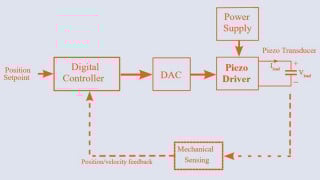
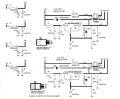
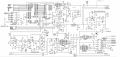
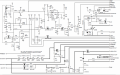
Hi, can someone guide me to troubleshoot this circuit.
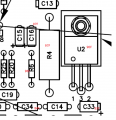
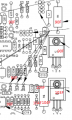
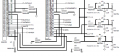
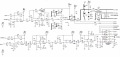
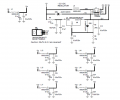
I have 15RTN shorted with +15V.
That is B72 and B69 are shorted together.
I am not sure why but its causing all the rest of the circuits not to work.
Can someone guide me through this?
Thanks
I don't know if we have a current tracer. I have never used one
I don't know if we have an IR imaging camera.
I can find a can of freeze mist. What do I do with it? What should I see or look for?
what is start cutting away at the 15V power rails on the PCB?
Thanks for your help!
I don't know if we have a current tracer. I have never used one
I don't know if we have an IR imaging camera.
I can find a can of freeze mist. What do I do with it? What should I see or look for?
what is start cutting away at the 15V power rails on the PCB?
Thanks for your help!
If you apply +15VDC and it is shorted to GND, all the high current is going somewhere back to the power supply.
The idea is to trace where the current goes and usually the shorted component is going to have elevated temperature. You are trying to find which component on the circuit board is getting the hottest.
If you cannot locate the fault visually, you have to do a binary search.
You divide the circuitry in half and cut the power supply trace leading to one-half of the circuitry.
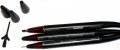
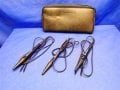
I must be one of the few people on the planet that owns an HP546A Pulser and HP547A Current Tracer. (They come as a kit with other parts.)
If you can find a pair for sale, it is worth their weight in gold for this type of trouble shooting.
If you apply +15VDC and it is shorted to GND, all the high current is going somewhere back to the power supply.
The idea is to trace where the current goes and usually the shorted component is going to have elevated temperature. You are trying to find which component on the circuit board is getting the hottest.
If you cannot locate the fault visually, you have to do a binary search.
You divide the circuitry in half and cut the power supply trace leading to one-half of the circuitry.
I like that idea. But I only have a can of freeze mist. So how do I use it?
What do you mean do a binary search? I am not too sure how to divide the circuitry in half since I don't know which half to begin with. I have an IR temperature meter. Maybe I can use that to find components that are the hottest?
I must be one of the few people on the planet that owns an HP546A Pulser and HP547A Current Tracer. (They come as a kit with other parts.)
If you can find a pair for sale, it is worth their weight in gold for this type of trouble shooting.

 Facebook
 Google
 GitHub
 Linkedin


 I have never used one