120Vac to 24Vdc speed control idea, will it work?

Thread Starter

TheEquineFencer

Joined Apr 20, 2007
42
I'm trying to use what I have laying around the shop to make something work like I want. Here's my "plan." I need to be able to turn a 16-inch x 2-foot steel pipe as if it were in a lathe. My lathe is just 13-inch swing, so I have to improvise. I've figured out the mechanics, now I need to figure out the electrics.

I have the drive, tires, motor, gear train from a motorized wheelchair, but not the controls. I have a 120vac-24Vac transformer from another project that has a full bridge rectifier wired to the 24Vac side for DC power. I also have a regular household slide type dimmer switch. I'm thinking I can put the dimmer switch on the incoming 120Vac side of the transformer to lower the AC voltage and then that should lower the 24Vac output going to the full bridge rectifier which should lower the speed of the 24VDC drive motor.

I don't know if the dimmer switch is PWM or a resistive type. I'll have to dig it out and test it, I guess.

Will it work? Ideas? Buget is virtually zero.
 

MisterBill2

Joined Jan 23, 2018
27,173
A common "dimmer" is not really what UI would call PWM, and certainly it is not resistive.It dims by changing the amount of each phase of the mains power that can pass thru. Will it work feeding a transformer?? It will have some effect, certainly. Will it be satisfactory?? No telling. BUT, because I don't know which scheme for dimming it uses, I suggest paying attention to the transformer temperature while using it.
 

Ian0

Joined Aug 7, 2020
13,097
You can control a motor on the DC side, from rectified but unsmoothed output of a transformer using a thyristor, using a phase-fired technique.
A phase fired triac on the primary side would have a very similar effect. Definitely worth a try, but as @MisterBill2 says, watch the transformer temperature, in case the waveform is uneven and the transformer gets a DC offset. You stand a better chance if the transformer is NOT a toroid.
 

Tonyr1084

Joined Sep 24, 2015
9,744
What stands out in my mind is the size of the pipe. 16 inches (diameter assumed). That's going to be a very heavy load.
I have the drive, tires, motor, gear train from a motorized wheelchair, but not the controls. I have a 120vac-24Vac transformer from another project that has a full bridge rectifier wired to the 24Vac side for DC power. I also have a regular household slide type dimmer switch.
That's going to be a BIG transformer. Wattage ? ? ? I surely don't know. So far you haven't told us what power requirements you have. A household dimmer ? ? ? They are not designed for inductive loads (i.e. motors & transformers). Like @MisterBill2 suggests it MIGHT work but likely not very well. But there's that power thing again! A large transformer is going to be needed. A large transformer is going to draw high current. The household dimmer isn't likely going to withstand that much power going through it.

Perhaps a different approach might be better. It's understandable you want to use what you have on hand. Unless you have industrial equipment on hand a better solution might be to get an appropriate sized variac to handle the 24V load. A heavy duty bridge rectifier would be needed and would recommend a suitably sized capacitor to power your 24V load on a variable speed setup.

To reiterate: Power! How much power do you need? How much power can the stuff you have on hand handle?

[edit]
After further review of Mr. Bill's comment about transformer and heat - he's touching on the very same issue I'm talking about. How much power is going to be handled by each and every component.
[end edit]
 

Tonyr1084

Joined Sep 24, 2015
9,744
No! Not a capacitor. All it will do is make huge pulse currents in the transformer. A motor will run happily on phase controlled unsmoothed rectified AC.
Okay, no cap. This is precisely why community is crucial.

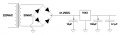
My approach is to rectify the current first, then filter it through the capacitor. I wouldn’t simply attach a capacitor to an AC output as a parallel load. I can see that as potentially problematic. Additionally, connecting it in series will block the DC current and allow only AC to pass through.

Here’s what I’m accustomed to:
Screenshot 2024-12-12 at 7.28.49 AM.png
This is an older drawing that doesn’t show the voltages the TS wants. However, in this configuration, I don’t see the transformer being negatively impacted.
 

gaber2611

Joined Mar 14, 2013
321
I'm trying to use what I have laying around the shop to make something work like I want. Here's my "plan." I need to be able to turn a 16-inch x 2-foot steel pipe as if it were in a lathe. My lathe is just 13-inch swing, so I have to improvise. I've figured out the mechanics, now I need to figure out the electrics.

I have the drive, tires, motor, gear train from a motorized wheelchair, but not the controls. I have a 120vac-24Vac transformer from another project that has a full bridge rectifier wired to the 24Vac side for DC power. I also have a regular household slide type dimmer switch. I'm thinking I can put the dimmer switch on the incoming 120Vac side of the transformer to lower the AC voltage and then that should lower the 24Vac output going to the full bridge rectifier which should lower the speed of the 24VDC drive motor.

I don't know if the dimmer switch is PWM or a resistive type. I'll have to dig it out and test it, I guess.

Will it work? Ideas? Buget is virtually zero.
Can you draw a simple circuit of how you will connect the dimmer with the system?
Also, maybe photo or something for the dimmer?
 

MisterBill2

Joined Jan 23, 2018
27,173
Many standard dimmers are rated for 600 watts. It may be that the proposed drive scheme will require more than that. I HAVE PURCHASED A much higher rated dimmer, though. I don't recall if it was 1800 watts or2000 watts. It was not an "on the shelf item" at my favorite hardware store, it was special ordered and an excess to some bigger contractor's project. But it dims a large number of incandescent bulbs in a larger room very well. I believe similar dimmers are available from "GRAINGERS", not cheap at al, but simply connect and play.
A standard 600 watt dimmer could probably serve to verify the concept with the motor operating at no load.
As for the actual power, consider that 24 volts at ten amps is 240 watts. so you should be able to get away with20 amps at 24 volts using a 600 watt dimer, and have an adequate margin.
 

Thread Starter

TheEquineFencer

Joined Apr 20, 2007
42
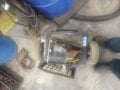
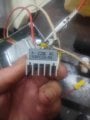
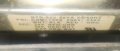
Okay, guys, let's keep it simple. I'll get pictures and Data Tags from the items I'm going to be trying. I'm 99% sure the rectifier is a 30A-50A one.

As far as the actual weight of the pipe? I just got a message back from the place with the pipe; two foot is about 80 pounds. The DC drive and motor will easily handle it. It'll drag 300-500# invalids around, so slowly turning a 80# pipe shouldn't be an issue.

I've previously used the transformer to power a 12VDC electric brake coil for an extended period of time with no problem. I just looked, it has voltage taps for 12 or 24V. I used them to hold a fixture in place while I cut a circle with a plasma cutter. But I have to admit, one of you bringing up the rating is something I didn't think about. I don't think it'll be an issue as the actual load should be minimal.

The rating for the dimmer switch might be an issue, we'll see. I'll look at Lowe's website and see what they have in stock. 600W was correct as someone mentioned for an "average" dimmer switch.
Dimmer Switch.jpgDrive from Motorized Chair.jpgFull Bridge Rectifier.jpgTransformer.jpg
 

Tonyr1084

Joined Sep 24, 2015
9,744
Your Skylark Dimmer (120V @ 600W) is capable of handling 5 amps.
Transformer is 48VA primary. Roughly 4 amps.
Assuming 120VAC source; 24VAC will be 20 amps depending on how efficient the transformer is. Assume 80% and you get 16 amps.
Your rectifier (KBPC50) is a 50 amp single phase full wave rectifier.
The last - unknown - rating is the motor. It's reasonable to assume 16 amps on a 24V motor (assuming it is 24V) with as much gear reduction as what appears in the picture will be adequate.

As for how the transformer will work with the dimmer - that - too - is an unknown. Load the transformer with the motor under load will indicate the final outcome.

Request clarification: What are you doing with the pipe? Are you building a pipe welding rotator? For some reason - and I can't find anything by re-reading the posts - I get the idea you're building something to move people. Am I wrong?
 

MisterBill2

Joined Jan 23, 2018
27,173
There are lots of reasons to put large diameter pipe in a lathe. The must common is to produce a clean square cutoff. In addition, that is how to make the spacer for going to dual wheels on a heavier duty vehicle. THAT is the first thought that came to my mind, and that is the application that will demand a rather accurate cut. But if you have never changed a failed tire on a "big truck" you might not have a clue.
 

Thread Starter

TheEquineFencer

Joined Apr 20, 2007
42
Your Skylark Dimmer (120V @ 600W) is capable of handling 5 amps.
Transformer is 48VA primary. Roughly 4 amps.
Assuming 120VAC source; 24VAC will be 20 amps depending on how efficient the transformer is. Assume 80% and you get 16 amps.
Your rectifier (KBPC50) is a 50 amp single phase full wave rectifier.
The last - unknown - rating is the motor. It's reasonable to assume 16 amps on a 24V motor (assuming it is 24V) with as much gear reduction as what appears in the picture will be adequate.

As for how the transformer will work with the dimmer - that - too - is an unknown. Load the transformer with the motor under load will indicate the final outcome.

Request clarification: What are you doing with the pipe? Are you building a pipe welding rotator? For some reason - and I can't find anything by re-reading the posts - I get the idea you're building something to move people. Am I wrong?
I'm going to cook a ham in it. Sort of how a turkey in my turkey roaster. The turkey roaster is cast iron and has a cone the turkey sits on. It also has a cast iron shallow grate in the bottom. I put 8 ounces of Red Oak sawdust and 6-8 oz of water in the bottom and crank the burner on up. A 10–12-pound bird only takes about 1.25 - 1.5 hours to be at 165* internal. This one took 3.5 hours. It cooks the bird from the inside and outside. The lid seals tight with a small hole at the seem to let it vent. It can't catch on fire as there's not enough oxygen inside to let it burn. As the water boils off, the sawdust starts to smolder and mixes with the moisture inside. It rises and condenses on the inside of the lid and drips back onto the turkey so it's truly self-basting. It puts the smoked flavor all the way through the bird. You can pull breast meat out from inside and it's even smoke flavored. I want to cook a ham with the smoke flavor. The 16-inch pipe will be bigger than the turkey roaster and taller. I'll rotate the pipe and cut it with a fixed in place cut off tool.... So now you know the rest of the story... Yes, the turkey is as good as it looks.
 

Attachments

Thread Starter

TheEquineFencer

Joined Apr 20, 2007
42
There are lots of reasons to put large diameter pipe in a lathe. The must common is to produce a clean square cutoff. In addition, that is how to make the spacer for going to dual wheels on a heavier duty vehicle. THAT is the first thought that came to my mind, and that is the application that will demand a rather accurate cut. But if you have never changed a failed tire on a "big truck" you might not have a clue.
I've changed my share of BIG and Small truck tires from 8.25x15 on small box trucks with two-piece rims to three piece 12:00x20 rims, tubeless 22.5 and 24.5 too. I've had a couple explode in a tire cage...
 

Thread Starter

TheEquineFencer

Joined Apr 20, 2007
42
Hopefully this will move up on MY list, right now it's low on HER list if you know what I mean? Life has got in the way right now. I pray for rain sometimes here on the farm. Not for things to grow, but so I can stay inside and work in my "man cave."
 

Tonyr1084

Joined Sep 24, 2015
9,744
As the water boils off, the sawdust starts to smolder and mixes with the moisture inside.
Sawdust ? ? ? Hopefully not just regular saw dust. I make a lot of saw dust and give it away. Some of it may contain chemicals from the cuttings of Pressure Treated wood. You certainly would not want to use that for cooking.

Choose a wood that complements the ham’s flavor. For instance, fruitwoods like apple, cherry, and peach add sweetness and fruitiness. Ensure the wood is dry and seasoned to prevent excessive smoke and bitterness. Opt for hardwood instead of softwood, such as pine, as softwood produces an unpleasant resinous taste. Consider the smoker’s size to avoid fires and ensure proper burning. Lastly, avoid woods with chemicals, pesticides, or other harmful substances that can affect the ham’s quality.
 

Tonyr1084

Joined Sep 24, 2015
9,744
I need to be able to turn a 16-inch x 2-foot steel pipe as if it were in a lathe.
OK, cooking in it is not what I had imagined when you first posted. I can't imagine how the turning 16 inch pipe is going to cook a pig. Best I can imagine is the lathe to cut the ends square and consistent so you can weld a bottom on and a hinged lid on the top. Ventilating is going to be a crucial matter when smoking in a smoker. How you vent will control how fast or slow the fire burns and smokes.

Anyway, I'm sure you have a clear picture in your mind of what you're after. Good luck.
 

MisterBill2

Joined Jan 23, 2018
27,173
Hopefully this will move up on MY list, right now it's low on HER list if you know what I mean? Life has got in the way right now. I pray for rain sometimes here on the farm. Not for things to grow, but so I can stay inside and work in my "man cave."
Really, iif you have steady hands and a bit of patience, once you mark the cut line on the pipe, A disk grinder with a cutoff disk can do the job neatly enough for a nice fire ring. That was probably the handiest tool, besides a screwdriver. At least the best for the money at Harbor Freight. And the cost for the grinder was about the same as for a set of brushes for my MILWAUKEE disk grinder.It does require patience and two steady hands, and don't cut all the way thru in one place, Start a groove and then move on, until the groove is the length of the entire cut. Then another pass most of the way, and then finally just breaking thru, just barely, so that the whole cut as yo take out the bridges. But make sure the cut opens instead of pinches.
 
Top