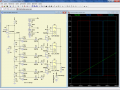
I am looking for a switch which will allow me to switch from 12 volts to 48 volts ( 36 V. and 12 V. in series) as per drawing. Any suggestions?
Thanks
tropes
I found this post in "the completed projects" forum, where it is invisible.
There we only accept "completed projects" and no questions.
I have moved it over here for the others to see.
Hello Tropes,
You attempted to post a photo that is in a Dropbox account. You might be able to see it, but nobody else can.
Please upload the image to the Forum. Edit your 1st reply, use the "Go Advanced" button on the bottom, and then you can use the "Manage Attachments" button to select the file while you're logged in to your Dropbox account. The forum will then upload the image to it's storage area so we can all see it.
We still cannot see the image in the Dropbox account, as you simply quoted your original post that has the private link in it.
You need to use the public link in Dropbox, or else you need to upload the image to this Board using the "Go Advanced" and "Manage Attachments" buttons.
I doubt you will find one like that. For manual battery switches, they usually have "OFF" between Battery 1 and Battery 2 selections; Battery 1&2 is opposite OFF, and would cause a melt down or explosion if selected with your intended setup.
I doubt you will find one like that. For manual battery switches, they usually have "OFF" between Battery 1 and Battery 2 selections; Battery 1&2 is opposite OFF, and would cause a melt down or explosion if selected with your intended setup.
Well, variable speed controllers are normally used for things like that. You wind up having much better control over a motor, and the batteries discharge evenly, instead of the lower one being discharged heavily.
But, we have no idea what your load is; it may not be a motor.
It would help a lot if you would tell us what your load is, how much current/power it requires, so we might be able to make some suggestions. We really don't like making wild guesses.
Well, variable speed controllers are normally used for things like that. You wind up having much better control over a motor, and the batteries discharge evenly, instead of the lower one being discharged heavily.
But, we have no idea what your load is; it may not be a motor.
It would help a lot if you would tell us what your load is, how much current/power it requires, so we might be able to make some suggestions. We really don't like making wild guesses.
The motor I would like to use is a Brush-type Permanent Magnet DC motor found here http://www.electricmotorsport.com/st...ors_me0709.php
The 12 V battery would only be used for a few seconds while stagging the dragster so the 12V battery would not be discharged heavily.
Could I use a single changeover contactor to change from 12V to 48volts? If so, where can I find a circuit drawing which incorporates this contactor?
tropes
Ahh, OK.... you might find this schematic helpful; someone else recently wanted a way to supply first 12v, then 24v, then 48v to a motor using a signal from a potentiometer that was connected to a "gas pedal". For such a pedal, you could use a musical instrument volume control pedal, such as a Roland EV-5, but modified slightly using a spring return.
Applying increasing voltage in stages would help you to avoid wheel spin (I don't know if that would even be a concern.)
It wouldn't be difficult to modify that schematic to add 36v to the mix.
Have a look at the attached. The relays could be starter solenoids, like were used on older Ford models.
Ahh, OK.... you might find this schematic helpful; someone else recently wanted a way to supply first 12v, then 24v, then 48v to a motor using a signal from a potentiometer that was connected to a "gas pedal". For such a pedal, you could use a musical instrument volume control pedal, such as a Roland EV-5, but modified slightly using a spring return.
Applying increasing voltage in stages would help you to avoid wheel spin (I don't know if that would even be a concern.)
It wouldn't be difficult to modify that schematic to add 36v to the mix.
Have a look at the attached. The relays could be starter solenoids, like were used on older Ford models.
Thanks for the input. After some searching and researching i decided to go with a 300 amp, programmable Alltrax motor controller, a JCAC-200 fork lift contactor and a Curtis throttle. I am now trying to decide whether or not to add a flywheel and electromagnetic clutch to the jackshaft.
tropes

 Facebook
 Google
 GitHub
 Linkedin