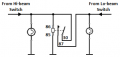
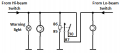
That design looks great except that the HB+ wire in the loom will be supplying nearly twice as much current as the original design.
Wire looms tend to melt when you try to push 2x current through a wire. Especially when all the wires are packed together in a plastic conduit that insulates the heat in the wire.
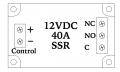
Relays are not the only option. A little research should find an SSR (Solid State Relay) that should have very little affect to the HB warning light. However, I'm not certain on what you mean by HB warning light. Does it warn you if the HB has burned out? Or is it a part of the circuit that indicates when the HB is on?
Relays are not the only option. A little research should find an SSR (Solid State Relay) that should have very little affect to the HB warning light. However, I'm not certain on what you mean by HB warning light. Does it warn you if the HB has burned out? Or is it a part of the circuit that indicates when the HB is on?
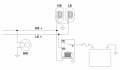
Whenever the HB is activated the relay will also be activated and will jump the LB to the battery through a proper fuse. The HBI should be unaffected. When only the LB is on the HB will not be on, neither will the HBI (High Beam Indicator). I would imagine the same thing could be done with an SSR.
A Solid State Relay is just basically a relay but the switching is done electronically. I believe they use even less current than the coil of a standard relay. You can find SSR's in SPST (no "NC" contact) or SPDT (as shown in the diagram). They're not cheap, but they don't exactly break the bank.
Commonly, halogen headlights run about 55 watts. 55W / 13.8VDC = 3.986A. Off hand I don't know what gauge wiring they're running but it's likely they're running close to the smallest wire they can get away with. Smaller wire is to reduce weight. Every ounce they can eliminate means better fuel economy. Back in my days I'd guess the wiring to my headlights on my 1970's cars was probably either 18 or 16 gauge wire. Modern automobiles don't run the full wire gauge all the way to the dash but rather likely they run from the relay (under the hood) to the headlights, meaning less than 10 feet. An 18 gauge wire <{click that link} can handle 13 amps (depending on the insulation) at a short distance. I'd find it hard to believe they've gone anything less than 18 gauge. But at 20 gauge; worst case is 9A. So low and high beams on the same 20 gauge wire would draw about 8 amps. As temp changes capacity changes too. And not like I expected.
So if you go with a diode, I'd recommend one for each headlamp assembly. That way no one wire is trying to power three lamps. (one HB and two LB's). Something rated for at least 15 amps. The relay comments? Good. But probably not necessary.
View attachment 275772
Whenever the HB is activated the relay will also be activated and will jump the LB to the battery through a proper fuse. The HBI should be unaffected. When only the LB is on the HB will not be on, neither will the HBI (High Beam Indicator). I would imagine the same thing could be done with an SSR.
Something you might be missing here; powering the LB from the battery could potentially back-feed something else. Possibly a pathway to power up the vehicle's electronics with the key off, which might cause issues elsewhere. At the very least you'd still need a diode to prevent unwanted current pathways unless you're connecting to a key switched power source. That way without the key there's no way the LB's could light. Even if the HB's are activated.
Ehm, as you were gents. I plugged in the headlight & did some measuring. When low beam is switched on, the high beam terminal is also powered. So the switch in the car must be switching to earth/chassis ground.
So I'm stuck. Sorry for the previous duff info'.
Thanks for the update. It doesn't make sense. If both lights are powered and you switch the switch (to ground) on and only the low beam comes on - I have to say "that's wrong."
You may be getting some cross talk, or maybe a test voltage to determine if there's any burned out bulbs. I'd suggest you rig up something to test each circuit separately, and then get back to us. Said "Rig" could be the halogen bulb itself. Just wear cotton gloves before you touch the glass bulb of the halogen. Oil from your finger can burn the bulbs out in short order. Days, weeks, maybe a little longer, but definitely sooner than if untouched.
About this "Possible" test voltage: The BCM (Body Control Module) may send a very low current to the HB. If the current is flowing then the BCM determines the HB is working, though not on. The low beam may have a similar configuration. Try measuring for voltage with all the lights off but the engine on. Doesn't need to be running, just thinking it's running. You may find voltage on each. But to be clear, this is just guesswork on my part. It's been about a hundred years since I messed with headlights, except to put HID lamps in place of the Halogens. They also sell a "Code Canceler" so you don't get an indication of a burned out lamp when you're running HID. I have them on both my vehicles. HID and Code Cancelers.
I'm only seeing three connections. One has to be chassis ground and each of the other two have to be separate power wires, one for HB and one for LB. Just a guess, but did I read where you said you were changing the single lamp assembly with dual filaments for an assembly with separate bulbs, one for HB and the other for LB?
Can you provide pictures of the original as well as the after-market headlamp assembly? Also, get pictures of the back side of the connector. One of those pins MUST have two wires going to it.
View attachment 275791
I'm only seeing three connections. One has to be chassis ground and each of the other two have to be separate power wires, one for HB and one for LB. Just a guess, but did I read where you said you were changing the single lamp assembly with dual filaments for an assembly with separate bulbs, one for HB and the other for LB?
Can you provide pictures of the original as well as the after-market headlamp assembly? Also, get pictures of the back side of the connector. One of those pins MUST have two wires going to it.
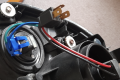
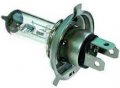
The original headlight uses a 3 pin, twin filament H4 bulb. The bulb pins look like the male plug above.
The wiring harness you see is made to use the later light unit (above), and it works. But it doesn't allow both bulbs to work simultaneously, as happens in the year of car the later light comes from.
By modern standards, they are not great, but the 2003-2005 light is much better than '99-2002.
To me that connector looks just like the ones that I used to plug sealed beam headlights into. Three wires. I get the same impression, that with three wires you can't have both hot all the time and switch the ground only. That would result in both lamps lighting up. I think Pan's right; there may be some sort of test current on the line to detect a good or blown lamp.
To be clear, THIS is the type of sealed beam headlight of long ago that had dual filaments and a three prong plug.
Scroll through the pictures and on the back side of the SBH you'll see the three pin connector. Each filament is connected to a single pin for grounding and each of the remaining two get powered to light the lamp either individually or simultaneously. Used to be that the desired effect was to have only one of the two filaments illuminated at one time.
There's no need to bring sealed-beam's into this. The H4 halogen has been around for decades. The car, (a 2000 Toyota) does not have a failed bulb warning, so the 12V on the h/b pin when low-beam is in use has no purpose that I'm aware of.
Some headlights - especially Japanese cars/motorcycles - use low-side switching for headlights.
With the switch element between the HB terminal and Ground, the HB terminal will always have +12v when you measure voltage between HB pin and ground (and LB pin and ground when LB is switched off. LB to ground will be a few tenths of a volt when the LB is switched on. HB pin to ground will also be a few tenths if a volt when HB is switched on.
To avoid running the increased current through the wire harness, use the same circuit at the selector switch, not at the light end of the wires. And the high beam indicator will illuminate when the high beam wire is active. no need for adding anything.
But the big question is how much "safety"does it gain for you by blinding the oncoming traffic???

 Facebook
 Google
 GitHub
 Linkedin