zener regulator calculations

MCU88

Joined Mar 12, 2015
358
100mA is just an example.

You can do the same calculations using 10mA as another example.
Well I think that is what he wants. The title of the thread is 'calculations on zener diodes'

Give him a crash course on algebra. No numbers though. In academia we don't use numbers in maths.
 

MrChips

Joined Oct 2, 2009
34,828
Yes, it is nice learning algebra and using variables instead of real numbers.
However, when it comes to practical electronics, it is the real numbers that make the difference.

In the example I have given with 100mA load current, with 4-12V supply voltage, you would need a 10Ω resistor rated for at least 10W and a 3V zener rated for at least 5W.

Real numbers make a huge difference.

Most of the power will be wasted as heat.
 

MCU88

Joined Mar 12, 2015
358
Yes, it is nice learning algebra and using variables instead of real numbers.
Well, if you can get your head around basic boolean algebra, then you are pretty much halfway there with computer programming. I have made video games that are not half laughable using pure boolean. Nothing fancy just pure boolean. Donkey Kong. Pacman. Space Invaders. They play like the originals.
 

MrChips

Joined Oct 2, 2009
34,828
Well, if you can get your head around basic boolean algebra, then you are pretty much halfway there with computer programming. I have made video games that are not half laughable using pure boolean. Nothing fancy just pure boolean. Donkey Kong. Pacman. Space Invaders. They play like the originals.
Nice. But what does that have to do with real world electronics?
 

Thread Starter

ebeowulf17

Joined Aug 12, 2014
3,307
For what it's worth, I was looking for both in this case (I usually am.) I'm glad to have the theoretical knowledge to apply to future projects, but I'm also very glad to have all the practical insights into what will give the best finished project.

To me, this isn't an either/or situation. Both are great. I'm often frustrated on this forum when people ignore an OP's actual question because they dislike his/her approach or premise. But I'm also really glad to learn why certain ideas are best avoided or only work in very specific circumstances. I wouldn't want theory without application warnings, nor said warnings without theory.
 

Thread Starter

ebeowulf17

Joined Aug 12, 2014
3,307
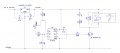
I think I've got a workable update. I've got a 3.3V LDO regulator that should handle 3.7-10VDC input and provide 3.3V out (maybe even up to 12V input depending on exact current draw and temperatures, but I don't want to hope for too much!) I think if it got 3.3V input it would still eek out 3.0V output and the rest of the circuit would work, although I wouldn't want to rely on that!

The relay is nominal 3V, with 2.4 max required on voltage and the MOSFET has very low Vgs requirements for maximum current flow, so I think I've done everything I can to make this tolerate low voltages. Let me know what you guys think!

555_relay-out_3V5-10VDC_01_crop.jpg
 

ScottWang

Joined Aug 23, 2012
7,501
What's the relay used for?
Using the astable oscillator to control relay is not a good idea, I knew that was used for motocycle to light up the light of direction as left light or right light.

You can using NPN or PNP of bjt and N type or P type of mosfet to control the output device.
 

Thread Starter

ebeowulf17

Joined Aug 12, 2014
3,307
What's the problem with 555 controlling relay? It's not powering the relay directly. I thought with the MOSFET handling the current and with a flyback diode for protection that this would be ok. What am I overlooking here?

What it's switching is potentially a wide variety of different devices at different times. In every case, the outputs of the relay would be wired in parallel across a momentary switch on the external circuit such that each closing of the relay is the equivalent of pressing the button on the external circuit. The external circuits could range anywhere from 3-12VDC, unknown but fairly low current draw, and unknown noise potential. Because of all the unknowns, I thought the extra isolation of a relay would make for a simpler, more reliable design. I am, of course, open to suggestions. It just seemed like picking a transistor setup (especially one that needs to run as low as 3.3V) to handle such a variety of conditions might be tricky.

I suppose an opto-isolator might provide the separation I want, but I've never used one before and wasn't entirely sure how I would approach it,
 

Thread Starter

ebeowulf17

Joined Aug 12, 2014
3,307
Almost forgot the other advantage of a relay here, which is that polarity reversal on the relay output connections won't matter.

I'm designing this for someone else, who may not always know which side of the external circuit's switch is which. This way, polarity doesn't matter. As long as the switch isn't connected to more than 120V or handling more than 500mA, it should be fine.

I wanted this circuit to be robust, flexible, and very easy to connect with its various partner devices.
 

Thread Starter

ebeowulf17

Joined Aug 12, 2014
3,307
Any thoughts on the revised schematic in post 27? I really appreciate all the help I got here and I tried to incorporate the necessary changes.

I'd love to know if I'm still missing something obvious before e-mailing it off to someone thousands of miles away for them to attempt to build!

Thanks all!
 

ScottWang

Joined Aug 23, 2012
7,501
If you need the Hi/Lo duty cycle more equally then you can change R3 to 1K~4.7K, and change the R1 to 250K.

Maybe you can using a switch to switching two current limiting resistor for LED.
 

Thread Starter

ebeowulf17

Joined Aug 12, 2014
3,307
If you need the Hi/Lo duty cycle more equally then you can change R3 to 1K~4.7K, and change the R1 to 250K.

Maybe you can using a switch to switching two current limiting resistor for LED.
Yeah, the duty cycle isn't quite what I want it to be, although in the opposite way. Ideally, the shorter low pulses would be a consistent length, like maybe 250-500ms and the only the time of the high output would vary with trim pot adjustments. I know a pair of 555s could do this, but the person I'm trying to help and I both agreed we wanted to keep the circuit simpler.

If there is a very easy way to set a fixed low output duration with a widely adjustable high output duration, I might want to try it out.
 

ScottWang

Joined Aug 23, 2012
7,501
Yeah, the duty cycle isn't quite what I want it to be, although in the opposite way. Ideally, the shorter low pulses would be a consistent length, like maybe 250-500ms and the only the time of the high output would vary with trim pot adjustments. I know a pair of 555s could do this, but the person I'm trying to help and I both agreed we wanted to keep the circuit simpler.

If there is a very easy way to set a fixed low output duration with a widely adjustable high output duration, I might want to try it out.
You may refer to this -- NE555 Clock Generator and PWM adjustable circuit.
This is a double functions oscillators, but you can just choose any one of them, you can also ignore the switches and just care about the points 1,2,3 and shorted the points to choosing the function.

If you choosing the pwm function then you can adjust the led brightness, that is to adjust the duty cycle for LED.


OBW0549

Joined Mar 2, 2015
3,566
If there is a very easy way to set a fixed low output duration with a widely adjustable high output duration, I might want to try it out.
If that's what you want, just replace R1 and R2 with a fixed resistor (value selected to give the fixed low output duration you're looking for) and replace R3 with a pot to vary the high output duration (in series with a fixed resistor, of course).

In other words, if you wanted a fixed low duration and a variable high duration, you put the pot in the wrong branch of the circuit.
 

Thread Starter

ebeowulf17

Joined Aug 12, 2014
3,307
Oops, that's embarrassing! I think I must've copied the formulas wrong when I tried to work out the timing values. Besides this mistake, I also have formulas telling me that the 555 can only do ~0-50% duty cycle instead of ~50-100%, which I've since found is apparently backwards.

I'll double check how I entered formulas into my spreadsheet and play around with variable R3 values. Thanks for the tip!
 

eetech00

Joined Jun 8, 2013
4,705
I think I've got a workable update. I've got a 3.3V LDO regulator that should handle 3.7-10VDC input and provide 3.3V out (maybe even up to 12V input depending on exact current draw and temperatures, but I don't want to hope for too much!) I think if it got 3.3V input it would still eek out 3.0V output and the rest of the circuit would work, although I wouldn't want to rely on that!

The relay is nominal 3V, with 2.4 max required on voltage and the MOSFET has very low Vgs requirements for maximum current flow, so I think I've done everything I can to make this tolerate low voltages. Let me know what you guys think!
hi

The LM2936 is a linear regulator. According to the data sheet, the input voltage has to be a minimum of Vout+2V, so 3.3v + 2v = 5.3v minimum(5.5v is recommended) to ensure output is well regulated.

Also, you'll have to use a CMOS type 555, like an LMC555, to operate it with a 3.3v supply. It has a max output current of 100ma, so you could drive the relay without a MOSFET if desired.

eT
 
Last edited:

Thread Starter

ebeowulf17

Joined Aug 12, 2014
3,307
I could be kidding myself, but I imagined that for this circuit, it wouldn't matter so much how well regulated it was as long as it stayed within a safe range for the relay coil and LED/resistor combo. I thought with a max dropout voltage of 0.4V at 50mA (pretty close to my expected load) that would mean that, although not fully regulated, that a 3.7V input would drop through the saturated LDO to 3.3V. Maybe I misunderstood the dropout spec. Really though, if the dropout spec doesn't mean that you can get output that close to your input, what's the point of a dropout spec? If you have a 0.4V dropout, but have to maintain a minimum 2V difference between input and output anyway, then isn't the dropout meaningless?

Does that range between the minimum input for proper regulation and the minimum based on dropout voltage just mean that the output in those conditions (say 3.7-5.3V input in this case) will be less stable, or does it mean it will be totally unregulated and only a function of dropout voltage? In other words, if the input voltage was reduced gradually in small steps below 5.3V, would the output stay near 3.3V until the dropout voltage became a limiting factor, or would it be totally unregulated, leading to a jump UP to input-dropout once you entered the unregulated zone like this:

Input Output
5.5V 3.3V (regulated)
5.3V 3.3V (minimum input for regulated output)
5.0V 4.6V (input below minimum input, so output = input minus dropout?)
4.5V 4.1V (input below minimum input, so output = input minus dropout?)
4.0V 3.6V (input below minimum input, so output = input minus dropout?)
3.7V 3.3V (at this input, voltage in minus dropout voltage just happens to deliver desired output voltage)
3.4V 3.0V (input too low; at this point, output is below desired 3.3V output)
If it's just a question of how perfectly smooth the regulation is when the input is below 5.3V, then I don't think I'm too worried. If it's more like the situation I imagined above, where the output voltage can actually go up significantly once the input voltage drops below the minimum acceptable input, then I may have to rethink things. Clearly I still have a lot to learn about these regulators!

As for the 555, yes I knew from the beginning that I'd have to go CMOS, and have specified it as such.

Thanks for your help and I look forward to getting a better understanding of linear regulators. I hope my examples above make sense. I'd really love to wrap my head around what typically happens in the unregulated zone on a linear regulator.

Thanks,
Eric
 

Thread Starter

ebeowulf17

Joined Aug 12, 2014
3,307
If that's what you want, just replace R1 and R2 with a fixed resistor (value selected to give the fixed low output duration you're looking for) and replace R3 with a pot to vary the high output duration (in series with a fixed resistor, of course).

In other words, if you wanted a fixed low duration and a variable high duration, you put the pot in the wrong branch of the circuit.
After fixing my mis-copied formulas in my spreadsheet, I tried new resistor values and found exactly what you said. Thanks so much for setting me straight!
 
Top