That might take some experimentation - I depends on the JFET and they vary all over the place.
The infallible solution is the 74HCU04 - it always works.
That might take some experimentation - I depends on the JFET and they vary all over the place.
The infallible solution is the 74HCU04 - it always works.
You do need to square the output. If you don’t and you connect it to several different devices, they won’t be synchronised, because they might have different logic thresholds.
Bit disappointed that this exchange led to confusion. Guys, I can't really make much sense of your suggestions, so I decided to follow my orig gut and go with an "intestinal" flatulence . I did note it here: https://forum.allaboutcircuits.com/...al-ckts-11-289-mhz-needed.194299/post-1828042
"It's a gas!!"
I.e., it works well, especially if one buffers the output with a decent 100R. I may experiment with squaring it up further with an 74LS04.
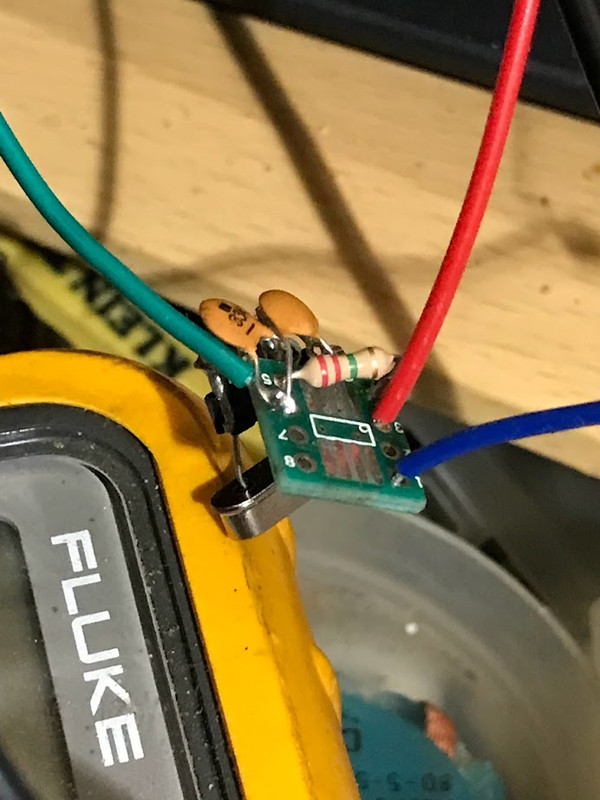
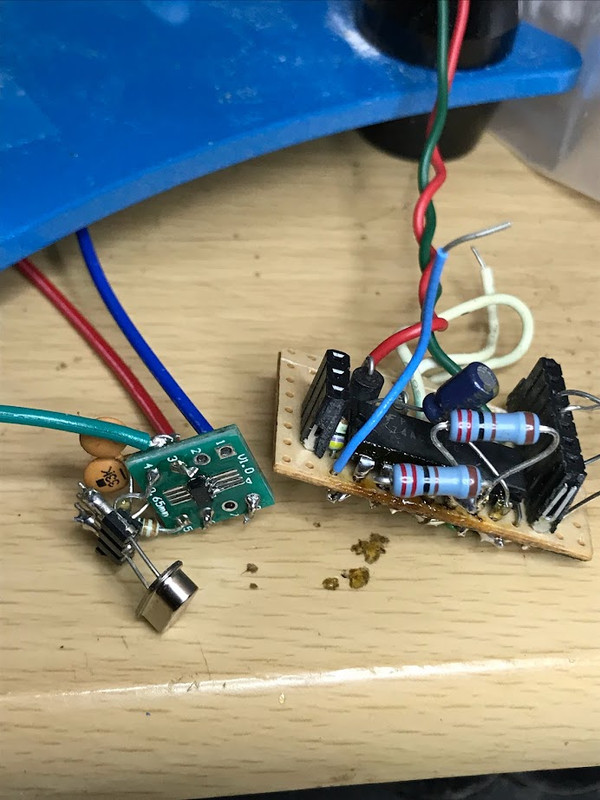
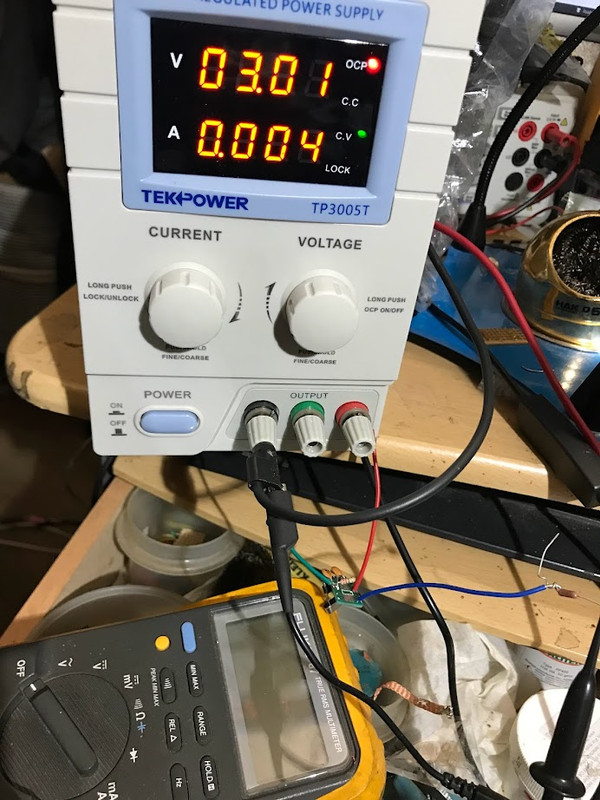
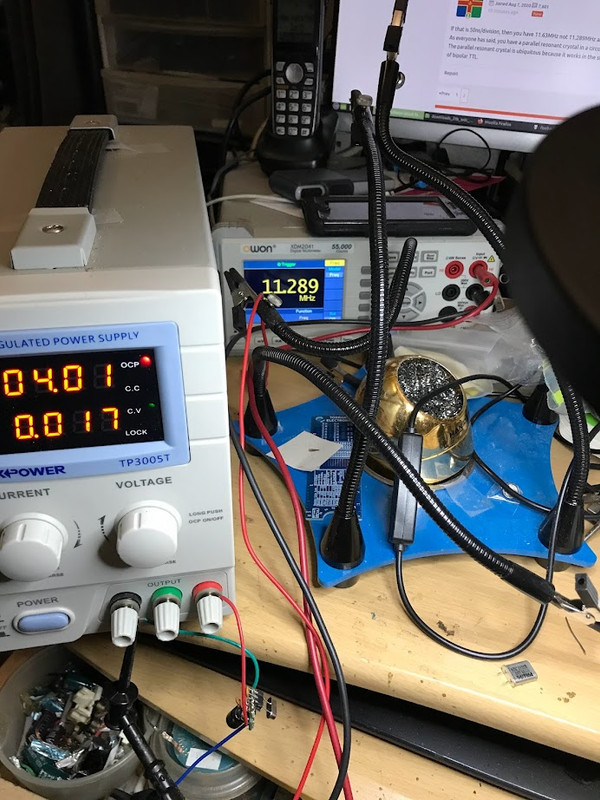
Photos of this project below... (in the 3rd photo, the project on the right is the earlier, unsuccessful attempt, also shown in TS post 1 of this thread)
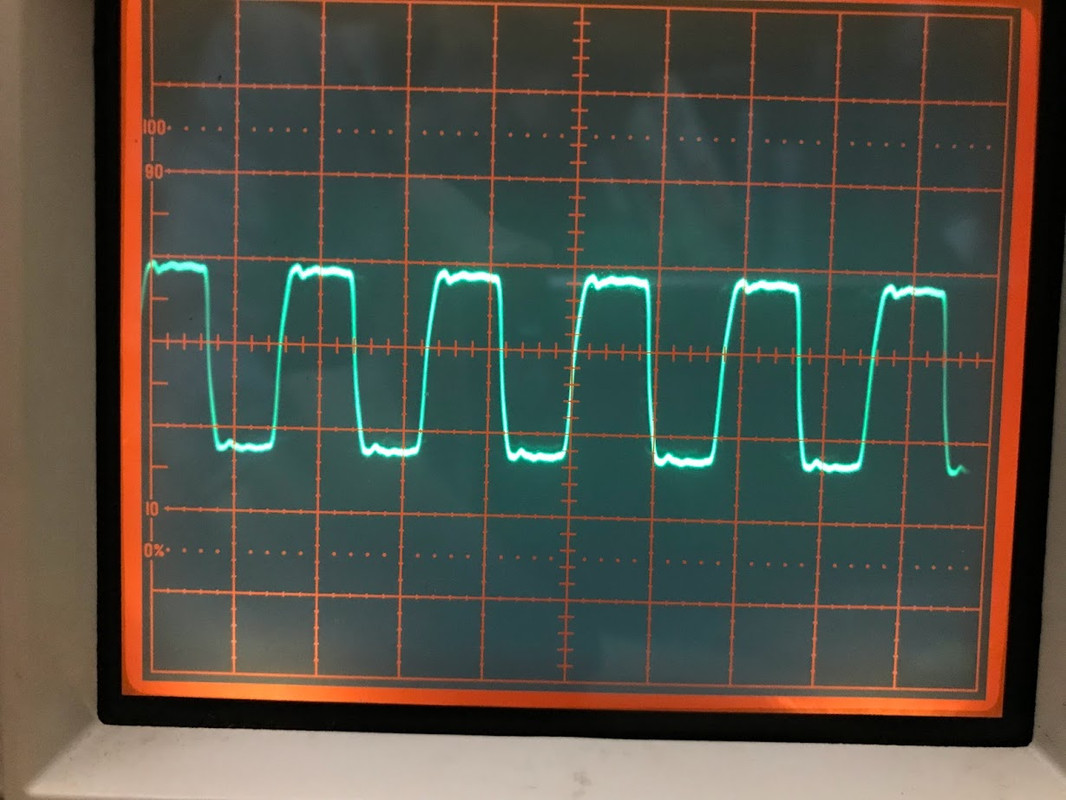
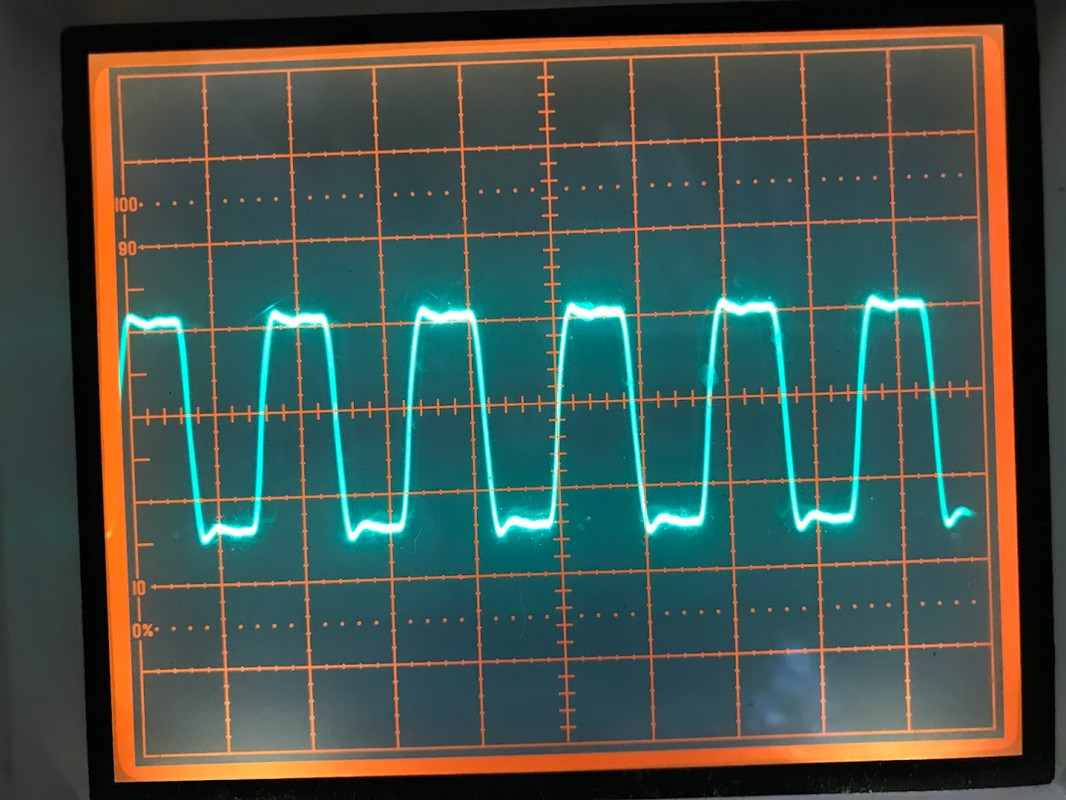
An update, with squaring up ... added a Panasonic 100uF/50v FM cap on Vcc/GND pins of driver. This improved output waveform. Also plugged in a Philips 11.289 xtal (1989 vintage) that gave very minor improvement over the smaller (new) generic brand. Finally compared to Martin Clark Flea regulator (an audiophile clock; note waveform is a but taller because of 5v input voltage).
1: Philips 11.289 xtal (1988 vintage); 4.00 Vdc
===============
2: Generic 11.289 xtal (2023, new); 4.00 Vdc
==============
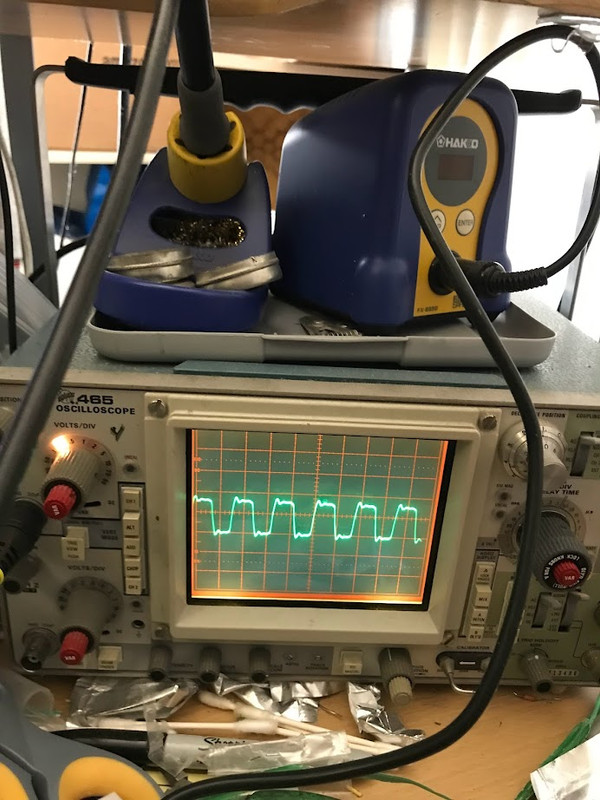
3. Martin Clark Flea "Audiophile" reg with Vanguard 11.289mhz low-jitter osc. 5.00Vdc. (Uggghhhhh!! Note geometry of vertical sides are not as steep and some added ringing, compared to the cleaner, "squarer" teeny-tiny SN74LVC1G04-based 4.00 vdc design. Now what does really constitute a "sound" design for audio ??? .... ahem .... )
If that is 50ns/division, then you have 11.63MHz not 11.289MHz and your music will be a semitone sharp.
As everyone has said, you have a parallel resonant crystal in a circuit designed for a series resonant crystal.
The parallel resonant crystal is ubiquitous because it works in the single-gate Pierce oscillator circuit. The series resonant circuit went out with the demise of bipolar TTL.
If that is 50ns/division, then you have 11.63MHz not 11.289MHz and your music will be a semitone sharp.
As everyone has said, you have a parallel resonant crystal in a circuit designed for a series resonant crystal.
The parallel resonant crystal is ubiquitous because it works in the single-gate Pierce oscillator circuit. The series resonant circuit went out with the demise of bipolar TTL.
Huh? What????!
The service manuals, schematics and datasheets (of processors and devices inside CDP like the SAA7220 df) are all based on Pierce. Again, I'm using the SN74LVC1G04. Look at the Owon:
Your scope needs calibration.
8.6 divisions at 50ns/division for 5 complete waveforms = 430ns total, 86ns per cycle = 11.63 MHz.
was I supposed to tell from that jumble of wires which circuit you were using?
Your scope needs calibration.
8.6 divisions at 50ns/division for 5 complete waveforms = 430ns total, 86ns per cycle = 11.63 MHz.
was I supposed to tell from that jumble of wires which circuit you were using?
Dude ... it's an old Tek 465 'scope from 1976. No one asked you (expected you!) to go off in a pointless diversionary tangent and pursue freq specifics based on the waveform. The purpose was to show the squareness of the waveform, which the old analog 'scope can do very well.
I could have easily shown you a direct image capture from my Siglent DSO. But that's not what this thread is about.
Stay on topic ... please!
Dude ... it's an old Tek 465 'scope from 1976. No one asked you (expected you!) to go off in a pointless diversionary tangent and pursue freq specifics based on the waveform. The purpose was to show the squareness of the waveform, which the old analog 'scope can do very well.
I could have easily shown you a direct image capture from my Siglent DSO. But that's not what this thread is about.
Stay on topic ... please!
If you are suggesting that it is the regularity and spacing (and its TEMPORAL exactness and precision), then yes ... the geometry of the square is not related. And, indeed, my small clock may well be under-performing in that respect (compared to Flea or Tent or even dCS!!).
Do you know of a way to measure those "gaps" in the square wave train? Say over a period of 1ms, 1s, etc. ? Get an average of the events? See/measure any "stretching" or "contracting" of the train? Analogous, perhaps, to a long, heavy freight train that lengthens and shortens as it is braked or accelerated .
The classic "Missing pulse detector" circuit - basically an edge-triggered retriggerable monostable (74HC123), which times out after a certain amount of time (say 1.5 periods).
You could count the output pulses with a 4017 or other sort of counter, depending on how many you were expecting.
Seems unlikely, though, because a crystal oscillator has a very high Q.
The classic "Missing pulse detector" circuit - basically an edge-triggered retriggerable monostable (74HC123), which times out after a certain amount of time (say 1.5 periods).
You could count the output pulses with a 4017 or other sort of counter, depending on how many you were expecting.
Seems unlikely, though, because a crystal oscillator has a very high Q.
Audiophiles and "jitter" go hand in hand. So I'd want a few pS accuracy in the "readout" ...
But again - the ripple is not what matters - it's the regularity of the transition between states,where enhanced clock performance in jitter-sensitive applications, lies: needs be down to a few 10s of pS for 16 bit audio.
I'm trying to figure out the differences between the 4000 series and 7400 series IC's. I know the 4000 are CMOS, have been around longer, use less power, but are slower. The 7400 series are TTL, newer, faster, but use more power.

 Facebook
 Google
 GitHub
 Linkedin