Just for the reference, I just realized what you have been telling me about the zener, I dont know exactly what kind of zener are in the market but reverse voltage of 24V I think is too high and it will be break (I dont know I havent tried it)
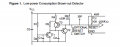
I did an schematic of my power design, then is easier
The idea is to introduce the load switch after C8, right before the load, so Vin of the load switch would be directly connected to C8. Once the switch is opened the small load after the load switch will discharge through the internal resistor, the only "problem" is that the capacitors would remain charged before the load switch but then is not damaging any device
As you said the option of using a high pull down resistor would keep the "ON" pin high for really long time. But I dont see how I could fix this issue just by using the transistor as far as I can not connect the "ON" to more than 5V
I still think the load switch is probably overkill, but it seems harmless, so I won't argue against it.
As for controlling it, you could probably use a voltage divider to drop the 24V down as needed. As I said earlier, you may or may not need the Zener, depending on your 3.3V supply characteristics. I'll try to check out the datasheet later when I have more time.
Just for the reference, I just realized what you have been telling me about the zener, I dont know exactly what kind of zener are in the market but reverse voltage of 24V I think is too high and it will be break (I dont know I havent tried it)
I don't think the Zener is in any danger. It's specifically designed to have predictable, repeatable reverse breakdown characteristics.
If the voltage to it is less than its Zener voltage (8.2V in my example,) then no current will flow through it. This is the case when the 24V supply turns off and voltage is (maybe) leaking backwards through the 3.3V regulator - we don't want that leakage, if there is any, to keep the load switch active while voltages are falling.
When the voltage across the Zener is above its Zener voltage (any time the 12/24V supply is present,) then current flows through it in its reverse breakdown state, which is totally harmless as long as that current is low enough to not overheat the Zener. As drawn in my example, current should be well under 2mA. These are rough approximations, but give the general idea:
*** EDIT: I've just realized both calculations below only account for current through the BJT, ignoring current through the 10k pull down. This means the correct current values through the Zener will be a little more than double what I've shown below. Sorry for any confusion.
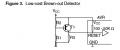
I had a better idea, using two transistors connected. I show you the schematic, I used a simple regulator, just to represent the two transistors, in the "3" pin of the PNP transistor I would connect the "ON" pin of the load switch
I had a better idea, using two transistors connected. I show you the schematic, I used a simple regulator, just to represent the two transistors, in the "3" pin of the PNP transistor I would connect the "ON" pin of the load switch
Yes, that's definitely a legitimate way to get a good signal at the appropriate voltage for the load switch.
It's worth noting that at this point you've got more components than my earlier proposed circuit.
You may or may not still need the Zener I was suggesting earlier. This new arrangement doesn't change that potential problem. I looked at the buck converter datasheet for the part in one of your earlier schematics, but couldn't tell if it would have reverse leakage properties like a linear regulator. If it does, you'll need a Zener, or some other solution to that problem. I've started a new thread asking this forum about the leakage question. Hopefully I'll get some answers:

 Facebook
 Google
 GitHub
 Linkedin