Wiring a Stratocaster

Thread Starter

drwrabella73

Joined Jul 30, 2018
23
I'm in the middle of a project of upgrading one of my guitars. The next thing I have to do is solder all of the electronics together. What I need to know is where and to what components I need to attach my copper alligator clips to draw the heat away from the components to prevent damage to everything.

Thanks,
Drew
 

wayneh

Joined Sep 9, 2010
18,104
I'm in the middle of a project of upgrading one of my guitars. The next thing I have to do is solder all of the electronics together. What I need to know is where and to what components I need to attach my copper alligator clips to draw the heat away from the components to prevent damage to everything.

Thanks,
Drew
A big part of the answer is to use good technique in the first place so that heat sinking is less of an issue. Hot, cleaned and tinned iron, proper solder, a holder perhaps to hold things together well. Good lighting and maybe a magnifying glass to help you see.
 

Thread Starter

drwrabella73

Joined Jul 30, 2018
23
A big part of the answer is to use good technique in the first place so that heat sinking is less of an issue. Hot, cleaned and tinned iron, proper solder, a holder perhaps to hold things together well. Good lighting and maybe a magnifying glass to help you see.
I definitely think a magnifying glass will help me! lol But are there any components that I really have to be worried about damaging?
 

MrChips

Joined Oct 2, 2009
34,810
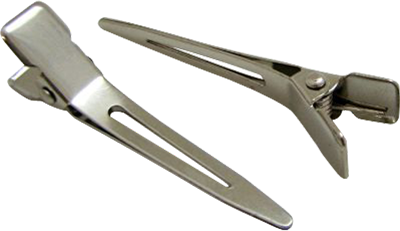
A long time ago when transistors were made from germanium before silicon transistors came along, it was common practice to heat sink the leads while soldering. I used my sisters' hair styling clips to do this.


Those days are long gone.
Proper soldering equipment and technique is what is required.
 

Thread Starter

drwrabella73

Joined Jul 30, 2018
23
A long time ago when transistors were made from germanium before silicon transistors came along, it was common practice to heat sink the leads while soldering. I used my sisters' hair styling clips to do this.


Those days are long gone.
Proper soldering equipment and technique is what is required.
I have plain, non-insulated copper alligator clips that I bought from StewMac to work with. I would've never thought of using my wife's hair clips! I'm learning something new everyday!
 

Thread Starter

drwrabella73

Joined Jul 30, 2018
23
What kind of components? I'm assuming pickups, potentiometers, jacks - but what else? Photos?
I'm dealing with a 500K push/pull pot for the volume(because that was suggested by the pickup manufacturer) because I was flirting with the idea of coil splitting the humbucker, two 250K pots for the tone, but, I have another plain 500K pot if needed in one of those spots. A five way selector switch, and a treble bleed capacitor/resistor combo that is already soldered together. I believe I can still use the existing jack and ground wire. Most importantly I don't want to fry the pickups! They're a lot more expensive than the other components. The configuration of pickups is H-S-S if that helps.
 

ebp

Joined Feb 8, 2018
2,332
Copper alligator clips are much better heatsinks. Steel has dismal thermal conductivity in comparison. Most stainless steels are even worse.

Before I quit doing electronics I might have used a heatsink for an average about 1 joint in a few thousand - and that most likely on something where I didn't want to re-melt an existing joint near a new one I was making or I was doing something oddball. There are components that do require care to avoid excessive heat, often because the packaging material won't take it. With surface mount components, everything is heated up to the melting point of solder, though pretty accurately controlled in both time and temperature.

Some wire is actually annoyingly fussy to solder because the insulation will shrink back when the wire is heated.

===
I haven't seen a pickup up close in many decades and I don't remember what the electrical side looks like. They would also be the things I'd be most concerned with.

The pots and the switch shouldn't be a problem.

As others have said, be sure your iron tip is clean and well tinned. The advise used to be to heat the parts of the joint until they would melt the solder. I regard that advise as dubious for modern electronics with small bits of metal being joined, but not conforming to it does require some experience. To get good heat transfer to the joint, melt a very small amount of fresh solder on the tip just before touching the tip to the work. Get that fresh solder in contact with the bits to be heated. The idea is not to transfer that solder but to use it to facilitate heat transfer. Preheat everything a little - maybe a second or two. Apply the solder to the lug, the wire and the tip all at once, and keep the iron on the joint until the solder flows well, usually no more than an extra couple of seconds. I've seen lots of people hold the iron on the joint far longer than necessary. With small joints two or three seconds start to finish is usually quite ample. Bigger things will take longer. You have to watch what is going on and be able to recognize that the solder has flowed properly. This is generally easy with tin-lead solder and much more difficult with lead-free solder. Be very careful not to move anything until the solder has solidified.

Some people will use extra flux all the time. It can be very helpful sometimes. I very rarely use it except for tinning stranded wire. It MUST be suitable for electronics and compatible with the flux core of the solder being used.

Getting the heat in, the right amount of solder and adequate but not excessive dwell time is a bit of an art. There is no substitute for experience so practicing on scrap is well worthwhile.

Sometimes pre-tinning stranded wire is a big help. Sometimes lugs can be hard to solder if the parts are old. I prefer a glass fibre "scratch brush" for cleaning off oxidation, but they are a bit of specialty item and of course the broken glass fibres are not anything-friendly. Very careful scraping with a small knife can work - I like a #15 scalpel blade, but not everyone has them lying around. You must be very careful not to get gunk into the innards of pots and switches.

One of my favorite little electric guitar vidies:
It really ought to be de-fretted for clawhammer, but admittedly that is more a banjo thing. Mr. Stenson plays a partially de-fretted banjo:
 

wayneh

Joined Sep 9, 2010
18,104
I'm dealing with a 500K push/pull pot for the volume(because that was suggested by the pickup manufacturer) because I was flirting with the idea of coil splitting the humbucker, two 250K pots for the tone, but, I have another plain 500K pot if needed in one of those spots. A five way selector switch, and a treble bleed capacitor/resistor combo that is already soldered together. I believe I can still use the existing jack and ground wire. Most importantly I don't want to fry the pickups! They're a lot more expensive than the other components. The configuration of pickups is H-S-S if that helps.
Nothing you've mentioned here would cause me to take extraordinary measures (applying clips) while soldering. Since you have the clips ready to go, I suppose it makes sense to use them on the expensive pickups . But as long as your technique is working (making a clean solder joint in ~2? seconds or less), I wouldn't sweat it. Use them where it's easy, if you want. I've built a few PCBs with ICs and transistors and such and didn't heatsink any of them.
 

Thread Starter

drwrabella73

Joined Jul 30, 2018
23
Thanks guys! All the advice has kinda put my mind at ease a bit. It sounds like I should be okay as long as I don't do anything terribly stupid.

From what I'm reading I believe that I've got a few things working in my favor. First of all, I'm working with all brand new components. Secondly, I'm leaving the old pickguard complete, so if I get lost in a schematic, I can look and see how all of the old(factory) wiring was done. Also, the tech department at the pickup manufacturer are pretty helpful, it just takes a bit of time for them to answer my emails.

Finally, I bought about two dozen electronic gadget kits from China for about a buck apiece to practice soldering on. Even though I know how to solder, it's been a very, very long time. And even then I was no expert, but I wasn't the worst at it either. I'm hoping that after a little practice, it turns out to be like riding a bike.

I do have two more fairly simple questions:

Is 60/40 solder the right type for this kind of project?

And, should I tin the lugs as well as the wire ends before making my joints?
 

ebp

Joined Feb 8, 2018
2,332
60/40 is good. 63/37 is "better" but it really isn't noticable for hand soldering.

If the lugs are new, tinning shouldn't be necessary. Sometimes the lugs on things like phone jacks are nickel plated. Nickle is considered to be harder to solder than many of the other materials used in electronics, so tinning might help a bit. I've run into the odd thing that appeared to be nickel plated and was remarkably difficult to solder well. I had some pin jacks from China like that. I actually took the plating off with a sanding disk in a rotary tool it was so bad. The freshly prepared brass underneath was very easy to solder.

Tinning wire ends can be helpful, but it really depends a lot on the specific wire and what you are doing. If I have to get stranded wires into "difficult" things I often pre-tin, but lots of times I don't. Recently-manufactured stranded wire usually takes solder very well. If it is old it can be a bit more difficult. I've dealt with old microphone cable that was an absolute pig due to oxidation of the plating on the strands. I do frequently dip stranded wire into very dilute flux to improve the tinning. It is hard to get flux from cored solder to "lead" the solder into the spaces between the strands where it is needed, and separate fluxing can improve things considerably. I usually find the time it takes to flux the wire is more than offset by the time saving in tinning. For extra finicky things I'll strip and tin a bit of excess length so I can clip to get a nice neat end - you sometimes wind up with a little excess solder near the end when tinning with an iron, especially for small wires that take only a tiny amount of solder to tin.
 
Top