I understand, but in the real world component values, especially capacitors, have wide tolerances - you could spend time trying to get all the capacitors right but it's quicker and easier to change resistor values. You can fine tune resistor values relatively easily by selecting a resistor a little larger than required and putting resistors in parallel with it which have two orders of magnitude higher value. In the days when people wanted accurate restance decade boxes this is how it was done inexpensively. I'd also add, an engineer should always look for the simplest solution to a problem!
hi nath,
Rerun this with the 741 and the AD8030
Note the frequency shift in your favour.
The 741 is unsuitable for this application.
E View attachment 286486
Yeah I found that other amps work better, however I have been told to use this 741 for initial design and testing to achieve frequency and can include other amps for future improvements
Cheers! When I’ve built this circuit in person the frequency is closer to the design frequency, would this just be due to component drift with tolerances then etc?
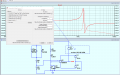
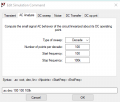
Looking at this marked up image, you can see it AC1 injects a 1Vac test sweep voltage into the feedback loop.
The .ac dec 100 100 100k sets this sweep to start100Hz, stop 100kHz at a 100 sampling rate
The frequency response of the circuit is plotted, Gain versus Frequency
hi nath,
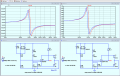
For comparison of the LM741 and AD8030 OPA's.
Note, I have stepped the value of R1 and R2 from 10k to 10k5, in order to show the effect on the frequency.

 Facebook
 Google
 GitHub
 Linkedin