Given the quite extreme complexity of the major computer system in even a minimal smartphone, even if any of us were given all of the parts and the instructions I would wager that even the best of us could not assemble it so that it worked.
And how are you going to assign an IP address to an analog device?
Do you even understand what it means to have an IP address or what it means to be an analog device.
This is akin to asking how to take the fifty year-old flashlight from your grandad's and assigning an IP address to it. Can't be two hard, right? You just need a unique address for each bulb, right?
Now, if you want to have an interface box that you plug your old analog set into and that, in turn, is connected to the Internet and provides VoIP functionality -- those devices have been around for decades. But that doesn't make the analog phone a VoIP phone -- it's still an analog phone.
It already has an IP address, but in its era, it wasn't called an IP address. It was called a "telephone number" and just like an IP address it consists of several parts - a country code, an area code and a telephone number, the telephone number being applied at the telephone exchange.
Yes, but it would be more accurate to say the phone socket on the wall has that, not the phone itself. So, it is still what the phone plugs into that is the device with the address.
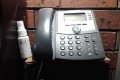
I use the VOIP gateway like in post #5, as well as an SPA3102 VOIP gateway and number of SPA942 VOIP phones on my home exchange.
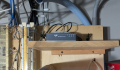
There is something called an analog terminal adapter (ATA). It provides an Ethernet port (or/or uses Wi-Fi) on one side and a foreign exchange station (FXS) port on the other. [Some also include a foreign exchange office (FXO) port to allow a connection to the public switched telephone network (PSTN)—that to provide plain old telephone service (POTS)].
The Ethernet/Wi-Fi is connected to a network that can reach the VoIP system the ATA will connect to. This could be the LAN, or the Internet depending on needs. The analog terminal (e.g.: analog phone, fax machine, modem, &c.) is plugged into the FXS port on the ATA.
The FXS port provides all of the voltages and signals—talk power, dial tone, ringing and all the other call progress sounds—that would normally be coming from the PSTN CO (Central Office). The ATA is configured to register with the VoIP system. The analog set can be used as normal.
The FXO port (if present) provides access to the PSTN through a POTS line and allows for using both POTS and VoIP through touchtone selection on the phone, or passing calls through from either automatically. It can also be used as a backup to VoIP. A good ATA ”fails safe”—that is, should power be lost it drops to PSTN automatically.
It is common (in the US) to take an ATA and backfeed the analog phone system from the network interface. This provides single number service like the usual household arrangement with no changes to anything except configuring the ATA and unplugging the POTS/plugging in the FXS port.
ATAs range considerably in cost but can be found for as cheap as 20 buck of a single line (though these are becoming rare—a shame, I like them) to about 35 bucks for a 4-line version, to much more depending on the manufacturer.
Certainly "Y" is correct about ADAPTERS that can connect an analog technology phone. But that is quite different from CONVERTING a phone into something that it is not! THAT requires the internal addition of all the required stuff.
I can connect my old analog phone to a ham transceiver and talk all over the globe without using any infrastructure, (when conditions are right.) But that is not converting the phone. Likewise, adding a string of modules is not "converting the phone.
So at this point it certainly does get down to "how are you going to assign an IP address to an analog device?"
Do you even understand what it means to have an IP address or what it means to be an analog device?
Of course, "Everything is simple when you don't understand how things work. "
Certainly "Y" is correct about ADAPTERS that can connect an analog technology phone. But that is quite different from CONVERTING a phone into something that it is not! THAT requires the internal addition of all the required stuff.
I can connect my old analog phone to a ham transceiver and talk all over the globe without using any infrastructure, (when conditions are right.) But that is not converting the phone. Likewise, adding a string of modules is not "converting the phone.
So at this point it certainly does get down to "how are you going to assign an IP address to an analog device?"
Do you even understand what it means to have an IP address or what it means to be an analog device?
Of course, "Everything is simple when you don't understand how things work. "
The ATA is the correct method of making connection to a VoIP system using an analog set. The contents of the single line ATA are not very large and could be made compact enough to fit in a typical DM2500 desk set—but why bother? Running the ATA outside the phone is easy enough.
Some analog sets are special purpose and it is worth making them work. For example, phones that were set up for ring down, that is, “hotline” service (pick up the phone and it rings a fixed remote number automatically); ruggedized or specialized phones that are very expensive and don’t have a digital equivalent; and households switching to VoIP but already wired for POTS.
The latter can be moved to newer sets that can connect wirelessly but that can be expensive and takes time.
Please suggest me an affordable microphone and Speaker for my project. No audio clarity required as it will not be the same at the end of the project. (I will replace with High-End Microphone and Speakers later)
The difference between an analog telephone and a digital phone intended for VoIP are profound. The fact that they both have a handset with a speaker and a microphone and some way to dial might fool one into thinking they are just variations of one thing. This would be an extreme misapprehension.
Aside from the ultimate purpose of being a way to make or take a phone call, Let’s take the analog set first.
An analog phone intended to be a terminal on a POTS line has X major components:
The reciever (speaker) in the handset
The transmitter (microphone) also in the handset
The TTP (Touch Tone Pad) for dialing and signaling
The switch hook to allow the phone to be picked up and hung up
These four things it shares with the digital set but the fifth component—the hybrid—is unique to, and only useful to to, the analog terminal. It is a network of components that allows both the outgoing audio to happen on the same two wires as the incoming audio at the same time.
It also provides “side tone”, a small amount of the outgoing audio in the receiver so the user gets enough feedback to be able to talk when there is sound coming from the other end. All in all it is a very robust, mature, and clever solution to terminating a two wire circuit while supporting a two-way full-duplex conversation.
A POTS call goes something like this:
Before the call, both analog terminals are connected to their respective POTS lines. Each is seeing ~48V DC in the on-hook state. This voltage is coming from each respective central office (CO) in which there is a large amount of switch gear collectively called the “phone switch” or “central office”/“CO”. Though the lack of capacity forced the use of multiplexers (also called muxes) to put more than one numbered line on a single pair that terminated in the CO, the basic idea is that every terminal (telephone) that could be called with a unique number has a pair of wires that start from the set and end in the CO.
Ignoring digital subscriber line (DSL), the only thing that goes on that wire are voltages DC and AC power and audio signals. Power only comes from the CO as do audio call progress signals—ringing, busy, reorder, and the like—and audio from the remote party in a call.
To start, the party making the call lifts the receiver from the switch hook. This closes a circuit connecting the hybird in a low impedance state and dropping the ~48V DC to ~5 to 12V. This is sensed at the CO and the subscriber pair is switched to connect to equipment that can accept dialing. Once this is done, the CO sends dial tone to the subscriber (a pair of tones—440Hz and 350Hz—which is a signal the CO is ready to accept the call.
Ignoring rotary dialing (and I am glossing over a lot of details but it isn’t anything important to understanding the basics), the subscriber then dials the number using the TTP. The CO gear decodes the DTMF (dual tone multiple frequency) signaling it produces and magically (as far as we know right now) routes the call to the remote CO that has the called party’s subscriber pair in it.
The called CO first checks if called line is engaged. If it is, either the called CO signals the calling CO (out of band, and digitally) that this is the case. and drops the routed line. The calling CO then sends the calling subscriber a busy signal (in NA a combination of 480Hz and 620Hz at 1Hz intervals with a 50% duty cycle.), or, the called CO sends the busy on the connected line to the calling subscriber.
If the line is not busy, the called CO connects to the pair and sends a ringing signal (~90VAC at 20Hz) to the subscriber. This causes the phones at the subscriber premises connected to the line to ring. If the subscriber picks up a handset, just like the calling party the 48VDC drops to ~5V to 12V DC and sensing it, the CO’s call management gear drops out to allow the call to begin.
When either end hangs up, the 5V to 12V jumps back up to 48V signalling the CO to terminate the connection to the remote route. Each end is independent, which is why you can hear someone hang up and sometimes even find them back on the line if they pick up soon enough.
So you see, the analog terminal is about as dumb as it gets. The CO does all the heavy lifting providing all the signals and intelligence to handle the call. The analog terminal is only a speaker, microphone, hook switch, and the important hybrid but it is purely an extension of the CO.
Now, a VoIP call…
I am not going to go into as much detail, just enough to show how different it is. You might think of a digital terminal as a smartphone and an analog terminal as set of earbuds. It‘s about like that.
A VoIP phone is most of a CO and everything important about a POTS phone combined. For our purposes, we are going to assume the phone is using SIP (Session Initiation Protocol) which is almost certain. When the digital phone is powered up, it will attempt to register with the VoIP switch it is configured to use. It does this using TCP/IP and can either be talking to premises equipment on the LAN or to a switch out on the Internet.
Once connected, the VoIP switch knows that any calls to that subscriber need to be routed to the IP address it registered with. It also knows to send any signaling (such as voicemail indication, presence, or instant messaging to that phone).
I’ll pause here for an aside to say that this could be a soft phone, that is, a program running on a desktop, laptop, tablet, or smartphone as easily as hardware on a desk or wall somewhere.
So, briefly, the calling party wants to initiate a call. Lifting the handset the phone produces a dial tone to signal it is ready for input. The person calling dials and the phone collects the digits, interpreting them according to a dial plan. The dial plan tells the phone if it needs to prefix, append, or remove numbers from the dialed number before sending the data to the VoIP switch which will handle call origination. Once the called number is set, the phone signals the switch via the SIP protocol and waits for a response.
If the remote party is engaged, the switch notifies the phone which produces the busy signal for the user. If not, the phones are connected via the network for the call. Hanging up will terminate the call and signal the phone will signal the switch about the on-hook condition.
This is much too long, but it should be enough to show that you are asking something akin to “how do I convert this ear bubs into a smartphone”.
Please suggest me an affordable microphone and Speaker for my project. No audio clarity required as it will not be the same at the end of the project. (I will replace with High-End Microphone and Speakers later)

 Facebook
 Google
 GitHub
 Linkedin