Facebook
 Google
 GitHub
 Linkedin
I have an ABS plastic pipe. It is .920" in diameter and is 1.250" long. At one end there is a thru hole going thru the two walls of the pipe. It is .094" dia. I need to insert a .915" long pin in this .094" hole but I don't know how I can roll the tube to be in the right position for the pin to be inserted. The part would slowly rotate and 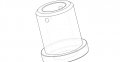 I would like a sensor that would send a ray of light that would go thru the .094 hole to a receiver that would indicate when the tube is in the exact position for a pin to be inserted. If one thought of the part as the face of a watch, the pin would go through the pipe from the 12 o'clock position to the 6 o'clock position. If the pipe was at the 11:55 position the sensor would find the part is NOT in the proper position and would cause the part to rotate until it is at the 12 o'clock position. Part would stop and the pin would be inserted.
Does anyone have an idea of what type of sensor I might use?
Thank you,
Rudy
I would like a sensor that would send a ray of light that would go thru the .094 hole to a receiver that would indicate when the tube is in the exact position for a pin to be inserted. If one thought of the part as the face of a watch, the pin would go through the pipe from the 12 o'clock position to the 6 o'clock position. If the pipe was at the 11:55 position the sensor would find the part is NOT in the proper position and would cause the part to rotate until it is at the 12 o'clock position. Part would stop and the pin would be inserted. Does anyone have an idea of what type of sensor I might use?
Thank you,
Rudy