Facebook
 Google
 GitHub
 Linkedin
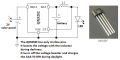
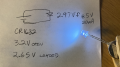
I had several 2032's that were past their usefulness. I wanted to toss them into my recycle bin but didn't want a fire. So I decided to throw the 2032's and LED's together. No resistors, just let the batteries power the LED's directly. One 2032 and one LED. These already weakened batteries lit those LED's for weeks. As their voltage diminished the brightness went down.
As others have already said - you don't need a resistor with an LED when powered from a single CR2032. Now, I can't speak to three 2032's in series. Still, it's likely you won't need a resistor in circuit. But your assumption is correct that it's the correct approach to have a single LED with a single resistor when designing multiple lit LED's. Any time your power source can exceed 20mA - you're going to need a resistor to drop some voltage. Remember, current is the dividend of voltage divided by resistance. ( I = E/R).
But you don't need to concern yourself with the 2032's.
As others have already said - you don't need a resistor with an LED when powered from a single CR2032. Now, I can't speak to three 2032's in series. Still, it's likely you won't need a resistor in circuit. But your assumption is correct that it's the correct approach to have a single LED with a single resistor when designing multiple lit LED's. Any time your power source can exceed 20mA - you're going to need a resistor to drop some voltage. Remember, current is the dividend of voltage divided by resistance. ( I = E/R).
But you don't need to concern yourself with the 2032's.