What is the difference between display module and display panel? what the module did actually?

Thread Starter

fadhilfirdausi

Joined Jul 14, 2026
4
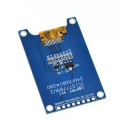
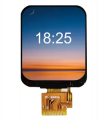
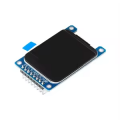
Hi, I wonder what actually the board on a display module did? Previously I thought the module has the ST7789 chip and it drives the panel. But when I look into the display panel itself, it already has the ST7789 chip. The only difference is the module has 8 header pin SPI, while the panel has 12 pin. So what did the panel actually?

and is it possible to connect the display panel directly to ESP32 S3 without the module? because I'm making a product and want to use the ribbon cable instead of header pin to connect the display and the ESP32.
1790850823099.png1790850840147.png1790850848122.png
 

Thread Starter

fadhilfirdausi

Joined Jul 14, 2026
4
Really hard to say anything from just photos of some random stuff.
Post links and / or part numbers / data sheets if you want a meaningful answer.
this is on of the link for the display module
https://www.amazon.de/-/en/Gerui-Pa...790855140&sprefix=display+1.69,aps,141&sr=8-2

and this is the panel
https://www.alibaba.com/product-detail/1-69inch-lcd-display-240X280-TFT_1600288423177.html

i don't have any part number since it is a generic 1.69 inch display 240x280px
the display panel is the same for both, the only difference one come with pcb module, one only the panel
 
Generic question , generic answer
There is no definition of the difference.
The English language is great !.

In essence. Panels can have many different interfaces , meaning the interface to say a MCU is fairly low level and specific
Modules , tend to have a display panel , and an interface chip . The idea is the interface chip provides an interface for an external MCU ,but the same interface is used for many different panels / shape / size
Thus one external MCU bit of SW can interface to many different types of display without change .

Abstract example.
You have a usb hard drive.
You plug it in , it works .
On the hard drive is a chip that interfaces usb to the actual drive .
Thus one usb driver on the pc can interface to many different types of drive..
 

panic mode

Joined Oct 10, 2011
5,285
of course there is a difference...

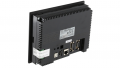
"display panel" is a complete - finished product (complete with enclosure, ready to use as is). an example of that is a TV or computer monitor or industrial HMI / panel PC or commercial marquee displays etc. in a finished product you do not see PCB exposed. just unbox it, install batteries or plug into mains and voila - it runs. this is a back side of display panel. no PCB or contacts exposed. inside it are several modules.
1790865131196.png

"module" is something that is a partial assembly - but not a complete product on its own, it is a component meant to be integrated into something larger (an actual full product).


component is smallest individual part. like discrete IC, resistor etc. they are used to build modules.

so panel is more than module, and module is more than bare component (LCD). but people trying to make a sale will always try to make things sound better than they are. this includes stretching the descriptions.
 
Last edited:

panic mode

Joined Oct 10, 2011
5,285
the first link shows module (an assembly) consisting of
a) LCD display (with FPC ribbon cable) and
b) carrier board that has voltage regulator, bypass capacitors and sometimes (depends on product) solder jumpers to choose type of interface (I2C vs. SPI). board also acts as an adapter FPC to pin header.

the second link is just a component "a" (a bare LCD display with FPC cable). both can be interfaced directly if you pay attention to pinouts, voltages, bypass capacitor requirements. same software driver is used.

Note: ribbon cables are fragile and need to be handled carefully. if you use the bare LCD display (without PCB), you need to:
a) have FPC connector on your board
b) have LCD screen glued/cemented to some surface (perhaps your PCB) since it has no mounting holes or features. this means that in case of a failure, it is harder to replace. also this limits how and where LCD can be placed.

and that is the reason most people go for module (first link you shared) rather than bare LCD screen (one you call panel). module is easy to mount and place anywhere, regardless where your circuit board is, easy to replace, you don't have to worry about soldering of fine pitch connector or bunch of capacitors, you don't have to to worry if the supply is 3.3V or 5V.

but if you are making your own product (microwave oven, fridge, IP phone, multimeter, whatever) and want tight integration, specially if space is limited, then choosing bare LCD display would make sense, specially if this is going to be made in volume. in that case may as well talk to LCD manufacturer to customize it for you (for example ribbon cable shaped to fit your product, custom part number etc).
 
Last edited:
Top