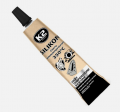
What can I use to secure capacitors in a speaker from vibrations?

Thread Starter

Bassquake

Joined Feb 16, 2018
97
Recently repaired a soundbar by replacing capacitors. Looking to put something on the caps to stop them rattling around. They were originally held by some orange glue like substance thats gone a bit brittle.

Needs to be fairly heatproof too as power unit is in there too so might get a bit warm.

Maybe silicone sealant used in bathrooms like the attached photo (I can't tell if its the acidic type)? Or hot glue? Or epoxy resin?

Or is there an electronics specific type I should look for?
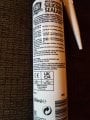
20241217_184857.jpg
 
Last edited:

nsaspook

Joined Aug 27, 2009
16,251
Bit expensive in the uk. Almost 3x the price!

Could this be an alternative? https://www.ebay.co.uk/itm/154935809739

View attachment 338220
Don't know, that's an automotive product for things like gaskets. YMMV as they say.
MIL-A-46106, Type I
is a specification for a product designed for applications like securing electronic parts from vibration, among other things. If you use a product that meets that spec, it most likely will work to your satisfaction.
 

KeithWalker

Joined Jul 10, 2017
3,603
I do not recommend the use of silicon sealants and adhesives on electronic circuit boards. Acetic acid is produced during the curing stages. This can cause corrosion of metals and can conduct electricity.
Hot glue is an inexpensive, reliable and simple way to fasten large components to a circuit board.
 

Thread Starter

Bassquake

Joined Feb 16, 2018
97
I do not recommend the use of silicon sealants and adhesives on electronic circuit boards. Acetic acid is produced during the curing stages. This can cause corrosion of metals and can conduct electricity.
Hot glue is an inexpensive, reliable and simple way to fasten large components to a circuit board.
Apparently neutral cure sealant are the ones that dont produce acetic acid. Dont know how well it works in warm enclosures though.
 

Thread Starter

Bassquake

Joined Feb 16, 2018
97
I do not recommend the use of silicon sealants and adhesives on electronic circuit boards. Acetic acid is produced during the curing stages. This can cause corrosion of metals and can conduct electricity.
Hot glue is an inexpensive, reliable and simple way to fasten large components to a circuit board.
Ill probably end up using a high melt hot glue.
 

MisterBill2

Joined Jan 23, 2018
27,186
Worse than the acid effect is the problem that the silicone stuff will flex, and so the leads will still flex and eventually fail, but nothing will show.
Use that nasty smelling liquid contact cement, similar in consistency to the original goop. When it sets and becomes fairly stiff, nothing will move. Cheaper, too.
 

olphart

Joined Sep 22, 2012
124
How about a series of zipties: One (or two) around the cap, (each) trapping two others that loop out to screws.
Adhesives are fine, until you need to disassemble. Both are valid methods.
Hot melt doesn't do well on nonporous surfaces. They'll do fine unless hit or vibrated, but easily reheated and reused.
 

Thread Starter

Bassquake

Joined Feb 16, 2018
97
How about a series of zipties: One (or two) around the cap, (each) trapping two others that loop out to screws.
Adhesives are fine, until you need to disassemble. Both are valid methods.
Hot melt doesn't do well on nonporous surfaces. They'll do fine unless hit or vibrated, but easily reheated and reused.
The caps are too small and close together to be zip tied but a good idea for the larger ones. Ended up using hot glue in the end.
 

MisterBill2

Joined Jan 23, 2018
27,186
Zip ties are not generally able to anchor anything to the PCB. AND, if the capacitors to be anchored are not already snug against each other, zip-ty bundling will place a stress on the leads that will certainly lead to failure, probably not immediate failure, but certainly much sooner than later.
 
Top