A bit of context would be really helpful, as it could mean lots of different things, even if we assume you are talking about the things normally talked about here.
Overload
Open Loop
Out of Limits
Ordered List
Overhead Line
and so on...
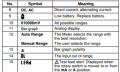
You can think of it as either "overload" or "over limit". It basically means that what you are trying to measure is beyond the capabilities of the range you have selected.
So if you are on a 2 V voltage range and try to measure 3 V, it will show OL.
For more information, refer to the owner's manual for your DMM.
There is some controversy about the meaning of “OL” in the case of a DMM display.
I always understood to to mean “overload” and the manual for my Fluke meters specifically state that to be the meaning while my Siglent meter actually displays “overload” instead of OL.
No Idea!, I assume it stands for Over Limit?
This displays when on the Ohms or Diode range and the leads are either open or the subject being tested is actually open.
Tricky to make a good "R" on 7-segment displays.
As Flukes are all auto-ranging, then the only time it shows up is on the resistance range, when the resistance between the probes is too high for it to measure. I suppose it could possibly say "OC" open circuit, though to be pedantic, I suppose that there are resistances that are not "open circuit" but are too high for a Fluke to measure.
If you are talking about measuring the "resistance" of a capacitor, then you are not discharging it, you are charging it. How most ohmmeters work is by applying a voltage to the resistor and measuring the resistance (or applying a current and measuring the voltage). In either case, the capacitor will initially look like a short-circuit (0 Ω) when it is fully discharged and eventually look like an open circuit when it is charged.
i am measuring sg60n03p. and after capacitance discharged with Red on D and Black on S i see OL. after put positive to gate for a second and after that bring back to D i see 195.this in diode testing mode. is the item faulty?

 Facebook
 Google
 GitHub
 Linkedin