Water heater leak detector.

Thread Starter

RichardO

Joined May 4, 2013
2,270
I built this leak detector for my water heater years ago. The good news is that it works. The bad news is that it works.

It finally sounded. Now I have to replace the water heater. :( Much better now than after it has done a lot of damage leaking. :)
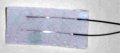
The circuit is very simple. Just a small MOS-FET and a sensor that conducts when exposed to a drip of water.
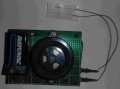
I chose an alarm that is very loud and pulsates to make sure it would be heard. The alarm and several sensors can easily be made in an hour or two.

I hope this will work for others here on the forum.
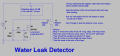
upload_2017-12-3_14-9-49.pngAAC_Leak_Detector.JPG AAC_Leak_Detector_Snesor.JPG
 

dl324

Joined Mar 30, 2015
18,220
My water heater came with a leak detector. It's WiFi enabled and can send a leak detection alert to my smartphone.

The one it replaced also had a leak detector. Water caused a short that melted the thermostat and it was emitting an awful smell. Fortunately we were home and got power and water shut off before it burned down the house.

It took a long time to get the stink out of the area. Now I have a smoke detector installed in the water heater "room"...
 

wayneh

Joined Sep 9, 2010
18,087
I built this leak detector for my water heater years ago. The good news is that it works. The bad news is that it works.

It finally sounded. Now I have to replace the water heater. :( Much better now than after it has done a lot of damage leaking. :)
The circuit is very simple. Just a small MOS-FET and a sensor that conducts when exposed to a drip of water.
I chose an alarm that is very loud and pulsates to make sure it would be heard. The alarm and several sensors can easily be made in an hour or two.

I hope this will work for others here on the forum.
Nice!

Do you have a pan under the heater, or just floor?

Also, I’d make certain that the water didn’t come from the blow-off valve. When the heater scales over with lime scale, the water will boil before the heat gets through to the thermostat, and this will pop the valve to release the pressure. You don’t need a new one, you just need to clean it out.
 

Thread Starter

RichardO

Joined May 4, 2013
2,270
Do you have a pan under the heater, or just floor?

Also, I’d make certain that the water didn’t come from the blow-off valve. When the heater scales over with lime scale, the water will boil before the heat gets through to the thermostat, and this will pop the valve to release the pressure. You don’t need a new one, you just need to clean it out.
Just the floor in a dark corner of the "furnace room" in the basement.

I don't think the water came from he valve. It is in the front of the water and the moisture is at the back. I will double check to be sure.

The leak seems to be slow. Just enough to keep the concrete moist. How long do you think I have before Niagra Falls happens?
 

dl324

Joined Mar 30, 2015
18,220
The leak seems to be slow. Just enough to keep the concrete moist. How long do you think I have before Niagra Falls happens?
Have you determined what's leaking?

I had a slow leak that was making the concrete moist and occasionally pooling. I thought it was the tank, but it was actually a corroded hose fitting on the water tank outlet. Water eventually made it inside the water heater and caused an electrical short.

If I had noticed where the water was coming from, I might have saved a 40 year old water heater by changing the outlet hose.
 

Thread Starter

RichardO

Joined May 4, 2013
2,270
Have you determined what's leaking?

I had a slow leak that was making the concrete moist and occasionally pooling. I thought it was the tank, but it was actually a corroded hose fitting on the water tank outlet. Water eventually made it inside the water heater and caused an electrical short.

If I had noticed where the water was coming from, I might have saved a 40 year old water heater by changing the outlet hose.
It is hard to tell for sure where the water is coming from. There seems to be a lot of corrosion on the bottom edge of the tank. It is time for me to get a real bright light and do a thorough inspection.
 

PGB1

Joined Jan 15, 2013
149
Thanks for posting your schematic & instructions, Richard O. Somehow making one's own detector is far more satisfying than buying one off the shelf, especially for amateurs like me!

You mentioned smoke from your heater, dl324. If you have any gas fueled appliances (water heater, furnace, etc.), it may also be wise to install a carbon monoxide detector, either in the room with the appliance or in the living area of the house- preferably both. They can be life savers if the gas fired appliances can't vent due to a blocked flue. Birds that land at the chimney's exit to keep warm can fall in when they breathe carbon monoxide, fall asleep. Inside, they die & block the flue gasses. It has happened more than once at my home. We have so many maple trees that a chimney cap didn't work. It often got blocked by leaves, thus blocking flue gasses from exiting.

Enjoy This Day!
Paul
 
Top