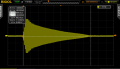
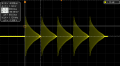
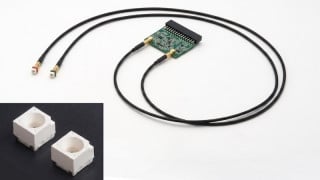
I'll just post the emulator code here. The folder has the code, schematic, and a cute picture. My code is only for the 5-bit DAC of the 12F1xxx. The 10-bit stuff I posted was from the other contributor (See: link therein). I believe he was using the AMS emulator that comes with the AS3935 evaluation board. I don't believe that code is available, or I would have know what the pattern(s) are.
I had done a fair bit of experimenting to copy published lightning patterns, including pre-strike sizzle and post-strike "late peaks." I did not like the reproducibility they gave for producing "strikes" and distance versus disturber. When I saw how simple the device manufacturer's pattern was, it was a simple matter to duplicate it (labeled "complex" in my code) and my results were much more reproducible. Not sure this will be of any help, but since you asked, it is no great secret.
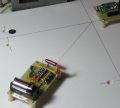
EDIT: Sorry, the picture doesn't include the op-amp that I added later as a buffer. Don't have a picture of that board. It is fitted between the PIC and the mosfet boards.
EDIT#2: added a picture with the op-amp enabled emulator (lower left) and receiver (upper right).

 Facebook
 Google
 GitHub
 Linkedin