Voltage sensing in a circuit

Thread Starter

Emma10

Joined Dec 9, 2024
9
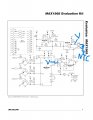
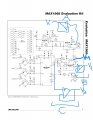
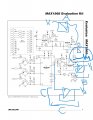
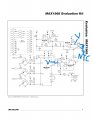
I have two sense two voltage which can vary from 0 - 1.5V maximum which i will send to microcontroller for display. One figure describe problem Second figure describe potential solutions in following figures :-
1) Voltage between 10Kohm and thermistor NTC . I think of only one option using the Voltage buffer than. Please tell if you have any other idea than voltage buffer to sense voltage. Which opam i should use for high accuracy. Also resistor should be use in feedback loop?
2) Set point voltage. I think of three options B,C,D. B, C option use voltage buffer while in option d we sense voltage directly. Please tell if you have any other idea than voltage buffer to sense voltage. Which opam i should use for high accuracy in B or C. Also resistor should be use in feedback loop?
 

Attachments

ericgibbs

Joined Jan 29, 2010
21,390
1) Voltage between 10Kohm and thermistor NTC . I think of only one option using the Voltage buffer than. Please tell if you have any other idea than voltage buffer to sense voltage. Which opam i should use for high accuracy. Also resistor should be use in feedback loop?
hi emma,
What is the specification of your thermistor?
An OPA is recommended to reduce offset and amplify the signal.
E

Where is C & D on that second image?
 

Thread Starter

Emma10

Joined Dec 9, 2024
9
Thanks for response, OPA means opam. C means using voltage buffer directly at set point that lead to two parallel voltage buffer, D means direct sending voltage to microprocessor as without using additional buffer. Only one option should use from B/C/D i think D is better as it don't need any additional component and voltage buffer will keep voltage constant at its output no matter how many output we take. In this case it will become 3 output if we use option. Parameters of NTC are-
NTC T010kOhm @25°C
NTC B25/503950K

I will send them to ardiino and convert them to set voltage become set temperature and voltage at junction of Thermistor and 10Kohm will be converted to actual temp in LCD display
 

Attachments

Ian0

Joined Aug 7, 2020
13,097
I would suggest connecting the thermistor between the input and ground, and a pull-up resistor between the input and the same supply that the A/D converter runs off, no op-amp. The impedance is low enough for a microcontroller A/D to measure it, and the op-amp will only add offset errors.
To get the best accuracy, choose the pullup resistor to be the same as the resistance of the thermistor at the temperature that is of most interest, or the centre of the range of temperatures which of of the most interest.
 

Thread Starter

Emma10

Joined Dec 9, 2024
9
NTC resistor is attached to Peltier cooler far away from controller circuit. SO according to you D is good option betweenB/C/D, there direct measurement is ok. But i think opam needed for A.
 

Attachments

ericgibbs

Joined Jan 29, 2010
21,390
hi Emma,
If you use a 10k series resistor with a thermistor having a 10k resistance at 25Cdeg, the voltage at the resistor, thermistor junction, if powered by a 5V supply will be +2.5V.
I use an OPA [opam] to remove most of that Voffset and also to amplify the dynamic voltage change due to a temperature change.
In that way with the thermistor sensor being in the high side of the resistor, as the temperature of the thermistor increases it's resistance will fall which will result in the ADC voltage rising so being the same polarity as the temperature change.

Please say what temperature range your project is expected to work.? And the accuracy.

I expect you know that the change in resistance of the thermistor versus temperature is not linear??

Your microprogram will have to correct for the non-linearity.

NTC resistor is attached to Peltier cooler far away from controller circuit.
How far, and what is the cable resistance?

E
 

MrAl

Joined Jun 17, 2014
13,667
I have two sense two voltage which can vary from 0 - 1.5V maximum which i will send to microcontroller for display. One figure describe problem Second figure describe potential solutions in following figures :-
1) Voltage between 10Kohm and thermistor NTC . I think of only one option using the Voltage buffer than. Please tell if you have any other idea than voltage buffer to sense voltage. Which opam i should use for high accuracy. Also resistor should be use in feedback loop?
2) Set point voltage. I think of three options B,C,D. B, C option use voltage buffer while in option d we sense voltage directly. Please tell if you have any other idea than voltage buffer to sense voltage. Which opam i should use for high accuracy in B or C. Also resistor should be use in feedback loop?
Hello there,

Most microcontrollers can measure voltage directly as long as the impedance is below about 10k, but better would be 5k and even better 1k. The higher the impedance, the more drift with temperature although it may not be much in your application.

If you do need an op amp, then look for the very low input offset types. They have less bandwidth but are used mostly for measuring DC voltages. You can get them with extremely low input offset these days. 2mv input offset would be considered large if you need high gain, but if you need only low gain then that may not matter either and then you can use a general purpose op amp like the LM358. Just check out the effect of the input offset before you choose.

As Eric has mentioned, you also need to correct for the nonlinearity of the thermistor. You can do that with a lookup table with interpolation, but because the characteristics of a thermistor are well known you can program in a function to convert measurements to actual temperature readings. The thermistor should be at least a 1 percent device. If you need super accurate measurements, then you would need to calibrate each and every unit built one by one. This would require a temperature controlled oven but you could actually build a simple one yourself for temperatures up to about 100 degrees C. For the lower temperature calibration, an ice bath is usually used.
 

Ian0

Joined Aug 7, 2020
13,097
I would definitely recommend connecting the thermistor between ground and input, and using a pull-up resistor to 5V. If you connect the thermistor between input and 5V, you are exporting the 5V supply some considerable distance and you would have to fuse it or otherwise protect it against shorts to earth.
It makes little difference to the look up table which way round it is.
Read up on the Steinhart Hart equation for thermistors. There is a useful calculator here.
 

crutschow

Joined Mar 14, 2008
38,316
If you use the thermistor as the feedback resistor of an op amp, then the output voltage will be a linear function of the thermistor resistance, (since it applies a constant current to the thermistor), so you don't have to compensate for the non-linear response of just a resistor in series with the thermistor.
That also means the thermistor doesn't need a power source or circuit common at its location, just two wires to the thermistor.
(Example circuit below):

Of course you should use a shielded twisted-pair wire from the thermistor to the op amp if you do that.
(The op amp shown is a low cost, CMOS device with low input offset voltage).

1742921136558.png
 
Last edited:

MrAl

Joined Jun 17, 2014
13,667
If you use the thermistor as the feedback resistor of an op amp, then the output voltage will be a linear function of the thermistor resistance, (since it applies a constant current to the thermistor), so you don't have to compensate for the non-linear response of just a resistor in series with the thermistor.
That also means the thermistor doesn't need a power source or circuit common at its location, just two wires to the thermistor.
(Example circuit below):

Of course you should use a shielded twisted-pair wire from the thermistor to the op amp if you do that.
(The op amp shown is a low cost, CMOS device with low input offset voltage).

View attachment 345340
Hi,

That's probably not a bad idea, but don't you still have to compensate for the logarithmic response of the thermistor itself? This makes me wonder if adding an op amp would be cost burden unless there happened to be one op amp section not being used already.
I do happen to like that it would expand the entire measurement range which should increase the resolution to some degree.
Maybe we can calculate a few examples.
 

Ian0

Joined Aug 7, 2020
13,097
The simplest solution (pullup resistor) tends to expand the scale around the values where the thermistor resistance is similar to the pull-up resistance and compress it elsewhere. Attempts to linearise it electronically are futile. If you need it linear in voltage, forget the NTC thermistor and use a PT100 sensor.
 
Top