Voltage display without loading the circuit

Thread Starter

keval.desai

Joined Jun 1, 2018
15
I am working on a project where I need to display the voltage that is present on one pin without drawing current from the rest of the circuit.
I want to measure the voltage from one point of the fuse and display it on the screen.
 

dl324

Joined Mar 30, 2015
18,326
Welcome to AAC!

What screen? Show us the circuit you're measuring the voltage from so we can consider any loading issues. What bounds are you imposing on solution space?
 

Thread Starter

keval.desai

Joined Jun 1, 2018
15
I have to send the voltage signal to the microcontroller and the microcontroller will display the voltage.
All I need to do is measure the voltage from one end of the fuse.
 

ebeowulf17

Joined Aug 12, 2014
3,307
I have to send the voltage signal to the microcontroller and the microcontroller will display the voltage.
All I need to do is measure the voltage from one end of the fuse.
You've gotta give us more info!

What kind of voltages? 5V, 12v, 120V...

AC or DC?

Current flowing through the fuse?

If you're unsure about these things, even just the fuse ratings would be a step in the right direction!
 

Thread Starter

keval.desai

Joined Jun 1, 2018
15
I have to test for 250mA,350mA,375mA,500mA,600mA,750mA and 1A fuses.
So, the source (max. voltage=115V) is connected to one point of the fuse and a DUT is connected to the other point.
The fuse is connected to a differential amplifier which gives the voltage across the fuse as output and gives the current flowing through the DUT.
If the fuse is blown, the point at which the DUT is connected will give 0V. So I want to measure the voltage at the point where the DUT is connected in order to determine whether the fuse is blown or not.
 

crutschow

Joined Mar 14, 2008
38,504
So why are you worried about loading the circuit, since its a low impedance?

Use a diode and capacitor to rectify and filter the voltage at the fuse output with a resistive divider to reduce the voltage to the microcontroller.
You don't need a differential signal measurement, just measure the voltage at the fuse output to see if it's zero.
 

Alec_t

Joined Sep 17, 2013
15,118
A neon screwdriver placed on the DUT terminal would tell you if the fuse were faulty. Or do you need to log results?
 

Thread Starter

keval.desai

Joined Jun 1, 2018
15
I have two tasks in hand.
1) I have to calculate the voltage through the DUT which I calculate using a differential amplifier connected to the fuse.
2) I have to test whether the fuse is blown or not.

now, I have taken care of the first part. But I am afraid that in order to test the fuse, I might draw current from the DUT which will affect the voltage of DUT and will give me an erroneous voltage reading from the differential amplifier.
I need a circuit that draws negligible current (say suppose like a multi-meter) to calculate the voltage at the DUT part of the fuse in order to check the fuse.
 

crutschow

Joined Mar 14, 2008
38,504
1) I have to calculate the voltage through the DUT which I calculate using a differential amplifier connected to the fuse.
That calculates the current through the DUT, not the voltage.
But I am afraid that in order to test the fuse, I might draw current from the DUT which will affect the voltage of DUT and will give me an erroneous voltage reading from the differential amplifier.
That makes little sense to me.
What do you mean "draw current from the DUT"?
Does the DUT generate current?
What is the DUT?
What is an "erroneous reading"?
Aren't you only interested in whether the fuse has blown or not?
 

Thread Starter

keval.desai

Joined Jun 1, 2018
15
DUT does not generate current but the extra circuit that I need to use to calculate the voltage of the DUT might draw current that is flowing through the DUT. Which will affect the voltage reading on the differential amplifier.
 

ericgibbs

Joined Jan 29, 2010
21,440
hi keval,
What would the absolute minimum value of current drawn by the voltage monitoring circuit, that would be permissible in order to keep the DUT measurement acceptable as a meaningful test.?
E
 

ian field

Joined Oct 27, 2012
6,536
I have to send the voltage signal to the microcontroller and the microcontroller will display the voltage.
All I need to do is measure the voltage from one end of the fuse.
Anything with a fuse for protection won't be bothered much by current high input impedance measurement amplifiers.
 

ebeowulf17

Joined Aug 12, 2014
3,307
I tend to agree that actually measuring the voltage is overkill if you just need to find blown fuses - a simple threshold detection would suffice.

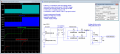
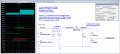
Nevertheless, if you assume the incoming AC voltage is a good sine wave (and therefore you can do Peak to RMS or average to RMS conversions,) you could use one of these two circuits to scale things down to Arduino 0-5V ADC levels. Each circuit draws very little current compared to the fuse values you're expecting to blow.

In both simulations, the AC voltage starts at 60VAC, then jumps to 120VAC, just to give an idea of the error levels and linearity. In each case, the output will be a DC voltage which then requires multiplication (and assumptions about how pure of a sine wave you've got) to arrive at approximate AC-RMS values.

voltmeter-high-impedance_02.png voltmeter-high-impedance_03.png
 

Attachments

Thread Starter

keval.desai

Joined Jun 1, 2018
15
Is this a school/college project?
This is a college project.


I tend to agree that actually measuring the voltage is overkill if you just need to find blown fuses - a simple threshold detection would suffice.

Nevertheless, if you assume the incoming AC voltage is a good sine wave (and therefore you can do Peak to RMS or average to RMS conversions,) you could use one of these two circuits to scale things down to Arduino 0-5V ADC levels. Each circuit draws very little current compared to the fuse values you're expecting to blow.

In both simulations, the AC voltage starts at 60VAC, then jumps to 120VAC, just to give an idea of the error levels and linearity. In each case, the output will be a DC voltage which then requires multiplication (and assumptions about how pure of a sine wave you've got) to arrive at approximate AC-RMS values.

View attachment 154799 View attachment 154800
I am sorry that I didn't mention the full details. The supply is a DC supply.

hi keval,
What would the absolute minimum value of current drawn by the voltage monitoring circuit, that would be permissible in order to keep the DUT measurement acceptable as a meaningful test.?
E
I would like to draw 0 current if that's possible. The voltage measuring/monitoring circuit should work just like a simple multi-meter (just measure the voltage value).
 

ebeowulf17

Joined Aug 12, 2014
3,307
This is a college project.


I am sorry that I didn't mention the full details. The supply is a DC supply.


I would like to draw 0 current if that's possible. The voltage measuring/monitoring circuit should work just like a simple multi-meter (just measure the voltage value).
Zero current is impossible. Accept that and we can move forward from there. The multimeters you keep referencing also don't have infinite input impedance. They also draw current.

If it's not AC, skip the transformer and bridge rectifier, and just use the voltage divider. In my example I've set total impedance of 10Meg, so you're looking at 0.015 mA of current at 115V.

How small of current do you actually need?
 

ebeowulf17

Joined Aug 12, 2014
3,307
Zero current is impossible. Accept that and we can move forward from there. The multimeters you keep referencing also don't have infinite input impedance. They also draw current.

If it's not AC, skip the transformer and bridge rectifier, and just use the voltage divider. In my example I've set total impedance of 10Meg, so you're looking at 0.015 mA of current at 115V.

How small of current do you actually need?
Oops! Should've been 0.0115mA (11.5uA) in my last post.
 

ebp

Joined Feb 8, 2018
2,332
You need to do some arithmetic to determine error. The voltage you will be sensing across a fuse will either be extremely low and subject to substantial error due to thermoelectric potentials because the current through it is extremely low, or a few microamperes of loading by the sensing circuits will be an exceedingly small fractional error. The uncertainty in initial resistance and temperature coefficient of the fuse will likely limit your actual accuracy to no better than a few percent, unless these factors are controlled for.

Are you using some sort of magical differential amplifier that has zero input bias current? It is no more difficult to get high input impedance with a simple op amp than it is with a differential amp.

Will the diff amp survive the voltage applied if the fuse blows? Unless it has input attenuation or you are using series resistance for current limiting (with implications for noise performance), the amp may well be destroyed if the input voltage exceeds either supply rail.

Many multimeters have input resistance of 10 megohms. The type of crude circuit you require could easily have an input impedance of 10 to 100 times that.
 

ebeowulf17

Joined Aug 12, 2014
3,307
Many multimeters have input resistance of 10 megohms. The type of crude circuit you require could easily have an input impedance of 10 to 100 times that.
Yup. I don't have the experience to know how high is too high in terms of input impedance affecting noise sensitivity, etc. but l did know that lots and lots of meters have 10Meg inputs, which is why I chose that as a starting point in my example circuit.

...Though the phrase "example circuit" is a stretch - now that l know it's DC, there's little more than a voltage divider there. Maybe a cap, diode(s) and resistor could be added for improved noise rejection and/or mcu input protection, but basically this is problem has a very simple solution.
 

ebp

Joined Feb 8, 2018
2,332
I think the TS needs to draw us at least a block diagram. After my post above, I thought maybe I had misinterpreted his intent, then looked at #5 and decided I hadn't, but I'm still not sure. And I still fear for his diff amp if he ever actually blows a fuse and needs his other circuit - IF I'm interpreting his description correctly.
 
Top