Using transistors to switch current limit resistor

Thread Starter

Fyod

Joined Jun 2, 2019
39
I'm designing a battery charge circuit which includes a USB sink detection IC and a Li-Ion charger IC.
The sink detector has three separate outputs - 1.5A capability detected (high if true), 3A capability detected (high if true), neither detected (low if true, charger not enabled).
The charger IC expects a current limit resistor on its ILIM pin or tied to ground for max limit.
I would like to take advantage of the 1.5A and 3A outputs to switch two resistors with a dual transistor package. Each resistor would be connected to ILIM on one side and to GND via series transistor.

Is this a viable design and can I use something like the BC847BS?
Sorry for the lack of schematic, I'll try to post a jot later on if necessary.
 

Irving

Joined Jan 30, 2016
4,996
You would be better off using MOSFETs rather than BJTs as they, when fully on, a purely resistive, whereas a BJT is inherently non-linear. What charger IC are you considering?
 

Alec_t

Joined Sep 17, 2013
15,103
What are the two resistor values? If they're very low then even the resistance of a fully switched on MOSFET might not be insignificant and would have to be taken into account.
 

Irving

Joined Jan 30, 2016
4,996
1.5A = 260R
3A = 190R

sense voltage = 0.8v so ILIM pin current max = 4.2mA

I'd use an analog switch eg MAX14759 (SPST, 1ohm max) to switch a 705R resistor in parallel with the 260R. That way no issues with it ever being o/c and the default is 1.5A, with a positive action for 3A. The tolerance on that 705 will easily absorb switch resistance.
 
Last edited:

Thread Starter

Fyod

Joined Jun 2, 2019
39
That sounds like a good idea. Is MAX17459 a typo? I can't find any info about that part number.
Edit: Found MAX4624EUT+T for example, but at around $4 it's a huge expense.
 
Last edited:

Irving

Joined Jan 30, 2016
4,996
That sounds like a good idea. Is MAX17459 a typo? I can't find any info about that part number.
Edit: Found MAX4624EUT+T for example, but at around $4 it's a huge expense.
MAX14759... doh, corrected above...

but its not cheap either $6.30 1 up at Mouser
 

Thread Starter

Fyod

Joined Jun 2, 2019
39
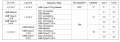
So I got to adding the switch to the circuit and discovered one flaw. I'd need to know the state of two of the outputs, not just one, because TCC0 is high not only in 3A mode, but also in default 500mA mode. TCC1 is similar in that it is high in both 1.5A and 3A mode.
I guess I could implement a DPDT switch as a sort of AND gate, but not sure if that's not adding too much complexity.

https://fscdn.rohm.com/en/products/databook/datasheet/ic/interface/usb_pd/bd91n01nux-e.pdf
 

Attachments

Irving

Joined Jan 30, 2016
4,996
Nothing so complex needed... just a little bit of old-fashioned diode logic!

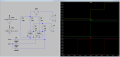
You need 2 SPST switches as before (S1,S2 below). R1 sets the 500mA charge current, R2 when switched in parallel to R1 by TCC1 going high while TCC0 is low sets the 1.5A and when both TCC1 and TCC0 are high R3 is switched in parallel to R1 || R2 to give the 3A charge rate.

1706197669152.png
 

DickCappels

Joined Aug 21, 2008
10,661
Check the datasheet for the particular `N4148's you plan to you. You will probably find that you need diodes with higher current ratings.
 

Irving

Joined Jan 30, 2016
4,996
Check the datasheet for the particular `N4148's you plan to you. You will probably find that you need diodes with higher current ratings.
Not for logic steering diodes. These don't handle charging current, just control the gating to the switches that adjust the charging regime.
 

Thread Starter

Fyod

Joined Jun 2, 2019
39
Thanks for taking the time to show the circuit, @Irving. It is very much appreciated.
I'll see if I can implement it into the design.
Btw: How did you choose the resistor values?
 
Last edited:
Top