Facebook
 Google
 GitHub
 Linkedin
Hi, first post, hopefully it's a good one... I'm having an interesting problem trying to use a FET to turn off a QSPI device and was hoping someone else might have some thoughts/inputs.
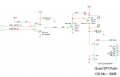
Schematic here: http://imgur.com/a/vXbDj
When I toggle the N-channel FET low, the P-channel FET should open and one would expect the QSPI to turn off. This wasn't working, I was still seeing ~3.3V on the VCC pin. I added a 4K7 pull-down resistor between VCC and GND on the QSPI (not shown in the SCH). That had almost no effect on the circuit, when the N-channel FET was toggled low, the voltage at VCC was still ~2.9V... Out of view on the SCH are 4K7 external pull-up resistors on the HOLD and WP pins of the QSPI. The QSPI also has internal pull-up resistors on those same 2 pins. As far as I can tell, the only possible explanation is the pull-up resistors on those 2 pins are holding the VCC high. With this in mind, I replaced the 4K7 resistor with a 51R. This results in ~1.5V measured at VCC; the circuit can now switch off the QSPI, but it's not a very elegant solution.
I have not yet contacted Cypress, but it seems very unlikely the pull-up resistors inside the device are really that strong. They would have to be around 50OHM which seems crazy strong.
Does anyone have any other ideas?
If I were to re-design the circuit, I'd likely invert the output of the AND gate and just use the N-channel FET, remove the P-channel FET entirely. Thoughts?
Thanks for any and all help.
Mods Edit:
Please upload the schematic to the forum.
Schematic here: http://imgur.com/a/vXbDj
When I toggle the N-channel FET low, the P-channel FET should open and one would expect the QSPI to turn off. This wasn't working, I was still seeing ~3.3V on the VCC pin. I added a 4K7 pull-down resistor between VCC and GND on the QSPI (not shown in the SCH). That had almost no effect on the circuit, when the N-channel FET was toggled low, the voltage at VCC was still ~2.9V... Out of view on the SCH are 4K7 external pull-up resistors on the HOLD and WP pins of the QSPI. The QSPI also has internal pull-up resistors on those same 2 pins. As far as I can tell, the only possible explanation is the pull-up resistors on those 2 pins are holding the VCC high. With this in mind, I replaced the 4K7 resistor with a 51R. This results in ~1.5V measured at VCC; the circuit can now switch off the QSPI, but it's not a very elegant solution.
I have not yet contacted Cypress, but it seems very unlikely the pull-up resistors inside the device are really that strong. They would have to be around 50OHM which seems crazy strong.
Does anyone have any other ideas?
If I were to re-design the circuit, I'd likely invert the output of the AND gate and just use the N-channel FET, remove the P-channel FET entirely. Thoughts?
Thanks for any and all help.
Mods Edit:
Please upload the schematic to the forum.