Using a MOSFET for ultra-simple switching.

Thread Starter

_gl

Joined Apr 19, 2011
3
I'm trying to find a suitable MOSFET to replace a simple manual switch, under microprocessor control.

The line I'm switching is at 2.46V (actually the remote-trigger signal from a camera - I'm building an intervalometer).
The load is a simple resistor.
The micro is an 8pin AVR, which can run at 2.4 - 6V (I can choose whatever is easiest).

I've spent the last two days Googling and reading datasheets, and I still don't know what a suitable MOSFET would be. I believe I need a logic-level enhancement N-channel (so I can drive it directly from a micro pin), which means I need to switch low-side. I guess that means after the resistor.

But which attributes do I need to look for to switch the 2.46V line with full saturation, with a gate logic level of 2.4-6V? Does it matter if the gate voltage is higher than the source? And do you have any MOSFET recommendations?
 
Last edited:

SgtWookie

Joined Jul 17, 2007
22,230
You don't say what the resistance is, or how much current it will conduct.

If the current is low (say, <100mA) you might use a 2N7000, which is an N-ch logic level MOSFET capable of sinking up to 200mA.

You should run your AVR on 5v, as most logic-level MOSFETs want to see a Vgs of 5v to turn on.

It does matter if the gate voltage is higher than the source. If Vgs (voltage on the gate referenced to the source) is 0v, an N-ch MOSFET will be off. If 4.5v >= Vgs < 20v then a logic-level N-ch MOSFET will be on.
 

Thread Starter

_gl

Joined Apr 19, 2011
3
Hi SgtWookie,

You don't say what the resistance is, or how much current it will conduct.
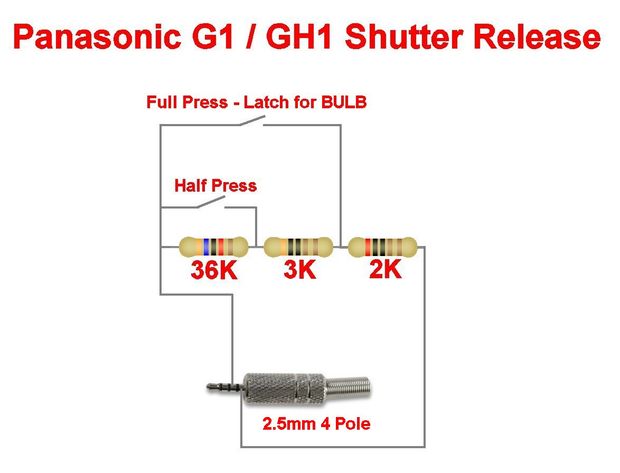
This is the circuit I want to automate with 2 MOSFETS & the micro. They will switch the load (resistance) between 41k, 3k and 2k. So the currents should be very low:


If the current is low (say, <100mA) you might use a 2N7000, which is an N-ch logic level MOSFET capable of sinking up to 200mA.

You should run your AVR on 5v, as most logic-level MOSFETs want to see a Vgs of 5v to turn on.
Thanks. Looking at the 2N7000 datasheet, Max VGS(th) is 3V. Does this mean that 3V is actually enough to trigger full saturation?

It does matter if the gate voltage is higher than the source. If Vgs (voltage on the gate referenced to the source) is 0v, an N-ch MOSFET will be off. If 4.5v >= Vgs < 20v then a logic-level N-ch MOSFET will be on.
I meant, does it it matter generally that the logic 1 voltage (say 5V) is higher than the source voltage (2.46V)? In other words, is there any interaction between the two voltages I need to be aware of, for the MOSFET to function correctly?
 
Last edited:

SgtWookie

Joined Jul 17, 2007
22,230
Max VGS(th) is 3V. Does this mean that 3V is actually enough to trigger full saturation?
No. You need to look further down where 4.5v is specified for static Rds(on).

I meant, does it it matter generally that the logic 1 voltage (say 5V) is higher than the source voltage (2.46V)? In other words, is there any interaction between the two voltages I need to be aware of, for the MOSFET to function correctly?
The MOSFET gate terminal needs to be 4.5v higher than the MOSFET source terminal in order to be considered turned ON.

I don't know what you mean by this 2.46v, and I won't have time to figure it out.

You might be better off using a small solid state relay.
Have a look at this: http://search.digikey.com/scripts/DkSearch/dksus.dll?Detail&name=CLA171-ND
You will need about 10mA current to turn each SSR on.

To calculate the current limiting resistors that you will need, you subtract the IR emitter's Vf, which is nominally 1.2v, from the Vcc you will be using to supply the AVR, and divide the result by 10mA.

Example:
Rlimit = (5v-1.2v) / 10mA
Rlimit = 3.8/0.01
Rlimit = 380
390 Ohms is the closest standard value of resistance.
 

Thread Starter

_gl

Joined Apr 19, 2011
3
No. You need to look further down where 4.5v is specified for static Rds(on).
Got it, thanks. So the lowest Rds(on) voltage shown there is always the lowest saturation voltage?

I don't know what you mean by this 2.46v, and I won't have time to figure it out.
The signal I'm switching (intercepted from the camera) is at a steady 2.46V. My microprocessor will run off a regulator @ 5V. Both share the same ground (a battery).

As it's battery powered, I'll prefer to stick with MOSFETS.
 

SgtWookie

Joined Jul 17, 2007
22,230
Got it, thanks. So the lowest Rds(on) voltage shown there is always the lowest saturation voltage?
If Vgs is less than the voltage specified, the Rds(on) will be higher.

The signal I'm switching (intercepted from the camera) is at a steady 2.46V. My microprocessor will run off a regulator @ 5V. Both share the same ground (a battery).

As it's battery powered, I'll prefer to stick with MOSFETS.
Well, I don't know where your ground reference will be, but as it is now, I don't see it working with MOSFETs.

Perhaps someone else will have better ideas.
 
Top