Facebook
 Google
 GitHub
 Linkedin
Hi there!
I am currently designing a small-scale wind turbine energy generation system that includes the following components: a 5V DC motor, a 6-60V solar and wind energy charge controller, two 3.7V 18650 lithium ion batteries for energy storage, a voltmeter display to measure voltage from the turbine, a battery capacity indicator for the battery health, a buck converter, an arduino mega 2560, a lidar sensor and servo motor. The picture attached also displays the wiring schematic I have designed at the current moment (ignore the solar panels for the time being).
1. My first question is whether or not I really need the 6-60V charge controller if there isn't ever going to be a 6V voltage from the turbine? Should I keep the controller in or just scrap it all together and let the voltage flow directly into my batteries? The voltage output from the turbine ranges from 1V-2.5V for the most part, so it really isn't enough to power all of my electronics within the board, let alone the range needed for the charge controller.
2. My next question is how I can charge the batteries using the turbines energy generation and then power my components at the same time using the batteries (how would this look on the actual breadboard?).
3. Looking at the schematic, does anyone have any recommendations about the current design (removing components to that aren't needed, adding/altering certain connections)
If it helps for me to explain this better just let me know, any advice helps! Thank you!
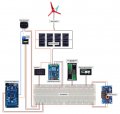
I am currently designing a small-scale wind turbine energy generation system that includes the following components: a 5V DC motor, a 6-60V solar and wind energy charge controller, two 3.7V 18650 lithium ion batteries for energy storage, a voltmeter display to measure voltage from the turbine, a battery capacity indicator for the battery health, a buck converter, an arduino mega 2560, a lidar sensor and servo motor. The picture attached also displays the wiring schematic I have designed at the current moment (ignore the solar panels for the time being).
1. My first question is whether or not I really need the 6-60V charge controller if there isn't ever going to be a 6V voltage from the turbine? Should I keep the controller in or just scrap it all together and let the voltage flow directly into my batteries? The voltage output from the turbine ranges from 1V-2.5V for the most part, so it really isn't enough to power all of my electronics within the board, let alone the range needed for the charge controller.
2. My next question is how I can charge the batteries using the turbines energy generation and then power my components at the same time using the batteries (how would this look on the actual breadboard?).
3. Looking at the schematic, does anyone have any recommendations about the current design (removing components to that aren't needed, adding/altering certain connections)
If it helps for me to explain this better just let me know, any advice helps! Thank you!