Understanding TDS sensor circuit.

Thread Starter

khizer ali

Joined Jan 10, 2019
21
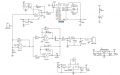
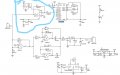
I am working on water quality monitoring system. i am using DFROBOT TDS sensor module. I want to understand the purpose of amplifier A (that attenuates signal) which is on top , is this has to do something with current. ? This sensor measure conductivity of water , and then through programming , output is converted to tds value. This module can be interfaced with arduino
 

Attachments

Last edited:

Alec_t

Joined Sep 17, 2013
15,112
U2A produces an alternating-polarity (AC) output from a uni-polarity (DC) input. AC is used to energise the test probes, to avoid electrolytic corrosion which would otherwise occur with DC.
 

Thread Starter

khizer ali

Joined Jan 10, 2019
21
I am working on water quality monitoring system. i am using DFROBOT TDS sensor module. I want to understand the purpose of amplifier A (that attenuates signal) which is on top , is this has to do something with current. ? This sensor measure conductivity of water , and then through programming , output is converted to tds value. This module can be interfaced with arduino
 

Attachments

Alec_t

Joined Sep 17, 2013
15,112
There's no need to repeat your first post.
how it convert dc to ac , please explain
I should have said it converts logic 1 and logic 0 levels to AC. U2A has a dual supply (±3V). Its non-inverting input is at ground potential (0V). Unusually, U1's Gnd pin is not at 0V but at -3V, so logic 0 level is -3V and logic 1 level is +3V as far as U1 is concerned. U2A applies a less-than unity gain factor to those levels, while providing a lower-impedance output than if a simple resistive divider had been used.
 
Top