Wasn't unusual to see one jacked up with a rear wheel replaced by a drive drum. Since the rear end had a differential, you only needed to jack up one wheel. That was the first one I've seen using the hand crank coupling with the crankshaft. No gear reduction except the drive drums since it was directly coupled with the crankshaft. Does appear to be an engage/disengage lever at the drive drum like that on the old mechanical PTO winches. I've always been impressed by belt and drum drives and how true the belts were to keep them from walking off the drums.
I've heard of the belts themselves being crowned but not the pully. That and crossing the belt in a figure eight to reverse the drive rotation. I've had some experience with both rubber composite and stainless-steel conveyors belts and drives from being called on to provide power, controls, and variable speed drives for them. We always brought in the factory specialist crews to splice them.
There used to be a diner along Highway 50 (east of Sacramento) that I stopped at a couple times that had some good pinball machines. It was all run somehow off an intricate system of pulleys and shafts overhead. The wide flat belts rode on pulleys and didn’t seem to have any issues.
I know the belt pulleys all had a slight crown to them on the tractor and driven machinery we had on our farm as a kid, .
Otherwise you could never line the two machines up accurately enough to keep the belt on the pulleys.
Conveyer belts and just about any flat belt always need a slight crown on the pully or shaft that drives them, otherwise they will not stay centered.
I know the belt pulleys all had a slight crown to them on the tractor and driven machinery we had on our farm as a kid, .
Otherwise you could never line the two machines up accurately enough to keep the belt on the pulleys.
Conveyer belts and just about any flat belt always need a slight crown on the pully or shaft that drives them, otherwise they will not stay centered.
When I worked at the Museum of Science in Boston we had a machine tools exhibit including a large industrial steam engine that would have previously run the vintage tools in the exhibit with overhead shafts. The tools had long been converted to DC motors before being donated by a prominent inventor in the machine tools business whose name escapes me. It appears the engine is now part of “Transportation” and the machine tools are gone, very sad for me. It was a working machine shop with two retired journeyman machinists who made parts for me when I needed them.
The engine ran on city steam at a few pounds of pressure. It was one of my normal jobs to start the engine in the morning at a very slow speed. It was an art and you had to be very careful not to get the connecting rod in a perfectly parallel position or it was going to take several people pulling on the flywheel to get it unbound. The large flywheel extends into a pit in the concrete floor and normal start up was to turn up the steam then stand on a spoke to get the wheel moving, then rush over to the steam valve to turn it down once it started moving.
We had to run it very slowly, about 30 RPM or so, because, aside from safety, the babbitt in the crosshead was quite worn and going faster made a terrible knocking noise which sounded very much like impending doom.
The large flywheel extends into a pit in the concrete floor and normal start up was to turn up the steam then stand on a spoke to get the wheel moving, then rush over to the steam valve to turn it down once it started moving.
We had to run it very slowly, about 30 RPM or so, because, aside from safety, the babbitt in the crosshead was quite worn and going faster made a terrible knocking noise which sounded very much like impending doom.
Umm, I'm guessing they are gone because it required someone to stand on a rotating object that extended into the concrete floor and then, once it started rotating, jump off and run across the room to manually control a steam valve because a dangerously warn part part may fail and OSHA finally visited the site (or someone who knew better about "workplace safety", "steam engines", "large rotating equipment and crush injuries" or "mechanical engineering") shut it down.
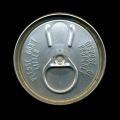
In 1959, Fraze decided to invent an improved beverage can. The current design required people to purchase a separate opener to access the beverage. One day at a picnic, Fraze forgot his "church key," the name for the opener, and had to use a car bumper to open drinks for himself and his guests. Later this same year, Fraze developed a can with the opener, a lever, attached. Unfortunately, this design produced a sharp opening, sometimes injuring the drinkers. Soon thereafter, Fraze developed a can, known as the "pull-top" can, where the user only had to pull a removable tab to access the drink. Although Fraze did not receive a patent for his invention until October 31, 1967, over seventy-five percent of beer brewers in the United States of America had adopted Fraze's can by 1965. The first company to utilize Fraze's design was the Pittsburgh Brewing Company in Pittsburgh, Pennsylvania.
Fraze's pull-top can proved to be a major improvement in beverage packaging, allowing drinkers quick and easy access to their drink. Unfortunately, pull-top cans increased litter in the United States, as many users simply threw the tab onto the ground. Other drinkers injured themselves by placing the tab inside of the can and then swallowing or cutting themselves on the tab when they drank. To solve these issues, in 1977, Fraze patented the first push-in and fold-back tab. This tab remained attached to the can, and it is the principal design still used on canned beverages today. By 1980, Fraze's new tab design and machinery to manufacture the can was earning the Dayton Reliable Tool Company, known by this time as the Dayton Reliable Tool and Manufacturing Company, Inc., over 500 million dollars per year.
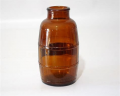
Can't remember the brand but for a while you could get bottle beer with a pull tab on the "crown'(the real name for a bottle cap). Just the first picture I found not what was available around here.
Can't remember the brand but for a while you could get bottle beer with a pull tab on the "crown'(the real name for a bottle cap). Just the first picture I found not what was available around here.
As I remember it, the detachable pull tab literally turned beaches into mine fields. The small, curved and extremely sharp bits of aluminum cut open many feet of beachgoers.
The sales of Johnson & Johnson Band-Aids tripled that year... They did make quaint Pop Top Chains though. Something popular for dorm decoration. In 1969 there was an off brand of "keg" beer that came in a widemouthed 12oz bottle with one of those tear-off aluminum caps. It didn't last long and other than the curiosity factor had no appeal as the beer was terrible.
The sales of Johnson & Johnson Band-Aids tripled that year... They did make quaint Pop Top Chains though. Something popular for dorm decoration. In 1969 there was an off brand of "keg" beer that came in a widemouthed 12oz bottle with one of those tear-off aluminum caps. It didn't last long and other than the curiosity factor had no appeal as the beer was terrible. View attachment 267069

 Facebook
 Google
 GitHub
 Linkedin