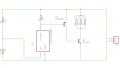
Are there particular parts that are expensive, and you need alternatives, or is everything expensive? That circuit is not terribly elaborate and if it's too expensive, I'm not sure there's much anyone can do.
The LM358 is an op-amp, not a comparator, and not a good choice here because it requires at least 3V to operate. That's the absolute most your panel can output.
I don't fully understand that circuit but the shown op-amp is a rail-to-rail type and I suspect that's important for that circuit. LM358 can approach the negative supply rail but it is not rail-to-rail. It cannot sense voltages within about 1.5V of the upper rail.
a while back i ordered some chips, the ALD8100xx. never ended up using them, but they are supposed to be your one-chip solution to balancing supercaps while charging in series. http://www.aldinc.com/pdf/ALD8100xxFamily.pdf
a while back i ordered some chips, the ALD8100xx. never ended up using them, but they are supposed to be your one-chip solution to balancing supercaps while charging in series. http://www.aldinc.com/pdf/ALD8100xxFamily.pdf
thank you for sharing but i have made the above circuit and it works perfect voltage never exceeds 2.69v.
now that it works can i charge the capacitors with higher voltage coz they cannot over charge and will it increase the charging speed ??
thank you for sharing but i have made the above circuit and it works perfect voltage never exceeds 2.69v.
now that it works can i charge the capacitors with higher voltage coz they cannot over charge and will it increase the charging speed ??
The answer is, "it depends". First let me point out that your capacitors will have a maximum current rating, and you don't want to exceed that.
Your ability to supply current depends on the impedance of your power supply. Just raising the voltage might not increase the charging rate. You need to analyze your system to identify the bottlenecks before you can make smart adjustments.

 Facebook
 Google
 GitHub
 Linkedin