TVS protection for input signal

Thread Starter

DJ_AA

Joined Aug 6, 2021
490
I am designing a new PCB that includes external connectors to GPIO pins, such as UART, I2C, and standard GPIOs.

Is it recommended to use TVS protection diodes whenever there is an external port connected to GPIOs?

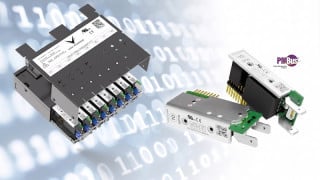
I have other circuits where TVS diodes have been recommended based on reference designs. My current BOM includes the two diodes listed below, so I was considering using them here as well.

LFSI-S-A0010460916-1.pdf

SMF05C - ESD Protection Diode Array, 5-Line
 

drjohsmith

Joined Dec 13, 2021
1,549
General,
If your making for yourself, 1 off, then protection is debatable. Put a sacrificial buffer on the board,
If it's a commercial product, it's going to be mandatory, CE and such like mean the pins are going to be zapped. Esd and emi is mandatory.
As to what device to use, tvs are classic answer,
You need to look at what voltage they start to conduct at so your normal signal is not troubled. Also look at the capacitance, if its say a USB pin, then you need low capacitance , devices for the job, if it's a power, then you can afford to use cheaper , higher capacitance devices ,
Also don't forget that esd jumps, so if there is a track from the connector to the tvs, and another track is say under them, esd can easily jump to the un protected track.

https://www.analog.com/en/resources/technical-articles/practical-aspects-of-emi-protection.html
 

nsaspook

Joined Aug 27, 2009
16,250
What controller chip (exact model name) is being used? Depending on the application and robustness of the on-chip protection, it could be belt and suspenders ("involving or employing multiple methods or procedures to achieve a desired result especially out of caution") or required.

Nothing wrong with belt and suspenders in circuit design.
 
Last edited:

Thread Starter

DJ_AA

Joined Aug 6, 2021
490
I am using the ATXMEGA256A3BU. At the moment, it is not for commercial use but will eventually be used by many users. I want to ensure that when wires are attached or removed from the I2C, UART ports, and power connections, adequate protection is in place.

As I already have the following two components in my BOM, I am wondering if I could use them for this purpose.

LFSI-S-A0010460916-1.pdf
SMF05C - ESD Protection Diode Array, 5-Line
 

nsaspook

Joined Aug 27, 2009
16,250
I am using the ATXMEGA256A3BU. At the moment, it is not for commercial use but will eventually be used by many users. I want to ensure that when wires are attached or removed from the I2C, UART ports, and power connections, adequate protection is in place.

As I already have the following two components in my BOM, I am wondering if I could use them for this purpose.

LFSI-S-A0010460916-1.pdf
SMF05C - ESD Protection Diode Array, 5-Line
Sure, those will help to reduce possible damage from some types of low energy spikes and glitches. Making things idiot proof can be expensive because idiots are so clever.
 

Thread Starter

DJ_AA

Joined Aug 6, 2021
490
The aim is to use a single device across all my designs as a good practice to provide some level of protection. The protection I am targeting is mainly against static discharge, which may occur during the insertion or removal of a connector or wire.

There are two versions available: unidirectional and bidirectional. Which version would be more suitable for this purpose? Additionally, should the VCC pin on the connector also have protection?

The SMF05C has 5 pins. Should these pins be grouped together, for example, when protecting interfaces like UART, I2C, or RS485? Or is it more appropriate to use the device for multiple individual GPIO connections instead?
 
Top