Facebook
 Google
 GitHub
 Linkedin
Hello,
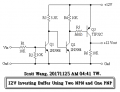
At first I try to find inverting buffer to work with 12VDC, and it is hard to find here. So I try to find idea how to work with transistor.
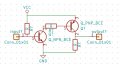
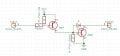
Attached is the circuit, I try to explain from left to right every component placed. Suggestion are very welcomed.
1. the input is open collector type, either Vcc or Gnd. The two of PNP will work either in saturation or cut off region.
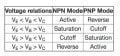
2. the Rbase is a base resistor, it is there just to restrict the amount of current, the current is restricted to make the left PNP works in saturation (Ve>Vb<Vc).
3. The R-Pull-Up, since input (no1) is open collector I need a Pull up resistor. the placement of R-Pull-up is to the right of the Rbase to make the left PNP in saturation (Ve>Vb<Vc), so that the Vb is less than Vc.
4. the left PNP, is just like a switch. When the input start pull low, the PNP's base current will start to flow (from emitter to base). This base current (adjusted by Rbase) so that it works in saturation (act like a switch). thats make the collector current (pin 3) flow.
5. in the effect that the left PNP is turned on, that makes the right PNP base voltage to almost equal to Vcc (a little Vce drop).
6. I skip the R-Pull-down explanation as this is function for turning off the circuit.
7. the diode will start to conduct and makes the right PNP's emitter to be Vcc - VfDiode. The right PNP act as Cut off (Ve<Vb>Vc). that makes the output almost equal to Vcc (a little Vce and Vf drop)
This first part makes the output On.
The second part makes the output off as follow:
1. the turn off begin with floating input pin. this makes the Vbase of left PNP = Vcc.
2. Base current of left PNP = 0. then the collector current also 0. The charge in Collector bleed to the ground via R-Pull-Down. The left PNP goes to active (Ve>Vb>Vc) and eventually off, NOT cut off (Ve<Vb>Vc). If the fast off is needed, adjust the R-Pull-up to minimum so that the Vb increase faster.
3. The R-Pull-Down now play its part to bleed current to Gnd. then the right PNP's base current begin to flow. Base voltage start to drop. The right PNP goes to active (Ve>Vb>Vc). To make right PNP faster, the R-Pull-down's value is reduced.
4. the right PNP begin to turn on. The emitter voltage will be drop as the current flow from emitter to collector.
5. the diode Vf maintain the Vb>Ve so it will be either cut off or active. cannot be in Reverse active or saturation because the emitter is grounded.
Principally:
the left PNP will be either Saturation or Active (Ve tied to Vcc => always higher than anything)
the right PNP will be either cut off or active (Vc tied to Gnd => always lower than anything)
The question: Does put the diode is good idea?
If No:
1. if there is no diode, will the right PNP goes cut off since Ve=Vb.
2. if there is no diode, on the second part (output is going off), is the right PNP do any useful to bleed current from emitter to the collector? I mean does it ever goes to active?
waiting for your idea and suggestion
Thank you
At first I try to find inverting buffer to work with 12VDC, and it is hard to find here. So I try to find idea how to work with transistor.
Attached is the circuit, I try to explain from left to right every component placed. Suggestion are very welcomed.
1. the input is open collector type, either Vcc or Gnd. The two of PNP will work either in saturation or cut off region.
2. the Rbase is a base resistor, it is there just to restrict the amount of current, the current is restricted to make the left PNP works in saturation (Ve>Vb<Vc).
3. The R-Pull-Up, since input (no1) is open collector I need a Pull up resistor. the placement of R-Pull-up is to the right of the Rbase to make the left PNP in saturation (Ve>Vb<Vc), so that the Vb is less than Vc.
4. the left PNP, is just like a switch. When the input start pull low, the PNP's base current will start to flow (from emitter to base). This base current (adjusted by Rbase) so that it works in saturation (act like a switch). thats make the collector current (pin 3) flow.
5. in the effect that the left PNP is turned on, that makes the right PNP base voltage to almost equal to Vcc (a little Vce drop).
6. I skip the R-Pull-down explanation as this is function for turning off the circuit.
7. the diode will start to conduct and makes the right PNP's emitter to be Vcc - VfDiode. The right PNP act as Cut off (Ve<Vb>Vc). that makes the output almost equal to Vcc (a little Vce and Vf drop)
This first part makes the output On.
The second part makes the output off as follow:
1. the turn off begin with floating input pin. this makes the Vbase of left PNP = Vcc.
2. Base current of left PNP = 0. then the collector current also 0. The charge in Collector bleed to the ground via R-Pull-Down. The left PNP goes to active (Ve>Vb>Vc) and eventually off, NOT cut off (Ve<Vb>Vc). If the fast off is needed, adjust the R-Pull-up to minimum so that the Vb increase faster.
3. The R-Pull-Down now play its part to bleed current to Gnd. then the right PNP's base current begin to flow. Base voltage start to drop. The right PNP goes to active (Ve>Vb>Vc). To make right PNP faster, the R-Pull-down's value is reduced.
4. the right PNP begin to turn on. The emitter voltage will be drop as the current flow from emitter to collector.
5. the diode Vf maintain the Vb>Ve so it will be either cut off or active. cannot be in Reverse active or saturation because the emitter is grounded.
Principally:
the left PNP will be either Saturation or Active (Ve tied to Vcc => always higher than anything)
the right PNP will be either cut off or active (Vc tied to Gnd => always lower than anything)
The question: Does put the diode is good idea?
If No:
1. if there is no diode, will the right PNP goes cut off since Ve=Vb.
2. if there is no diode, on the second part (output is going off), is the right PNP do any useful to bleed current from emitter to the collector? I mean does it ever goes to active?
waiting for your idea and suggestion
Thank you