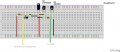
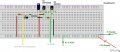
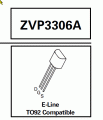
Look again at Eric's pin designations.I have the pinout OK.

What do you mean by "solid"?Hi guys. Having spent some time with the delay circuit and replaced the 200K with a 500K POT. it would seem that the higher the resistance level, the more fluffy the relay de-energise gets. Is there a way round this. 555 timer is a no go because as the high low input is toggled, the delay should reset. What I mean by that is that if the probe is right on the water level and the circuit is switching on and off quickly, the delay countdown should restart. The 555 timer circuit does not reset. Carls circuit does this well but I need the relay action to be solid. Any ideas.
Relays should click when they energise or de-energise, the cap feeds the p channel mosfet, obviously the voltage degrades slowly, this means the mosfet only conducts partially and the relay does a very quiet almost double click. The greater the resistance the less positive the relay action.What do you mean by "solid"?
A relay is either on or off so I don't understand the problem.![]()

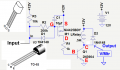
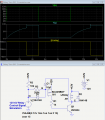
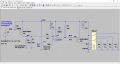
Thanks for the input yet again......Here's the circuit modified with a simple fix to improve the relay switching time and remove the "fluff" (wish all problems were that easy to fix).
I moved the timing capacitor connection from +12V to the relay transistor to provide some positive feedback to the MOSFET gate, which should provide a snap-action when the relay turns off after the delay.
Note how the V(g) MOSFET gate voltage snaps to 12V, fully turning off the MOSFET, when the relay de-energizes after the delay time.
View attachment 118893