Facebook
 Google
 GitHub
 Linkedin

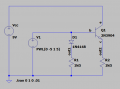
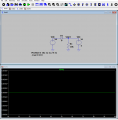
hello all, i got a question, can i simulate the transistor junction in this way?
and also why the circuit doesnt work as i expect?, like when i use a normal transistor npn as emitter follower this happens:
I connect collector vcc, lets say im using a square wave to drive the transistor as on-off ( saturation and interdiction mode )
during the phase where its in saturation, the transistor is conducting, and vcc is tied to gnd via a resistor ( in this way there is no shortcircuit, but we can "remove the D.C" in order to see only the signal i give in input ( at its base - 0.7V )
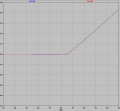
Now i tried to simulate to do exactly the same thing, but i didnt obtain this result, why so? what i wanted to do is to see in output a square wave in output ( since it should work as the transistor, vcc is pulled to gnd via the resistor, and what i get is the pulse wave - the drop of the diode )
Can someone explain me? thanks.
and also why the circuit doesnt work as i expect?, like when i use a normal transistor npn as emitter follower this happens:
I connect collector vcc, lets say im using a square wave to drive the transistor as on-off ( saturation and interdiction mode )
during the phase where its in saturation, the transistor is conducting, and vcc is tied to gnd via a resistor ( in this way there is no shortcircuit, but we can "remove the D.C" in order to see only the signal i give in input ( at its base - 0.7V )
Now i tried to simulate to do exactly the same thing, but i didnt obtain this result, why so? what i wanted to do is to see in output a square wave in output ( since it should work as the transistor, vcc is pulled to gnd via the resistor, and what i get is the pulse wave - the drop of the diode )
Can someone explain me? thanks.
Attachments
-
739 bytes Views: 3
-
 39.6 KB Views: 28