Facebook
 Google
 GitHub
 Linkedin

Hello, I am learning about transformers and how if you have an Open-Circuit on the Secondary side of the transformer than there is no current flow. But when you connect a Load to the secondary side completing the circuit then i read:
"The secondary current, IS which is determined by the characteristics of the load, creates a self-induced secondary magnetic field, ΦS in the transformer core which flows in the exact opposite direction to the main primary field, ΦP. These two magnetic fields oppose each other resulting in a combined magnetic field of less magnetic strength than the single field produced by the primary winding alone when the secondary circuit was open circuited. "
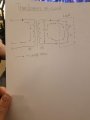
I drew the image above that i copied from this website here to visualize how the two current flow opposite of each other.
My Questions,
1) What does it mean when they say ""The secondary current, IS which is determined by the characteristics of the load, creates a self-induced secondary magnetic field", Can someone explain in an easy to understand way how it creates a self- induced secondary magnetic field?
2) What is it exactly about connecting a load that causes it to flow current in the direction opposite that of the primary?
"The secondary current, IS which is determined by the characteristics of the load, creates a self-induced secondary magnetic field, ΦS in the transformer core which flows in the exact opposite direction to the main primary field, ΦP. These two magnetic fields oppose each other resulting in a combined magnetic field of less magnetic strength than the single field produced by the primary winding alone when the secondary circuit was open circuited. "
I drew the image above that i copied from this website here to visualize how the two current flow opposite of each other.
My Questions,
1) What does it mean when they say ""The secondary current, IS which is determined by the characteristics of the load, creates a self-induced secondary magnetic field", Can someone explain in an easy to understand way how it creates a self- induced secondary magnetic field?
2) What is it exactly about connecting a load that causes it to flow current in the direction opposite that of the primary?