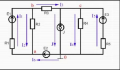
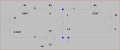
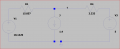
You can do it exactly the same way using Thevenin but it involves more steps converting R3/E2 to a current source and then combining with I1 & R1||R2. My post #19 shows that version...
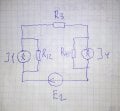
Well going by your first post, i would say yes and no. Yes because you drew it right, no because you did not show what value the current source takes on other than "J1". You should have shown what J1 was equal to.
The rules are as follows (really just one rule stated two different ways):
1. A voltage source in series with a resistor is equivalent to a current source in parallel with that resistor.
2. A current source in parallel with a resistor is equivalent to a voltage source in series with that resistor.
The last part is that the current source above is the voltage source divided by the value of the resistance of the resistor, and the voltage source has the value of the current source times the value of the resistance of the resistor.
So the current source becomes E*R in parallel with R, and the voltage source becomes E/R in series with R. So you are sort of using the resistance two times for either transformation.
To see the real value of these methods, once you convert E1 to J1 you then end up with R1 in parallel with R2, which simplifies to one reisstor:
Rx=R1*R2/(R1+R2)
and then you can convert that into a voltage source in series with R3 and then add Rx+R3 and transform again, and if you can keep doing these Thevenin and Norton transformations you can then simplify the entire network.

 Facebook
 Google
 GitHub
 Linkedin