Facebook
 Google
 GitHub
 Linkedin
They're a great starter kit for the average home owner who wants to water their garden without having to remember.
My wife went in for a surgery (long time ago). She asked me to not let her flowers die. She convalesced at her mom's house for six weeks.
I promised to keep her garden alive. So what was the first thing I did? Forget to water her hanging plants. Realizing I was being forgetful I went to the local big box store and bought a drip irrigation kit which consisted of a single unit and a single valve and a 9V battery. Screwed it to the hose bib and ran the tubing up to her plants. Fortunately for my marriage the plants recovered. When she came home she found her plants lusher than she had ever seen them. So those cheap dip systems have a place.
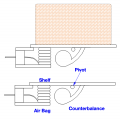
The TS wants to use something battery powered. Likely it's at a low voltage. 9V? Probably hard to find. 3V? More than plentiful. So a momentary positive pulse (assuming red and black wires, positive on the red wire, negative on the black) will open the valve and it will hold its setting. Suppose the timer is set to run for 10 minutes. At the end of the cycle a negative pulse (negative on the RED wire) will set the valve back to the closed position. These valves are not motorized, they are purely set or reset same as a latching relay. This is where @MisterBill2's suggestion of air comes into practicality. A valve, albeit designed for water can deliver a blast of air (I wouldn't exceed 80 lbs. pressure) can open an air cylinder to drop a shelf latch allowing the shelf to fall. The impracticality of it is that a source of compressed air is needed. A second, negative, pulse will be needed to shut the airflow off. Depending on the size of the air cylinder lower pressure would be plenty adequate to drop a shelf.
I've seen videos of people who turn an old refrigerator compressor into an air compressor but the rate of compression is low. To run the fridge compressor to fill an air tank you'd need a safety shutoff switch to prevent the tank from being over-pressurized. While air is a good idea, there are the peripherals that need to be considered. (sound familiar?)
1) How long is a solenoid to be powered?
2) What voltage is the solenoid powered at?
3) How much current will be required to successfully pull the plunger of the solenoid to allow the shelf to drop?
4) What means of control will be used to actuate the solenoids?
4a) If battery powered, where can you find a relay that can both operate on the low battery voltage AND handle the amount of current needed by the solenoid?
4b) If AC powered, can the AC power be used both for triggering the relay AND enough power to actuate the solenoid?
5) How much money does the TS (Thread Starter) want to spend on this project?
6) WHAT IF the system fails either due to a power failure, loss of power (pulled plug or broken cord)? What kind of alarm might be needed?
I'd guess there are other things that need to be considered as well, things I haven't thought of. So think of this as a starting point.
My wife went in for a surgery (long time ago). She asked me to not let her flowers die. She convalesced at her mom's house for six weeks.
I promised to keep her garden alive. So what was the first thing I did? Forget to water her hanging plants. Realizing I was being forgetful I went to the local big box store and bought a drip irrigation kit which consisted of a single unit and a single valve and a 9V battery. Screwed it to the hose bib and ran the tubing up to her plants. Fortunately for my marriage the plants recovered. When she came home she found her plants lusher than she had ever seen them. So those cheap dip systems have a place.
The TS wants to use something battery powered. Likely it's at a low voltage. 9V? Probably hard to find. 3V? More than plentiful. So a momentary positive pulse (assuming red and black wires, positive on the red wire, negative on the black) will open the valve and it will hold its setting. Suppose the timer is set to run for 10 minutes. At the end of the cycle a negative pulse (negative on the RED wire) will set the valve back to the closed position. These valves are not motorized, they are purely set or reset same as a latching relay. This is where @MisterBill2's suggestion of air comes into practicality. A valve, albeit designed for water can deliver a blast of air (I wouldn't exceed 80 lbs. pressure) can open an air cylinder to drop a shelf latch allowing the shelf to fall. The impracticality of it is that a source of compressed air is needed. A second, negative, pulse will be needed to shut the airflow off. Depending on the size of the air cylinder lower pressure would be plenty adequate to drop a shelf.
I've seen videos of people who turn an old refrigerator compressor into an air compressor but the rate of compression is low. To run the fridge compressor to fill an air tank you'd need a safety shutoff switch to prevent the tank from being over-pressurized. While air is a good idea, there are the peripherals that need to be considered. (sound familiar?)
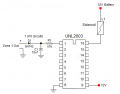
So IF a compressor is used then there's going to be 120VAC (or 240VAC) by the feeder, why not just go with a 24VAC sprinkler controller? IF battery powered, a drip irrigation controller would need a couple of batteries connected to a very low voltage relay or transistor to handle switching the higher voltage needed for the solenoids. Plus a (likely) 12V battery to actuate the solenoids. While all this is doable it IS going to take some engineering.{from a different thread}
I am the one who considers the secondary result to those who only focus on their idea of the immediate fix, not realizing the secondary results. And those secondary results are what we get stuck with. Sometimes not so very good as we might wish.
"There are those who find solutions to the problem, and then there are those who only find problems with the solution."
1) How long is a solenoid to be powered?
2) What voltage is the solenoid powered at?
3) How much current will be required to successfully pull the plunger of the solenoid to allow the shelf to drop?
4) What means of control will be used to actuate the solenoids?
4a) If battery powered, where can you find a relay that can both operate on the low battery voltage AND handle the amount of current needed by the solenoid?
4b) If AC powered, can the AC power be used both for triggering the relay AND enough power to actuate the solenoid?
5) How much money does the TS (Thread Starter) want to spend on this project?
6) WHAT IF the system fails either due to a power failure, loss of power (pulled plug or broken cord)? What kind of alarm might be needed?
I'd guess there are other things that need to be considered as well, things I haven't thought of. So think of this as a starting point.
Last edited: