Thermistors

Thread Starter

trickyrick

Joined Sep 18, 2013
79
I have a furmace that has a thermisitor outside. The purpuse is to tell the furnace how hard to come on. If its really cold outside than it will come on full force. Problem is the thermisistor is not measuring the temperature properly. This early spring when there was frost on the ground it said it was 80 decgrees outside. Then it corected itself for a few weeks.
The furnace company want to charge me $45 dollars for the part. How do I go about figuring out what thermisitor to get
Thanks
 

SamR

Joined Mar 19, 2019
5,470
Ask the furnace company for the specification and part number? Or find the manual and parts diagram for the furnace.
 

MrChips

Joined Oct 2, 2009
34,629
Provide details of the furnace and the thermistor, with pictures if possible.

It is unusual for the furnace to have a temperature sensor outdoors. Usually, the furnace thermostat is in the living room. Also, the thermostat operates on heat/no_heat with hysteresis. The user sets the target temperature and the furnace is triggered to turn on when the temperature drops a certain number of degrees below the target and then turns off when the temperature rises above by a certain number of degrees. It is ON/OFF control. Smart HVAC systems can control the output based on other parameters, not outdoor temperature.
 

SamR

Joined Mar 19, 2019
5,470
Yes, my digital HVAC Thermostat has an outdoor temp displayed. But only for information as far as I know. Heat pump with emergency heat electric coils. As well as a basic weather forecast from WIFI. Sunny, cloudy, rain, thunderstorms, snow, etc. No, it does not give the correct outdoor temp and is mounted under the roof overhang on the front of the house. So, I pretty much ignore it and open the front door to check the wall thermometer on the porch. Although, opening the front door pretty much tells me all I need to know...
 
Last edited:

AnalogKid

Joined Aug 1, 2013
12,049
Please post photos of the component, If it really is a thermistor (and there is no guarantee that it is), you should be able to read its resistance with a meter after you disconnect it from the system wiring. That and the approx temperature will tell us the nominal value. A possible issue is that there is no one standard response curve for an NTC thermistor.

ak
 

Thread Starter

trickyrick

Joined Sep 18, 2013
79
OK a little more info it is a thermistor. Its a Hot water boiler for an appartment building
This is a link to the furnace/boiler
Boiler
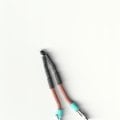
The thermistor is very small no markings on it.
I thought maybe I could measure the temp around the thermistor and then measure the resistance. Can I not figure out the part from that
therm.jpg
 

MrChips

Joined Oct 2, 2009
34,629
Thermistors are specified with its resistance at 25°C.
Take three resistance readings, one below, one at 25°C, and one above.
Then we will be able to suggest a replacement.

However, you are assuming that the thermistor is at fault, which might not be true .
 

Thread Starter

trickyrick

Joined Sep 18, 2013
79
Thanks, outside were the thermistor goes I installed a resistor one that gave me a temp of 68 degrees. I have being checking the display on the Boiler and its always at 68 degrees. Would that not suggest that its the thermistor
 

MrChips

Joined Oct 2, 2009
34,629
Thermistors have different resistance vs temperature curves.

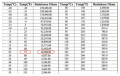
Here is an example of a typical 10 kΩ thermistor. We would need at least three readings in order to find a suitable replacement.

1753043040864.png
 

Tonyr1084

Joined Sep 24, 2015
9,744
It is unusual for the furnace to have a temperature sensor outdoors.
Its a Hot water boiler for an appartment building
I've seen those added to modern boilers on ThisOldHouse. A boiler doesn't need to heat water to 180˚F if the temperature outside is not very cold. But if the outdoor temp is much colder the boiler will compensate and put extra heat into the water. This is especially of use when you have a programmable thermostat; one set to heat the home to 70˚F at 6:00 AM while overnight the temp was allowed to fall to 66˚F. The need for heat is higher at that moment.

My gas fired furnace seems to know when to put extra energy into the air stream simply by the ambient temperature indoors. If the house cooled to 66˚ over night and is set to come on to 72˚ at 6:00 AM the furnace will go into full heat mode. But if the house dropped to 71˚ during the daytime the furnace will come on at a much gentler energy level. You'll notice the difference by how hard the blower is running and how hot the air coming out of the vent is. Since boilers don't have the same response time they need to know what the heat load looks like based on how cold it is outside.

Though, I think it odd to be worrying about the heater in July. Unless you're south of the equator. But if it's summer where the TS is then he has plenty of time to figure this out.
 

WBahn

Joined Mar 31, 2012
32,706
Thanks, outside were the thermistor goes I installed a resistor one that gave me a temp of 68 degrees. I have being checking the display on the Boiler and its always at 68 degrees. Would that not suggest that its the thermistor
Not necessarily. You said in your first post that you got incorrect readings for a while and then it started reading correctly again. That would argue that the problem was NOT the thermistor, but rather something else, such as a poor solder joint, a loose connection, or condensation somewhere. The fault was temporary and went away. About the only way for the thermistor itself to exhibit this kind of behavior would be a broken lead inside the encapsulation that makes intermittent contact, but not only is that fairly unlikely, but handling it in order to remove it would likely have aggravated it and made it permanently broken and reading as an open circuit.

In addition to that, most thermistors are of the NTC type (negative temperature coefficient), meaning that the resistance goes down as the temperature goes up. So, in order for your thermistor to indicate 80°F when it is so cold that there is frost on the ground, it would have to be exhibiting a resistance that is a fraction of it's correct value, which is not consistent with the likely failure modes.

Since you have the thermistor pulled out, make some measurements on it and let us know what it's resistance is at a few different temperatures. Be sure to let the thermistor reach equilibrium before taking the measurement. One way to do this (that should be close enough for this purpose), is to put the thermistor in the corner of a plastic bag (think sandwich bag) or a small balloon. The idea is to just keep the thermistor from getting wet or having to deal with the resistivity of the water. Then take some cold water and put a bunch of ice in it, preferably in an insulated cup of some kind, but that's not critical. Let it stand for a half hour or so and then remove the ice and put a thermometer into the water. Dip the thermistor (and bag) into the water, making sure to keep the open end of the bag out of the water. Measure the resistance and record it when it stops changing, along with the thermometer reading at that time. Then record the temperature and resistance every few minutes (the frequency depends on how fast the water warms up), shooting for a measurement every five to ten degrees Fahrenheit.
 

ericgibbs

Joined Jan 29, 2010
21,395
Hi C,
I agree, my calculator shows it should much higher, say the 5800R mark.??
E
My estimate is an NTC with a resistance of 15k at 25C Beta value ~4000
 

Ian0

Joined Aug 7, 2020
13,097
OK a little more info it is a thermistor. Its a Hot water boiler for an appartment building
This is a link to the furnace/boiler
Boiler
The thermistor is very small no markings on it.
I thought maybe I could measure the temp around the thermistor and then measure the resistance. Can I not figure out the part from that
View attachment 352968
That's not a clever way to connect a thermistor. Much better to put the second piece of sleeving over the whole lot. That prevents two things from happening:
1) twisting the bead and shorting its leads
2) moving the leads apart and breaking them off the bead.
 
It would help if you can give us the make/model of boiler controller.
I am used to working with Tekmar ones, example #070 they use a vanilla 10k B=3892 thermistor for outdoor reset.
15k exists but is oddball. What I would do is spoof the thermistor by using say a 10k resistor in its place, and see what it reads. In case your method of measuring temps is wrong and leading you on a goose chase.
Well, really why are you trusting a "bad" thermistor's ohmmeter readings?

Common problems I have seen is water in the wiring - the temperature reading is higher than expected.
Another is the cable picking up AC hum and interference, depends on how long it is but a shielded cable is best.
Last is the boiler controller malfunctioning and just reading wrong.
 
Top