Facebook
 Google
 GitHub
 Linkedin
I found Altium document describing the power dissipation in DC DC converters. The power loss is the difference between the input power (Pin) and output power (Pout). The efficiency is Pout/Pin. In most DC DC converts the efficiency is 70 to 80 %. This can be higher for very efficient DC DC converters.
https://resources.altium.com/p/know-power-dissipation
Can we calculate the Junction Temperature (Tj) of DC DC converters, provided we know the power loss, thermal resistance and ambient temperature ? I have done such calculations Junction Temperature (Tj) for LDOs where the power loss is (Vin - Vout) x Current. Is there any difference in calculating Junction Temperature (Tj) for DC DC converters ?
One more question regarding ambient temperature. I found another document from Texas Instruments.
https://www.ti.com/lit/an/slyt793a/slyt793a.pdf?ts=1725538993221&ref_url=https%3A%2F%2Fwww.google.com%2F
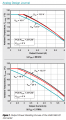
On the last page, there is a figure which says that ambient temperature decreases as we increase the output current. This is not clear to me. The figure is also attached. Kindly have a look and explain how the ambient temperature decreases with increase in output current.
https://resources.altium.com/p/know-power-dissipation
Can we calculate the Junction Temperature (Tj) of DC DC converters, provided we know the power loss, thermal resistance and ambient temperature ? I have done such calculations Junction Temperature (Tj) for LDOs where the power loss is (Vin - Vout) x Current. Is there any difference in calculating Junction Temperature (Tj) for DC DC converters ?
One more question regarding ambient temperature. I found another document from Texas Instruments.
https://www.ti.com/lit/an/slyt793a/slyt793a.pdf?ts=1725538993221&ref_url=https%3A%2F%2Fwww.google.com%2F
On the last page, there is a figure which says that ambient temperature decreases as we increase the output current. This is not clear to me. The figure is also attached. Kindly have a look and explain how the ambient temperature decreases with increase in output current.
Attachments
-
 80.3 KB Views: 2