the critical point about convolution

Thread Starter

circuit975

Joined Jun 13, 2024
43
i salute the whole community

i'm working on convolution, but there's a point I don't understand

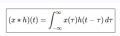
I use the general formula of the convolution as follows :

1749557748258.png

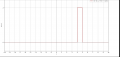
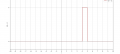
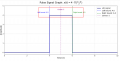
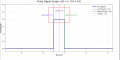
and I draw the graphs accordingly, and after I draw, we need to Decouple them, find the space in between, and find the convolution.
1749557770686.png

1749557784889.png


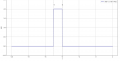
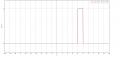
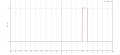
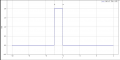
this is how I draw the graphs

but I have a hard time about how to draw the h(t - τ) sign when I draw it, I can't understand because if I draw it, they already seem to overlap directly with x(t) almost like they're intertwined, but I think I did it wrong somewhere, I couldn't find it.

how are we going to draw h(t- τ), what should it be?
every help will be honored! thank you very much!
 

WBahn

Joined Mar 31, 2012
32,702
Since your graph is static, there is only so much you can show at one time (no pun intended).

So you can show graphs that capture h(t-τ) for particular values of t that are of interest (keeping in mind that, for the integrand, the independent variable is τ, not t). For instance, you might show a plot when t just places the two pulses next to each other on one side and another when they are just next to each other on the other side. This along lets you determine the convolution for all values of t for which the two pulses don't overlap and what the limits of those regions are. Then show a plot where the two waveforms are completely overlapped (one is contained entirely within the other) and identify the range of t for which this is the case. Finally, the most involved one is when they are only partially overlapped. This is the one where you want to be careful to identify the integrand properly as t varies through this region.
 

Thread Starter

circuit975

Joined Jun 13, 2024
43
Since your graph is static, there is only so much you can show at one time (no pun intended).

So you can show graphs that capture h(t-τ) for particular values of t that are of interest (keeping in mind that, for the integrand, the independent variable is τ, not t). For instance, you might show a plot when t just places the two pulses next to each other on one side and another when they are just next to each other on the other side. This along lets you determine the convolution for all values of t for which the two pulses don't overlap and what the limits of those regions are. Then show a plot where the two waveforms are completely overlapped (one is contained entirely within the other) and identify the range of t for which this is the case. Finally, the most involved one is when they are only partially overlapped. This is the one where you want to be careful to identify the integrand properly as t varies through this region.

actually, what I'm trying to figure out is briefly this :


h(t) in this way :

1749633710953.png


h(-tau) in this way :

1749633793818.png


h(t - tau) shows that it is in this way :

1749633851223.png


but I think this is not true because h(-tau) and h(t - tau) show the same thing.

how to draw the correct h(t - tau)?
 
Last edited by a moderator:

Thread Starter

circuit975

Joined Jun 13, 2024
43
i salute the whole community !

h(t) in this way :


1749634081764.png


h(-tau) in this way :

1749634102952.png


h(t - tau) shows that it is in this way :

1749634122163.png

but I think this is not true because h(-tau) and h(t - tau) show the same thing.


how to draw the correct h(t - tau)?
 
Last edited by a moderator:

WBahn

Joined Mar 31, 2012
32,702

WBahn

Joined Mar 31, 2012
32,702
You asked why h(-tau) was the same as h(t-tau). The answer is that it is because you plotted h(t-tau) for the specific value of t=0.

As I said previously, your graph is a function of tau. The variable t is a parameter. So you have a different plot for each value of t. You can use a different graph for each, or you can plot multiple curves on the same set of axes, indicating what value of t is associated with each.
 
Top