That Lenz law experiment of magnet dropped in a copper tube...

Thread Starter

Externet

Joined Nov 29, 2005
2,624
Hi all.
Dropping a magnet into a copper tube shows the Foucault eddy currents and braking effect. Many explanations and videos about it on the web.
Does it behave the same if the tube is aluminium; magnesium, mercury, iron, silver, titanium... ? Is there any pipe made of an electrical conductor that does not produce the effect ?

Question 2: While the magnet is descending in the tube; is there an electrical current going around the tube ?

Question 3: If the tube is slitted like the image below; does the effect shows the same ?
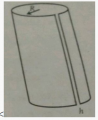
1723316751701.png
 

nsaspook

Joined Aug 27, 2009
16,250
The higher the conductance (bulk resistance and thickness) of the tube the fewer the IR losses in the conversion from gravitational energy to the electrical energy causing the slowing effect. If a changing magnetic field can cause electrical charge to move by induction (current going around the tube) in the material, then there is some effect.

1723317918184.png
My demo tubes and magnet.
https://forum.allaboutcircuits.com/...magnetics-and-copper-coil.172812/post-1551800

Tilted. (EDIT misread slitted as tilted)

 
Last edited:

WBahn

Joined Mar 31, 2012
32,703
Hi all.
Dropping a magnet into a copper tube shows the Foucault eddy currents and braking effect. Many explanations and videos about it on the web.
Does it behave the same if the tube is aluminium; magnesium, mercury, iron, silver, titanium... ? Is there any pipe made of an electrical conductor that does not produce the effect ?

Question 2: While the magnet is descending in the tube; is there an electrical current going around the tube ?

Question 3: If the tube is slitted like the image below; does the effect shows the same ?

View attachment 328988
Answer 1) The better the conductor, the stronger the effect. So a thick-walled tube generally shows a stronger effect than a thin-walled tube. A tube of higher conductivity is better than one of a lower conductivity. Also, the stronger the magnet the greater the effect in the same tube. Most metals have a higher conductivity at lower temperatures, so cold tubes show a stronger effect than hot tubes.

Answer 2) Yes -- that's the whole point. The magnet's motion is turning gravitational potential energy into the energy of the circulating current around the tube. That circulating current is producing a magnetic field. That magnetic field is exerting a force on the magnet that, by Lenz' Law, attempts to oppose the generation of the current by slowing the magnet down. If the tube were made of a superconductor, the magnet would simply stop in the tube once the currents built up to the point where the opposing magnetic field was strong enough to offset the gravitational force on the magnet.

Answer 3) The effect largely disappears for the slotted tube.
 

Thread Starter

Externet

Joined Nov 29, 2005
2,624
Thanks, gentlemen.

OK. If the dropping (moving) magnet is surrounded by electrically conductor, the effect takes place.

1- Is it wrong to assume that a magnet dropped in NaCl solution will create a circulating current in such conductive liquid ?
2- Is it wrong to assume the magnet does not need to be spinning for the effect to take place, just moving/dropping/tumbling in the liquid media ?
3- Is it wrong to assume the electric field around the magnet moving in a conductive liquid will decrease with the square of the distance ?
4- Is it reasonable to assume the voltage field strength is proportional to the moving speed of the submerging magnet, and proportional to its magnetic flux density - Gauss magnitude ?

How could the voltage or current be probed in a glass of salt water that has a magnet moving around it, or in it, or near it ? Is it just putting meter probes in the solution ?
 

nsaspook

Joined Aug 27, 2009
16,250
Thanks, gentlemen.

OK. If the dropping (moving) magnet is surrounded by electrically conductor, the effect takes place.

1- Is it wrong to assume that a magnet dropped in NaCl solution will create a circulating current in such conductive liquid ?
2- Is it wrong to assume the magnet does not need to be spinning for the effect to take place, just moving/dropping/tumbling in the liquid media ?
3- Is it wrong to assume the electric field around the magnet moving in a conductive liquid will decrease with the square of the distance ?
4- Is it reasonable to assume the voltage field strength is proportional to the moving speed of the submerging magnet, and proportional to its magnetic flux density - Gauss magnitude ?

How could the voltage or current be probed in a glass of salt water that has a magnet moving around it, or in it, or near it ? Is it just putting meter probes in the solution ?
https://forum.allaboutcircuits.com/threads/magnet-in-mercury.188065/post-1748043
 
Top