Switching Mode vs Linear regulation

Thread Starter

rpschultz

Joined Nov 23, 2022
808
I'm a mechanical engineer and dabble in electronics design and fabrication. I'm also a musician. Guitarist use DC power supplies to power their pedals. I'd like to understand the difference between switching mode and linear regulation. Specifically, comparing 2 types of pedal power supplies very commonly used by guitarists:

Cioks DC7 uses a 2-stage switch-mode power supply topology.
Voodoo Labs x8 uses linear regulation with advanced-hybrid DC transformer topology

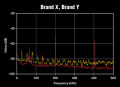
Here is a thread that shows the noise floor on the Voodoo and suggests the others are Strymon/Truetone, both use switching PS.
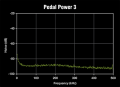
1729600571343.png1729600585315.png

This sweetwater ad is also good at explaining the Voodoo regulation method, albeit with some salesmanship.
 

Thread Starter

rpschultz

Joined Nov 23, 2022
808
"" Here is an article written from the guitar world on the difference.
Evidently, modern switching power supplies are better than linear ones. ""

The things that are "better" about a SMPS is that they are .......
Smaller, more light-weight, cheaper to manufacture, and usually have higher efficiency.
These things are not deal-breakers in most projects.

The problem is, they may require much more sophisticated Output-Filtering,
because they are naturally extremely "Noisy" Electrically.
Sophisticated Output-Filtering costs Money and Circuit-Board-Space,
so, your mileage may vary, depending upon which Model and Manufacturer You choose.

Transformer-based Power-Supplies have
only 50, or 60hz "Hum" which needs to be filtered,
and are otherwise, generally, Electrically-quiet.

They're ~twice as big, and weigh ~3-times as much,
and usually don't present You with any difficult surprises.
This quote from a couple years ago in a different thread is interesting.
 

BobTPH

Joined Jun 5, 2013
11,463
60 Hz is right in the audio spectrum. switching supply noise is way outside. I use switching supplies for audio all the time without problems.
 

MisterBill2

Joined Jan 23, 2018
27,159
Certainly a switching mode supply can be smaller, and cheaper and much more efficient. But for the power level of the typical guitar effects pedal, that will run for many hours on an internal 9 volt radio battery, the wasted power in a linear supply is not a big deal. And most linear regulated supplies are very low noise. And even the noise above hearing will have an effect on how well an audio amplifier performs. It can be overloaded and distorting even if you can't hear that signal.
 

Sensacell

Joined Jun 19, 2012
3,767
Filtering difficulty and cost is inversely proportional to the power level required.

For low-power audio circuits, it's pretty easy to add filtering or even linear regulation on top, with great results.
The weight and volume saved makes 60 hz iron transformers obsolete.

People tend to get a little nuts when the subject of audio noise comes up, it quickly gets into voodoo territory.
 

MisterBill2

Joined Jan 23, 2018
27,159
Ripple would be a 100Hz/120Hz and that is definitely in the guitar spectrum. Even with a very sharp cutoff filter so would 50Hz/60Hz.
Have you ever heard a guitar combo that didn't hum?
ACTUALLY, YES!! And in fact, back in the mid 1960's era I made money selling guitar cables that did not allow any hum. Good shielded cable and well soldered PL055 plugs. At that time there were a whole lot of folks who had no clue as to how to solder well, or what was adequate shielding. And amplifiers that needed filter caps replaced.
 

sparky 1

Joined Nov 3, 2018
1,218
I lean toward linear supply for some but not all audio.
I am willing to look at why some linear designs are more efficient.
The switch modes are getting better but for a precision split supply for op amps. The two switching halves fight each other.
By using a linear center tap transformer both positive and negative outputs are independently regulated facilitating smooth tracking.
I have learned that spending a little more on some parts is better for overall quality as well. Explained in the video which is not a dual supply.
For music inclined in electronics' you might need a dual supply for op amps however the audio tube amplifier and all the effects involves
an array of multiple power supplies that can be a tangled affair.

Someone knowledgeable that tested different supplies and is willing to share his design and how he implemented it.
Seeing the results on the oscilloscope and going through the explanation put us ahead on the learning curve.

 
Last edited:

Thread Starter

rpschultz

Joined Nov 23, 2022
808
Super interesting, but a fair bit beyond my understanding.

I think it would be interesting to test the noise floor of my 2 pedalboard power supplies - one is a SMPS (Cioks DC7), the other (Voodoo x8) is a " linear regulation with advanced-hybrid DC transformer topology ", whatever that means. I have a Silgent SDS804, but I'm a novice still learning how to properly use it.
 

Thread Starter

rpschultz

Joined Nov 23, 2022
808
My point is that you cannot simply compare the noise level when one is at 120Hz and the other is at 500KHz in an audio application.
I'm probably thinking about this wrong, but when I think of noise floor, that's when there is no audio signal.
 

panic mode

Joined Oct 10, 2011
4,864
i find the fascination with fidelity and noise floor very interesting.

but audiophiles and musicians are something else. the part i love the most is when subjective comparisons are included ("vinyl and tube amps sound better to me..."). at the same time almost everything we hear today is compressed and streamed in a digital form, so folks working on compression algorithms are like "nahhh, they won't hear that part, lets optimize that out...".

and here too is a discussion about pushing the noise floor of the PSU down below audible limit. ok.. why not... that is always desirable... but i cannot stop grinning ear to ear... the funny thing is - this is used for pedals that are designed to do one thing only - to produce abundance of various distortions... for electric guitars... instruments that are not exactly known for playing particularly delicate or faint music. can't make that up...:p

i would like to see a challenge, where guitar players are asked to hit the same note, exactly the same way, multiple times... and the winner is the person able reproduce that same note (frequency and volume) most repeatably. why not see how good of an instrument, instrument players hands and ears can be. i would like to see how well the first 2-3seconds of the recorded traces overlap when they try their best...
 

MisterBill2

Joined Jan 23, 2018
27,159
I'm probably thinking about this wrong, but when I think of noise floor, that's when there is no audio signal.
The "noise floor" is always there, but when the intended signal is much larger it is difficult for most of us to hear. The noise floor may be audible when there is no signal, so you are correct. THAT is when it is prominent.
The 500KHZ ripple on the power supply can cause unintended results, for instance overloading an amplifier stage to cause distortion at signal levels much lower than should cause any problems.
 

Thread Starter

rpschultz

Joined Nov 23, 2022
808
… but i cannot stop grinning ear to ear... the funny thing is - this is used for pedals that are designed to do one thing only - to produce abundance of various distortions... for electric guitars... instruments that are not exactly known for playing particularly delicate or faint music. can't make that up...
:p
You have a narrow view of electric guitar. Overdrive and distortion are only a small subset of pedals used today. Modulation, delay, reverb and a plethora of other pedals are used as well. And often those different types are not used at the same time, or at least maybe a little overdrive with a lot of delay/mod/reverb.
 

sparky 1

Joined Nov 3, 2018
1,218
I could be wrong but I think the
"Distortion effect " The term includes the product of a signal that is clipped, filtered and recombined. Other clipped signal distortion no doubt existed before that but the guitar industry began opening that technology to the public. Some radio people have other stories. Here we are considering the audio inception, the term distortion used in the Fuzz tone circuit. Maestro Fuzz-Tone | Vintage Guitar® magazine
The replication of the studio's faulty equipment shared the microphonic tube effects of Grady Martin. Must have been the closest they could find.
In this video below most of the original Fuzz tone circuit is explained. The Bradley Film and recording studio's equipment may have been relocated.
Quad Eight Electronics became Langevin https://www.orphanaudio.com/classic-audio-equipment/langevin
Gibson guitar is noted as the manufacturer of the Maestro FZ1 introduced 1962 which did justice to original. Hopefully I have this correct.

Other effects should be noted
 
Last edited:

panic mode

Joined Oct 10, 2011
4,864
the only processes that does not distort waveform is one that can be reversed. in this case that is amplification and attenuation. anything else changes actual waveform in some fashion so that recovery of original signal (in its near original form) is not only difficult but closer to impossible. and in this case even modulation is not used with intent to demodulate at some point so this is one way change (irreversible). and you may not agree but to me, what i just described is pretty much a definition of distortion.

and don't get me wrong, i love music and specially electric guitars. i do not play so i am glad that others do... keep it up. the distortions produced by pedals are not a defect, they are the goal... which is why so many exist. i am just amused by contrasting demands for fidelity and distortion. :p
 

ronsimpson

Joined Oct 7, 2019
4,645
When I first started designing switching power supplies, we struggled to get to 20khz. (just above audio)
Later I worked to get to 120khz.
Recently we are running at 1Mhz and up.
One thing we learned is that a switching frequency will mix with the digital audio sampling rate. 44.1Khz, 96khz and 192khz. Just for digital audio, if the PWM frequency is 1khz off the sampling rate you will see a 1khz tone down near the noise floor. This does not apply for linear audio but where do you find that now days. If I do another audio & PWM project I probably will switch at 250khz or above to stay away from the audio sampling rate.
 
Top