Soldering flux: the basics?

Thread Starter

rambomhtri

Joined Nov 9, 2015
606
Wow, amazing replies, thank you so much. Ball soldering sounds and looks scary and impossible to be done properly unless you're an expert at it and have very specific tools, hahaha. That would be like the CPU's in some laptops, right? or GPU's, that they are ball soldered to the MoBo, right? How would you remove those? I never tried, and I'm pretty sure I don't have the tools.

OK, it's weird you have never heard of it, since it's made in the USA and appears to be a "standard" flux, at least it looks really neat and is presented really well in a nice plastic canister, with a brush included, here are the pictures of the La-Co:

https://www.sealantsandtoolsdirect....flux_laco_non_toxic_non_acid_125g_P28678.html
https://markal.com/products/regular-flux-paste?variant=9204786823215

Yes, I've heard it used for piping soldering, but I seen this flux used many times in electronics. Did I just bought an exclusive piping soldering flux?
Lol, though doesn't seem to be for piping only, the specs say it's also for general use.

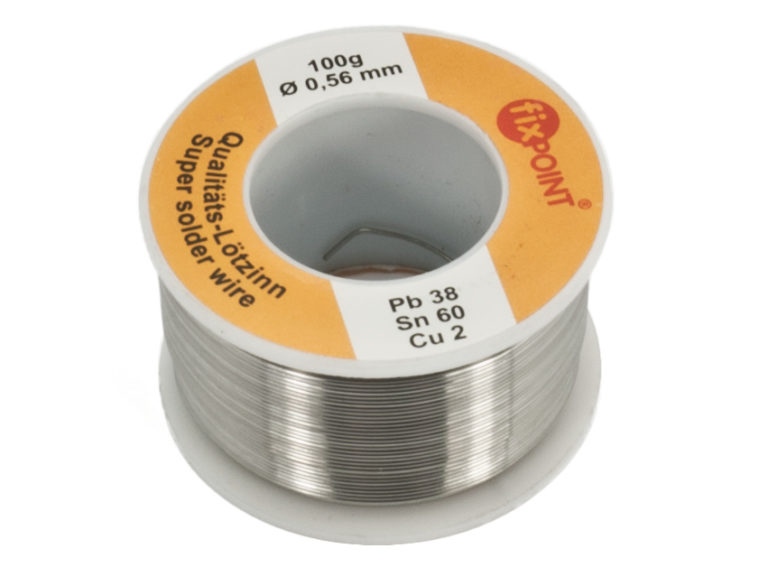
Yaakov, I tried that as well, and couldn't stick any solder to the positive. Of course, I'm concerned about the batteries, I don't put the soldering iron on there as I would do with a cable or something, I'm "scared" that the heat would damage the battery, so I try not to heat up the surface much. This is the soldering wire I use:

I could solder barely some AA 1.5V batteries I had without flux the other day, I guess with flux it would easier, but with the battery I tried yesterday (different manufacturer), the positive was impossible to solder, it was not hard, but impossible, like trying to solder on water or something. May be you have a battery that it's not that hard to solder?
 

MrSoftware

Joined Oct 29, 2013
2,273
You'll get lots of recommendations for flux, and there are many good ones. I've personally had very good luck with this one:

https://www.amazon.com/gp/product/B00425FUW2/ref=ppx_yo_dt_b_search_asin_title?ie=UTF8&psc=1

And for cleanup, use a brush like these with alcohol, cut the bristles a little short to make it stiffer. Give it a gentle scrub with the alcohol, then put a lint free disposable towel over it and give it another wipe with a brush soaked in alcohol to clean up:

https://www.amazon.com/gp/product/B01LXNQW9W/ref=ppx_yo_dt_b_search_asin_title?ie=UTF8&psc=1

This video has some excellent examples:
 

dl324

Joined Mar 30, 2015
18,376
You can explain from experience also why do you use flux
I use it on things that have some sort of film/residue on them.

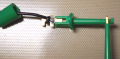
Without extra flux, getting wires attached on these grabbers from AliExpress caused the plastic parts to start deforming:
upload_2019-10-10_8-31-19.png

A dab of flux made soldering a breeze.
 

Tonyr1084

Joined Sep 24, 2015
9,744
Flux cleans the surface but it also has a very important function: it prevents reoxidation. For that to happen, the flux must be there at the time the solder is applied. The tacky fluxes stay around even with a lot of heat, but even fluxes that will burn off will do the job if they are present at the time the solder is applied.

The flux you have will almost certainly facilitate soldering to a battery terminal if you DON'T heat it up first. Apply the flux, then make the joint as you would, right on top of the flux.

Here's a wire soldered to the terminal of a AA cell. I used Kester 959T no clean flux, but could easily have used a rosin flux. The solder is a Kester 63/37, though for the tinning, a 60/40 would have worked even better with the better wetting action it offers (it wasn't needed). The iron was a 350°C, and I applied a drop of the flux, then tinned the terminal, then tacked the tinned wire on and flowed a bit more solder.

The joint is very solid, mechanically, and of course electrically sound. The flux allowed the solder to flow on an oxide free surface, and it makes getting the terminal tinned easier. It can be done with the rosin core solder alone, but not as easily, and it would likely mean heating the work more.

View attachment 187748
I, too, have successfully gotten wire to stick to a battery. However, 35 years of inspecting electronic solder joints, what you call "The joint is very solid" is - in my opinion a lack of wetting. Though it may be stuck AND may flow current sufficiently, I wouldn't have called it a very solid joint.

I don't recall, did someone post a link to spot welding to batteries? That would afford you a thinner tab that can more easily be soldered to with less concern about heating a battery. Incidentally, my suggestion about pre-heating things was not intended to make recommendation you put your battery in the oven set at 125˚C. In fact, just the opposite. You should do all you can to avoid heating a battery. They can very easily leak. OR WORSE - EXPLODE. Depends on battery type. Nevertheless, don't pre-heat batteries before attempting to solder to them.

No, I don't have a spot welder for battery connecting. However, there are plenty of YouTube videos for that sort of thing.

[edit] Yes, MrSoftware (post #12) posted a video on spot welding. [end edit]
 

Thread Starter

rambomhtri

Joined Nov 9, 2015
606
Amazing spot welding, very easy, neat and kind of professional. Although, I think... is that 4 point joint gonna resist time?
I mean, I see a cable soldered to a PCB and I think it's mechanically fine and will resist time perfectly. But, I see a little flat thing attached with 4 holes and I believe if you twist it a little bit, overtime they 4 spots will free from the battery. Also, I don't have a car battery hanging around, a the whole set up takes too much space, I don't own a garage to have those kind of things, hahaha. I'd love to though...

Yes, I don't put the iron tip for so long because I don't want to heat up the whole battery, as I know leaking or exploding are things that can totally happen. By the way, why batteries have this non-soldering surface on them? Couldn't they just use a material solder friendly?
 
Last edited:

Tonyr1084

Joined Sep 24, 2015
9,744
One possible reason for how or why they choose the finish they do is because the battery has to make contact with something. Using something solder friendly - say "Copper" - could result in excessive wear on the battery. Or the spring. Or both. And dissimilar metals tend to corrode. Since the spring is (and I don't know this for sure) some kind of stainless steel (maybe) - if the battery top is similar or alike then there will be far less corrosion and wear. A lot of science has gone into engineering batteries. Corroded contacts also cause resistance that can hinder electrons, thus, raise the resistance to where the device is no longer getting the minimum required current. You can have a new battery act like a weak battery. And a weak battery just like a dead battery. So the material at the ends of the battery are (probably) designed to avoid corrosion.

If you've ever had a battery leak and corrode the spring terminal you may know it's virtually impossible to fully restore it to its former conductivity. You can scrape it off, sand it off, use a chemical on it - but it's never the same.

As for those welded four small pin-pricks holding the tab on - - - if you've ever tried pulling one off you'll know just how strongly they are attached. You can tear the metal before the welds give up. If they were done right that is.
 

Ya’akov

Joined Jan 27, 2019
10,259
I, too, have successfully gotten wire to stick to a battery. However, 35 years of inspecting electronic solder joints, what you call "The joint is very solid" is - in my opinion a lack of wetting. Though it may be stuck AND may flow current sufficiently, I wouldn't have called it a very solid joint.
You may be fooled by the photo, Tony. The joint was so solid when I pulled the wire off it took at least 20 pounds of force and the wire pulled out of the solder, not off the terminal, leaving a strand behind and fracturing the solder below it.

It was solid, no question. Not that it matters but I calculated that I started soldering *50* years ago, so if longevity is relevant...
 

Thread Starter

rambomhtri

Joined Nov 9, 2015
606
Thanks for such useful information. Yaakov, I might try again. If I understood correctly, I should put some flux on the surface, heat only flux covered area, and the put the solder wire there and it should stick to the metal? How long should I heat up the positive while the flux is still there?

One thing I don't like is that it's a battery, it can't heat up much...
 

Ya’akov

Joined Jan 27, 2019
10,259
Thanks for such useful information. Yaakov, I might try again. If I understood correctly, I should put some flux on the surface, heat only flux covered area, and the put the solder wire there and it should stick to the metal? How long should I heat up the positive while the flux is still there?

One thing I don't like is that it's a battery, it can't heat up much...
You should put the flux on, then make the solder joint as you would otherwise: first tin the terminal (coat it in a small amount of solder) by placing the solder on the work first, then touching the iron to the solder and melting enough for the purpose, then take away the solder and leave the iron on for long enough that the solder flows onto the terminal and leaves a flat, shiny pool.

Then, tin the wire if it is stranded, and place it on the tinned terminal in position. I put a VERY small amount of solder on the tip at this point, which is normally not a good idea since it will burn off the flux in the core, but we don't need that for this and the little molten solder will enhance heat transfer. Heat the wire, not too much pressure if it is stranded or you'll fan it out and make an ugly result. Heat it until the solder of the terminal and wire flow together, then let it cool.

You are not using a eutectic alloy (I don't think so, anyway, though it might be with the copper in it, you can research that) so, you must be careful not to move the wire during the cooling and forming a cold joint. 63/37 alloy doesn't have this issue, but you just need to be careful.
 

shortbus

Joined Sep 30, 2009
10,049
Yes, I've heard it used for piping soldering, but I seen this flux used many times in electronics. Did I just bought an exclusive piping soldering flux?
Lol, though doesn't seem to be for piping only, the specs say it's also for general use.
General use is not electronics. It's for things other than electronics, general things.

Also if that is a picture of the solder your using to solder batteries, that is part of the problem, it's lead free solder. It takes way more heat than regular lead solder. And no lead solder is not harmful to you as long as your not eating it.
 

Thread Starter

rambomhtri

Joined Nov 9, 2015
606
You should put the flux on, then make the solder joint as you would otherwise: first tin the terminal (coat it in a small amount of solder) by placing the solder on the work first, then touching the iron to the solder and melting enough for the purpose, then take away the solder and leave the iron on for long enough that the solder flows onto the terminal and leaves a flat, shiny pool.

Then, tin the wire if it is stranded, and place it on the tinned terminal in position. I put a VERY small amount of solder on the tip at this point, which is normally not a good idea since it will burn off the flux in the core, but we don't need that for this and the little molten solder will enhance heat transfer. Heat the wire, not too much pressure if it is stranded or you'll fan it out and make an ugly result. Heat it until the solder of the terminal and wire flow together, then let it cool.

You are not using a eutectic alloy (I don't think so, anyway, though it might be with the copper in it, you can research that) so, you must be careful not to move the wire during the cooling and forming a cold joint. 63/37 alloy doesn't have this issue, but you just need to be careful.
Instructions unclear, burnt my whole apartment...

Jokes aside, thank you for such detailed description, I might even make a video so you can check what's wrong in case it doesn't work. By the way, my soldering wire is this one:
https://forum.allaboutcircuits.com/threads/soldering-flux-the-basics.163740/page-2#post-1438813
 

Thread Starter

rambomhtri

Joined Nov 9, 2015
606
General use is not electronics. It's for things other than electronics, general things.

Also if that is a picture of the solder your using to solder batteries, that is part of the problem, it's lead free solder. It takes way more heat than regular lead solder. And no lead solder is not harmful to you as long as your not eating it.
Really?
A few years ago, after some research I thought I had bought the "perfect" soldering wire with those percentages (38% Pb, 60% Sn, 2% Cu)...

Lead free you say?
There a big clear 38% Pb on the specs. Why did you say lead free?

About the flux, the manufacturer states: LA-CO Regular Flux is a water soluble flux that meets industry standard ASTM B813. With NSF and UPC approvals, this all-weather flux is the ultimate flux for all copper soldering. Water-soluble paste won't leave residue in water piping, meets industry standard ASTM B813 and contains no zinc chloride to reduce corrosion concerns, non-acid, non-toxic, and lead-free to eliminate safety concerns, cleans pipe upon application, allowing solder to run more smoothly around the pipe, all-weather formula for use in hot and cold climates, made in U.S.A. FOR USE ON: All lead-free and common soft solders, Copper, Brass, Galvanized iron, Lead, Zinc, Tin, Silver, Nickel, Mild steel, Terne plate, Malleable iron.

That includes electronics, why shouldn't?
 

shortbus

Joined Sep 30, 2009
10,049
Lead free you say?
There a big clear 38% Pb on the specs. Why did you say lead free?
My bad, miss read the PB.

About the flux, the manufacturer states: LA-CO Regular Flux is a water soluble flux that meets industry standard ASTM B813. With NSF and UPC approvals, this all-weather flux is the ultimate flux for all copper soldering. Water-soluble paste won't leave residue in water piping, meets industry standard ASTM B813 and contains no zinc chloride to reduce corrosion concerns, non-acid, non-toxic, and lead-free to eliminate safety concerns, cleans pipe upon application, allowing solder to run more smoothly around the pipe, all-weather formula for use in hot and cold climates, made in U.S.A. FOR USE ON: All lead-free and common soft solders, Copper, Brass, Galvanized iron, Lead, Zinc, Tin, Silver, Nickel, Mild steel, Terne plate, Malleable iron.
The "for use on", lists the common uses of solder other than electronics doesn't it? If it was for electronics when they went to the trouble of listing all of the others, don't you think they could type one more word? But then again they are your projects, not mine.
 

Thread Starter

rambomhtri

Joined Nov 9, 2015
606
Not trying to "argue", I'm simply pointing out that the manufacturer says you can use it for those purposes/materials. Doesn't all of this "All lead-free and common soft solders, Copper, Brass, Galvanized iron, Lead, Zinc, Tin, Silver, Nickel, Mild steel, Terne plate, Malleable iron" include whatever you find in electronics, mainly copper and tin?
I guess they put materials, not the profession itself. Notice how they didn't put use for electronics, just like they didn't put plumbing, or piping. It's because they are included when they say: copper and lead, and also all the other things...

So, hahaha, I guess it's perfectly fine for electronics use, right? Anybody see something bad?
 

shortbus

Joined Sep 30, 2009
10,049
So, hahaha, I guess it's perfectly fine for electronics use, right? Anybody see something bad?
I wouldn't use it for electronics and doubt that anyone else would that knows what their doing, but go for it. If you already made up your mind on this why ask about it???
 
Top