Facebook
 Google
 GitHub
 Linkedin
Hi,
I am working on a project, whare I explore different fault detection methods for coaxial cables. For that purpose I created two Ansys simulations of coaxial cables, whare one is the control and one is damaged. I want to know if my Ansys HFSS simulation results are correct. I simulated the impedance of a RG59 coaxial cable in Ansys HFSS in the TDR mode. My cable is 30mm long and all the other parameters are the same as specified in the RG59 datasheet.
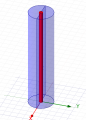
RG59 coaxial cable
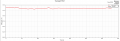
Impedance of RG59 coaxial cable
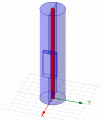
Damaged RG59 coaxial cable
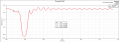
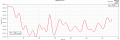
Impedance of damaged RG59 coaxial cable
The damaged section of the cable is present only in the dielectric. I was expecting the undamaged coaxial cable to have a strait line as the impedance graph but I was surprised when it was vary wavey.
I appreciate all the help I will get.
Have a grate day!
Domen
I am working on a project, whare I explore different fault detection methods for coaxial cables. For that purpose I created two Ansys simulations of coaxial cables, whare one is the control and one is damaged. I want to know if my Ansys HFSS simulation results are correct. I simulated the impedance of a RG59 coaxial cable in Ansys HFSS in the TDR mode. My cable is 30mm long and all the other parameters are the same as specified in the RG59 datasheet.
RG59 coaxial cable
Impedance of RG59 coaxial cable
Damaged RG59 coaxial cable
Impedance of damaged RG59 coaxial cable
I appreciate all the help I will get.
Have a grate day!
Domen