selecting Transistors for led sign boards

Thread Starter

lubnaan90

Joined Jan 13, 2010
198
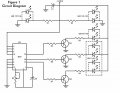
Can any of the below mentioned transistors be used in the Schematic attached ??
Note : Q1,Q2,Q3 = 2N3643 or PN3643 (can't find em anywhere) , IC = 4047

BC 327-40 , BC 328-25 , BC 337-40 , BC 338B , BC 517 , BC 547C ,
BC 557B , BC 557C , BC 639 , BC 807 , BC 817 , BC 847C , BC 848B,
BC 856B , BC 857C , BC 858B

2N 1893E , 2N 5401 , 2N 5551 , 2N 6073A , 2N 6400
 

Attachments

peranders

Joined May 21, 2007
88
This is a really easy application so what you need is this:
fT = anything
Uce = > 30 V
Hfe = > 100
Ic = > 100 mA

Anything will do here.
 

Audioguru

Joined Dec 20, 2007
11,248
The schematic is missing important details:
1) What is the current in each LED?
2) What is the forward voltage (colour) of each LED?

If the current is 20mA and LEDs 85-126 are 1.8V red ones then resistor R3 dissipates 8.4W of heat.

Most of the listed transistors cannot drive a load current as high as 0.82A.

The CD4047 cannot provide enough base current for the transistors to saturate.

If 5 LEDs are connected in series then the currents will be reduced but the LEDs will look the same.
 

SgtWookie

Joined Jul 17, 2007
22,230
Wait a minute - Q2 and Q3 are driving a total of 84 LEDs in parallel, or 42 each?
And Q1 is driving 41 LEDs in parallel?

And each set of LEDs has only ONE current limiting resistor?

That design won't work as is.

If the LEDs require 20mA current, each transistor would have to sink 840mA current, and the 4047 would have to source 84mA current to the bases to saturate the transistors (turn them on). It can't source anywhere near that much current.

You need to tell us more about this application.
Is it going to be run from a battery, a regulated power supply, or something else?
What is the typical Vf @ current of the LEDs that you are planning on using?

The only transistor types you would be able to use are Darlingtons or power MOSFETs.
Darlingtons would drop too much voltage from the collector to the emitter.
That leaves power MOSFETs that have a low gate charge.

IRLD014 and IRLD024 are both useable, the 014 can sink up to 1.7A, the 024 can sink up to 2.5A, and they are both in a 4-pin DIP package. Mouser and Digikey stock at least one of them.
 

Thread Starter

lubnaan90

Joined Jan 13, 2010
198
Wait a minute - Q2 and Q3 are driving a total of 84 LEDs in parallel, or 42 each?
And Q1 is driving 41 LEDs in parallel?

And each set of LEDs has only ONE current limiting resistor?

That design won't work as is.

If the LEDs require 20mA current, each transistor would have to sink 840mA current, and the 4047 would have to source 84mA current to the bases to saturate the transistors (turn them on). It can't source anywhere near that much current.

You need to tell us more about this application.
Is it going to be run from a battery, a regulated power supply, or something else?
What is the typical Vf @ current of the LEDs that you are planning on using?

The only transistor types you would be able to use are Darlingtons or power MOSFETs.
Darlingtons would drop too much voltage from the collector to the emitter.
That leaves power MOSFETs that have a low gate charge.

IRLD014 and IRLD024 are both useable, the 014 can sink up to 1.7A, the 024 can sink up to 2.5A, and they are both in a 4-pin DIP package. Mouser and Digikey stock at least one of them.
Hello Sgt, Q2 & Q3 are individually driving 42 leds each i.e Q2=42 leds , Q3=42 leds.
Led's i am using are not high power , the old ones 5mm , red & yellow (not transparent)

P/S - 12volt 0.5amps wall transformer .
 
Last edited:

SgtWookie

Joined Jul 17, 2007
22,230
If they are the old type LEDs, they were probably rated for 15mA current.

You will need to determine the forward voltage of the LEDs when 15mA current is flowing through them.

You will also need to determine if your wall transformer is regulated or not. Measure the DC voltage output with no load.

Then subtract 2v from that (approximate Vf of LED)
Let's say you measure 12v from the unloaded transformer output.
12v-2v=10v.
Then calculate the resistor you'll need to allow 15mA current with 10v across it.
R=E/I, so R=10v/15mA = 666 Ohms - resistor of the beast. :eek: ;)

The closest standard value is 680 Ohms.
Connect a single LED and a 680 Ohm resistor in series across the supply, and measure the voltage drop across the LED, and the voltage drop across the resistor. (this is more safe than measuring current directly)

You will need to measure 10 of each type to get a good statistical sample. Record your results carefully, and post them.
 
Last edited:

Audioguru

Joined Dec 20, 2007
11,248
With five 1.8V red LEDs in series then their current is all the same at 20mA if you want.
The resistor is (12V - [1.8v x 5])/20mA= 150 ohms. You can have 8 strings like this which will be a total current of only 160mA that can be driven by a 2N4401 NPN transistor.

Your circuit is for NPN transistors but you list PNP transistors.
 

Thread Starter

lubnaan90

Joined Jan 13, 2010
198
hi all , found a website where we can check the equivalent transistors .
http://nte01.nteinc.com/nte/NTExRefSemiProd.nsf/$$Search?OpenForm

Put in the part number & the reasult will come out with NTE sub number , Go back to the search page , enter the equivalent part you are planing to use , if the result comes out with the same NTE sub number , then the part is equivalent .

For eg , i compared the results with 2N3643, 2N4401, 2N2222, PN3643 & finally BC337 (which is available here) , the NTE sub are same for all the substitute Transistors .
 

Audioguru

Joined Dec 20, 2007
11,248
NTE buy transistors and re-label them before selling them at a ripoff price.
Of course one 1000mA NTE transistor can replace many different lower current transistors.

A 2N4401 has a max allowed collector current of 600mA but performs poorly above 400mA. A BC337 has a max allowed collector current of 500mA but performs poorly above 300mA.
 
Top