Seeking Advice on Meaningful Personal Electronics Projects

Thread Starter

NgocAnh063

Joined Jul 16, 2026
1
Hello everyone,

My name is Ngoc Anh, and I'm a third-year Electronics and Telecommunications student from Vietnam, studying at The University of Danang – University of Science and Technology (DUT).

I've been thinking a lot about how to spend the rest of my university years building practical engineering skills through personal projects.

Although my major is Electronics and Telecommunications, my career goal is to become an electronics hardware engineer. My primary interest is electronic circuit design rather than Computer Engineering. I certainly understand that programming and microcontrollers are useful skills, but I'm much more interested in designing, analyzing, debugging, and building electronic hardware.

I'm not looking for projects just to make my résumé look better. Instead, I want projects that will genuinely teach me how experienced engineers think and solve real-world engineering problems.

If you were mentoring a university student, what projects would you recommend completing before graduation?

I'm interested in projects from any area of electronics, such as:

  • Analog circuit design
  • Digital electronics
  • Test and measurement equipment
  • PCB design
  • RF and communication circuits
  • Audio electronics
  • Power electronics
  • Sensors and instrumentation
  • Or any other field that you believe provides valuable engineering experience
I'm also interested in knowing why you recommend those projects and what skills each one helps develop.

I would really appreciate hearing from experienced engineers about the kinds of projects that had the biggest impact on your own careers.

Thank you very much for your time. I look forward to learning from your experience!
 

MaxHeadRoom

Joined Jul 18, 2013
30,732
On your list for PCB design, I would Use the free Kicad to display the circuit, design the board layout and complete up to the Gerber file used b the board manuf.
Take advantage of the particular program forums..
Take a short survey from aquantences for some need they would like to be filled and try and design and build a unit that might satisfy thier need.
IOW, find a need and fill it.
 

WBahn

Joined Mar 31, 2012
33,005
Look for projects that are of interest to you or others. When I was a sophomore, the school's theatre club wanted a couple of things that I designed and built for them. One was a circuit to ring an old-style telephone on stage and the other was to enable them to dim some spotlights. Both of my designs worked... for a while. But I had not taken into account effects that I wasn't aware of yet, and so they failed fairly quickly. In trying to figure out why they weren't working, I learned about those effects in a way that drove them home and was able to modify the circuits so that they continued to use them for many years (may still be using them, for all I know). That also put me in a much better position to appreciate those concepts when we finally got to them in courses, and, unlike quite a few of my peers that just dismissed them out of hand, to recognize that these were not just academic points, but things that affect real-world circuits.

Virtually all of the projects I did in those years were small projects for people that needed them. A Jeopardy-style buzzer system for the annual physics bowl, a timer the Taco Bell were I worked to remind workers to do a front-of-house cleanup, a model rocketry launch controller, a model rocket engine test stand. Each of these (and more) came at a time when I had limited awareness of options (I hadn't heard of microcontrollers yet, for instance) and exposed me to real-world issues that often get overlooked (like how quickly a 9 V battery gets drained by a bunch of TTL chips and LEDs).

Talk to the departments at your schools, particularly anyone doing research. They often need fairly simple circuits and are operating on a shoestring budget and love it when they can point to in-house student involvement in their reports to their superiors and sponsors. If you do a few, you will probably build a reputation as someone to go to when a need is identified. This is how I ended up doing my senior design project by designing and building a critical current measurement facility for high-temperature superconductors.
 

BobTPH

Joined Jun 5, 2013
11,584
Talk to the departments at your schools, particularly anyone doing research.
And you could even get paid for it! When I was a physics student, One of my profs hired me as a lab assistant, making $2.40 / hr (minimum wage at the time.) My first serious electronic design was a 3 digit BCD D/A converter that could select any three consecutive digits from a six digit counter instrument. The department EE tech mentored me and introduced to the brand new 4000 series CMOS for driving my ladder. I layed out the PCB using a mylar sheet with double sized stick-on footprint decals and literally taped out the wiring. The hardest part was wiring the 12P4T rotary switch to select which 3 digits to convert.
 
Last edited:

MisterBill2

Joined Jan 23, 2018
27,822
Post#4 is quite interesting indeed! That seems like an interesting project. My initiql project was prior to the transistor era, so the first project was to build a tube-type audio amplifier, followed by building an AM radio "tuner" to provide a steady signal to amplify. Then followed designing and building a DC power supply, After that came a more powerful audio amplifier, an excursion into the HI-FI , low distortion and flat frequency response power amplifiers. And they all used vacuum-tube technology, because transistors were mostly low power and still not cheap, while used tube-type stuff was plentiful and easily obtained .
 

MisterBill2

Joined Jan 23, 2018
27,822
On your list for PCB design, I would Use the free Kicad to display the circuit, design the board layout and complete up to the Gerber file used b the board manuf.
Take advantage of the particular program forums..
Take a short survey from aquantences for some need they would like to be filled and try and design and build a unit that might satisfy thier need.
IOW, find a need and fill it.
Certainly printed circuit design skill is valuable, and just as certainly PC design requires some actual understanding of circuits, as well as understanding the signals and voltages present on every element of those circuits, because coupling between different traces can lead to problems.
 

MisterBill2

Joined Jan 23, 2018
27,822
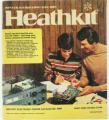
I built a few KNIGHT kits, and also a Heathkit. And also, I think it was, an OLSEN kit, photo electric relay. I still have them, up on a shelf. The Knight Kit 12 watt amplifier came with an open circuited power transformer. No High voltage. Eventually also a signal generator and a R/ C bridge for determining part values and checking used capacitors. Also built a Radio Shack analog multimeter. I still use that one, 50years later.
 
Top