SCOPE UP!!!!!!!!

WBahn

Joined Mar 31, 2012
32,866
To be honest, even close would be adequate, Im not splitting atoms here
What constitutes "close".

When this idiot user sees the scope trace and compares it to the one on the overlay, what do they look for to decide that it is close enough to be adequate? If it isn't close enough to be adequate, what do they do to make it that way? How do they know when they have done it enough?
 

Thread Starter

Kim Sleep

Joined Nov 6, 2014
398
What constitutes "close".

When this idiot user sees the scope trace and compares it to the one on the overlay, what do they look for to decide that it is close enough to be adequate? If it isn't close enough to be adequate, what do they do to make it that way? How do they know when they have done it enough?
the input that the scope is reading from is variable
 

Thread Starter

Kim Sleep

Joined Nov 6, 2014
398
Ok, I think that its time to put this thread to bead. My idea is obviously flawed, and obviously not practical. I do thank everyone who has pitched in, and attempted this. Ill be back with some other hair brained idea again in the future...all the best!
 

BobTPH

Joined Jun 5, 2013
11,521
I don’t think you want an actual scope. How about a microcontroller that samples the waveform and displays it on an OLED display? All the synchronization and display of the reference done with software. This also saves on cost and gives you infinite flexibility in how it is displayed.
 

Thread Starter

Kim Sleep

Joined Nov 6, 2014
398
Thank you BOB...thats sorta what I asked for may responses ago, if there could be a OLED display and a microcontroller programmed that would immediately have all the parameters built in , right on start up
 

WBahn

Joined Mar 31, 2012
32,866
the input that the scope is reading from is variable
I have no idea what you mean by this.

You might try taking the following approach -- write a user manual for this part of the operation. Assume that someone has just purchased your product and they take it out of the box, hook it up, and turn it on. Your scope is preconfigured just the way that you want it to be. The user has the manual sitting in front of them and needs it to walk them through step by step on how to tell if adjustments need to be made and exactly what adjustments to make until they get to a point where further adjustments are not needed.

In the process of actually writing down those instructions, you will likely get a good feel for what is and what isn't possible/reasonable for your intended user to accomplish. It will also force you to consider how you will explain to the user what they need to look for to determine if the waveform is good enough. Once you can do that, you are in a position to consider whether displaying a waveform at all is necessary or even useful. You might be able to analyze the waveform with an MCU and have it tell the user what to do (perhaps with the help of the manual) and whether the waveform is good enough. You might also be in a position to have the system make the adjustments itself.
 

MisterBill2

Joined Jan 23, 2018
27,547
It is a trivial exercise to create a scope display overlay with limits that the scope display needs to be inside to be acceptable.

It is also possible to use a processor with a fast A/D to do a comparison of an input with limits that are changed with time. That is not hard at all, just quite tedious.
 

WBahn

Joined Mar 31, 2012
32,866
It is a trivial exercise to create a scope display overlay with limits that the scope display needs to be inside to be acceptable.
Only if what constitutes "acceptable" can be established. If I task you with creating the overlay for me and all I can tell you is that it needs to be a 3 V sawtooth (rising ramp) at a frequency of 1 kHz, can you make the overlay showing the limits that the waveform has to be inside of to be acceptable? Of course not, you need me to tell you, quantitatively, what determines whether it is acceptable or not, and if all I can do is say things like, "I need it to be the highest quality I can get, but this isn't for NASA," or, "I just need to see if the amplitude and waveform are accurate," are you going to be able to make a useful overlay?

Even if I am able to tell you exactly what the parameters are that things have to fall within, it's very possible that no simple go-no-go overlay can be made. Consider the simple case of a sawtooth that has a certain range of allowable frequency, but also has a limit how how long the reset at the end of the ramp can take. What's the overlay going to look like? Or consider a case where I have a maximum amount of frequency error and also a maximum amount of nonlinearity. If I create my overly for the ideal frequency and the maximum nonlinearity that can be tolerated. My overlay has to have these bounds because waveforms at the ideal frequency that fall outside that box are not valid while waveforms that fall within it are. But now consider a waveform that is at a higher or lower frequency, but still acceptable, and that has the same or even slightly better nonlinearity. It's very likely that this waveform will not fit within my overlay window. Similarly, it's possible that a waveform at the wrong frequency that moves it toward one side of the overlay might have excessive nonlinearity that moves it toward the other side, but because of the bias from the frequency error, it never goes outside the overlay bounds., even though it is not an acceptable waveform.

Then there's the basic question of resolution. If I need the amplitude to be 3 V ± 5%, that can probably be determined with a scope overlay well enough. But if it has to be 3 V ± 0.5%, That's going to be a lot more challenging. The same with frequency. If they need it to be 1000 Hz ± 1 Hz, that's going to be all-but impossible to determine on a static waveform display with an overlay. So whether not the tuning can even be done using a scope trace depends on what is and is not deemed an acceptable waveform, which brings us right back to the person developing the system has to be able to articulate what those specifications are and do so quantitatively.
 

MrChips

Joined Oct 2, 2009
34,819
We understand the specifications presented by @WBahn but what the TS is looking for can still be accommodated with a ‘scope display.

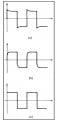
An example is when we adjust an oscilloscope probe for the flattest frequency response. We do this visually to get the “best possible” square wave and settle for what we accept as “good enough”.

IMG_2335.jpeg
 

WBahn

Joined Mar 31, 2012
32,866
We understand the specifications presented by @WBahn but what the TS is looking for can still be accommodated with a ‘scope display.

An example is when we adjust an oscilloscope probe for the flattest frequency response. We do this visually to get the “best possible” square wave.

View attachment 357362
I'm curious how you were able to determine that what the TS is looking for can be accommodated with a scope display when she never articulated what she was looking for.
 

MisterBill2

Joined Jan 23, 2018
27,547
OK, returning to the original request, YES, it is possible to have software that accurately displays a voltage waveform that stays within some specified limits, both voltage magnitude and time limits. And probably there is available a suitable display to provide the resolution that the TS needs. It will be possible to implement ACCEPT/REJECT limits for every segment of that waveform.and have those as part of the code. BUT this will require a quite detailed specification, and a quite skilled software creator. And the computer will not be a tiny module device. And the entire program will need to be stored in non-volatile memory.
BUT, that program can also tell the operator what to adjust to correct the waveform error portion.
 

Thread Starter

Kim Sleep

Joined Nov 6, 2014
398
Im putting this whole thing to bed, as I cannot myself comprehend the needs required. I honestly thought this would be easier than this, so thank you everyone that has attempted this
 

MisterBill2

Joined Jan 23, 2018
27,547
Directly displaying a waveform with a CRT is not horribly complex, but it is certainly not compact. Creating a digital interface display is certainly possible, but not simple.

And "KIM" is the family name of a large portion of the population of Korea, including the current leader. So I never assume the gender of those named KIM. AND certainly it can also be a guy's name. That is avoid assumptions!!
 

Thread Starter

Kim Sleep

Joined Nov 6, 2014
398
Directly displaying a waveform with a CRT is not horribly complex, but it is certainly not compact. Creating a digital interface display is certainly possible, but not simple.

And "KIM" is the family name of a large portion of the population of Korea, including the current leader. So I never assume the gender of those named KIM. AND certainly it can also be a guy's name. That is avoid assumptions!!
Yes, Kim can be a male name, especially in Scandinavia and Korea. While it has become more commonly used for females in some English-speaking countries, Kim was primarily a male name from the early 1900s to the 1960s. It is a gender-neutral name with various origins and meanings, and its use as a male name is also a shortened form of names like Joakim or Kimball.
I was born in 1961. Plus it happens all the time, Im used to it.
 

wayneh

Joined Sep 9, 2010
18,106
Im putting this whole thing to bed, as I cannot myself comprehend the needs required. I honestly thought this would be easier than this, so thank you everyone that has attempted this
Don't give up so easily! Well not yet anyway. Our problem is understanding the big picture.

I believe it's possible that what you want can be done easily, but I can't be sure based on what we've heard so far. It might be nearly impossible for all I know.

It sounds like you want an existing OLED display to show an oscilloscope-like input signal and a reference. The user has two? inputs (amplitude and frequency? maybe duty cycle?) with which to fiddle until the input resembles the reference. Any more you can tell us will increase the odds of the solution coming forth.
 

panic mode

Joined Oct 10, 2011
4,995
i am not in favour of CRT. while that would be a reasonable approach in the past, this technology is obsolete and therefore not worth spending time on unless one is interested in building it for retro effect.

It is much simpler to use one of open source projects built around current technology. then supplying spare units or making units in volume (if needed) is not a problem.

LCD displays are everywhere and there are plenty of sizes and specs to choose from. most of them are built around couple of chipsets so code to drive them is common and probably ready to use. Reading analogue signal at 1kHz is not much of a challenge. 10-12bit resolution is more than plenty (top DSOs use the same). wiring is dead simple - the entire unit will need just couple of wires and ready to use modules: display, MCU development kit, voltage divider and power supply (such as USB PSU).

https://www.instructables.com/PiScope-Raspberry-Pi-based-Oscilloscope/
https://www.instructables.com/Graphical-Current-Analyzer-With-Adjustable-Voltage/
https://www.instructables.com/Make-an-Oscilloscope-Using-the-SainSmart-Mega2560-
https://www.instructables.com/How-to-Make-a-25-Oscilloscope/
https://www.instructables.com/Build-Your-Own-Arduino-Nano-Based-DIY-Oscilloscope

Fleascope is a unit that uses browser on mobile phone as UI.
https://www.elecrow.com/flea-scopet...Z8Du-M857SqmknhOXYFTO5Q0NXDXYsjY8h2ZmNICqA62S
 
Top