Scope help

Thread Starter

Treeman

Joined May 22, 2014
157
Hi,
I have a gould advance os250a and no idea really!!! . I have successfully viewed waveforms at 1khz in all 4 patterns (sine,sq etc). Using a velleman pmk105
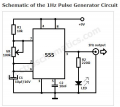
I would like to tune a 555 to 1hz but am having trouble showing a sq wave. What am I doing wrong?
time is on .5 sec/cm and v/cm on 2.

I would expect to be able to get 2 sq waves at 1hz on screen.
 

DickCappels

Joined Aug 21, 2008
10,661
Is your vertical input direct coupled (DC), or AC coupled?

If you send a simple drawing of your circuit and setup you can get better help faster.
 

R!f@@

Joined Apr 2, 2009
10,004
That is an Analog scope. You cannot view 1Hz in that as you expect.
The dot will go up and down as it travels to left. That is because it cannot store. Like a Digital storage ones.
To avoid flicker to see continues wave form from analog the freq should be greater than around 25Hz or so, give or take.

You are seeing a wave but not how you want to.
To see a continues wave form at low (1Hz) freq, you need a digital storage scope.
 

Thread Starter

Treeman

Joined May 22, 2014
157
That is an Analog scope. You cannot view 1Hz in that as you expect.
The dot will go up and down as it travels to left. That is because it cannot store. Like a Digital storage ones.
To avoid flicker to see continues wave form from analog the freq should be greater than around 25Hz or so, give or take.

You are seeing a wave but not how you want to.
To see a continues wave form at low (1Hz) freq, you need a digital storage scope.
So any idea on how to tune my circuit without using a split timer? When I sleep I count...........like when I swim 1`,2, 3 breathe etc etc.
 

Thread Starter

Treeman

Joined May 22, 2014
157
Yes the circuit is good but I want to tune it with the var resistor to exactly 1Hz. I cant do this with my analogue scope so I'm asking if there is a way of doing this without resorting to using a split timer online (stopwatch). I can get close but not exact. Just wondering if another method exists outside of a digital scope. TBH its not hugely important but I'm trying to be exact if I can-all part of the fun....
Thanks.
 

Alec_t

Joined Sep 17, 2013
15,119
You could use your 555 circuit to clock a counter such as a CD4020, then use a stop-watch to see how long it takes to reach a count of, say, 128 (check output Q7).
 

Thread Starter

Treeman

Joined May 22, 2014
157
You could use your 555 circuit to clock a counter such as a CD4020, then use a stop-watch to see how long it takes to reach a count of, say, 128 (check output Q7).
Ok thanks Alec. There will be an element of human error on the stopwatch part so looks like being a tenth out is as close as I can get and that will suffice. Thinking how the circuit will be used there will be human 'error' anyway (exercise timer alarm) so I will say its good enough.

Thanks for the help on this- should have got a digiscope after all! I will be working at 1hz a lot I think for a while.

I have a cd4060 so will give that a go. I guess the longer the count the more accuracy achieved.
 

Thread Starter

Treeman

Joined May 22, 2014
157
Ok great idea- I think I will live with the slight inaccuracy though for now - I don't have the parts to hand either but one idea for the future. I will spend my life constructing circuits to check my circuits otherwise LOL .
 

DickCappels

Joined Aug 21, 2008
10,661
If I may ask, when you:

direct couple the signal to the vertical input with

the vertical sensitivity sent to two volts per cm and

the horizontal timebase set to 0.5 sec/cm, and

the horizontal and vertical positions adjusted so that the display is on the screen,

what do you see if it is not square waves?
 

Thread Starter

Treeman

Joined May 22, 2014
157
If I may ask, when you:

direct couple the signal to the vertical input with

the vertical sensitivity sent to two volts per cm and

the horizontal timebase set to 0.5 sec/cm, and

the horizontal and vertical positions adjusted so that the display is on the screen,

what do you see if it is not square waves?

I see a dot going up and down and along. If I use the variable x10 x amp I get a better reading flowing across the screen but not a sq wave.
 

DickCappels

Joined Aug 21, 2008
10,661
As Rif@@ said, since your scope is not digital (and not a storage scope), it will not look like a square wave, but you can still use it to measure the pulse timing. What you are seeing is what the makers of the scope expect you to see -after all they have a 0.5 second timebase setting and a phosphor that decays is tens or hundreds of milliseconds.

Just notice horizontal position of the dot when the it goes up and when it goes down. Use your mind as the memory.

Your scope might not be as accurate as you can get with the stop watch. One technique I use when timing slow things like is (and don't or can't use the scope) is to time many flashes of the LED with a stopwatch then divide the elapsed time by the number of flash intervals. For example, if the time for 20 flash intervals is 19 seconds, then you know the flash period is 0.950 seconds )1.053 Hz).
 

cornishlad

Joined Jul 31, 2013
242
Something I've done recently is to strip out the tiny pcb of an ordinaty quartz wall clock. remove the two wires to the coil and the resulting pulse on that feed is 1 hz with alternating polarity. If your scope has two channels you may be able to compare the timings even though they are not synchronous. trigger from the signal on the quartz pcb. Experiment !
Or amplify the quartz signal to light a led and compare. Or just use the quartz oscillator instead af the 555.
 

atferrari

Joined Jan 6, 2004
5,012
I found that most of discarded table clocks have a still working pulse generator inside. Lot of them in my bench.

Be careful, found some that the use 2 Hz pulses, not 1 Hz.
 

MrChips

Joined Oct 2, 2009
34,812
Set the probe input switch to DC.
Set the Time/cm to .5s

You will observe the dot go up and down on every division on the grid scale. That is your square wave.

For better calibration for 1Hz, time 10 oscillations for 10 seconds using a stop watch. This procedure will be more accurate than the scope.
 

MrChips

Joined Oct 2, 2009
34,812
Ok, I just read that you want to avoid human error when using the stop watch.

In your situation your best solution is to use an accurate reference.

One way of doing that is to build a crystal control oscillator and divide the frequency down to 1Hz.
Connect your 555 timer output to one channel of the scope and the reference signal to the other channel. Adjust your 555 circuit until there is no drift between the two signals on the scope.

Another thing to try is to use your AC mains signal as your reference.
Connect the 555 timer output signal to channel Y1 and trigger on Y1.
Connect a second probe to channel Y2 and touch the tip of the channel Y2 probe (or a jumper wire connected to Y2) with your finger. Adjust as per above.

(I have to try this myself and report back to you.)
 

Thread Starter

Treeman

Joined May 22, 2014
157
Set the probe input switch to DC.
Set the Time/cm to .5s

You will observe the dot go up and down on every division on the grid scale. That is your square wave.

For better calibration for 1Hz, time 10 oscillations for 10 seconds using a stop watch. This procedure will be more accurate than the scope.
Yes Mr Chips. I was hoping to improve what I saw. I guess in Electronics if you have all the gear and no idea is better than some of the gear and no idea. Great responses and more circuits to build! I'm laughing that I bought a scope that will be hard to use till I'm over the 1Hz timer thing. It was nice of him to chuck in the MegaMegger though and the 110v millivoltmeter. At least the PMK105 works and I have the means to prove it at 1kHz.

Looks like I will be exploring clock oscillators next. Brace yourself for more Q's.
 

MrChips

Joined Oct 2, 2009
34,812
Ok, I just read that you want to avoid human error when using the stop watch.

In your situation your best solution is to use an accurate reference.

One way of doing that is to build a crystal control oscillator and divide the frequency down to 1Hz.
Connect your 555 timer output to one channel of the scope and the reference signal to the other channel. Adjust your 555 circuit until there is no drift between the two signals on the scope.

Another thing to try is to use your AC mains signal as your reference.
Connect the 555 timer output signal to channel Y1 and trigger on Y1.
Connect a second probe to channel Y2 and touch the tip of the channel Y2 probe (or a jumper wire connected to Y2) with your finger. Adjust as per above.

(I have to try this myself and report back to you.)
Sorry. I tested this with an analog scope. You cannot get any meaningful results at 1Hz.
At such low frequency you will have to resort to a period measurement.
Time to brush up on your microprogramming skills and build a time interval meter using a microcontroller. Nice idea for an MCU project.
 
Top