Schematic of a battery-powered audio range sinusoidal oscillator

MisterBill2

Joined Jan 23, 2018
27,714
Given that the TS intention is A SIMPLE sine wave oscillator, with a variable frequency output, the circuits using a single active device seem closest to the request. AND given that there are quite a few such circuits around, that would be the best suggestions.
Since I do not know where the TS is located, it might be that obtaining parts could also be a challenge. I think about a missionary friend who was in rural Thailand, in a smaller town. Any parts had to come from a distance of at least a few hours drive.
 

Thread Starter

RosenDochev

Joined Dec 20, 2025
11
Rosen: where are you located?
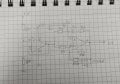
I live in Bulgaria, finding components here is not difficult, and I have some available at home, my problem is rather to find time for real tests, since I travel often for work and so my time is quite limited, I come home for the weekends or holidays, so I asked for a suitable circuit that I can try on a simulator and then implement at the first opportunity. In the interest of truth, I found a circuit that I have already tried some time ago, it is a variation of the circuits you suggested above, but I did not like that at different frequencies the amplitude of the output signal is very different. However, I think that with further modification and adding an amplitude limiter it will be possible to achieve the same signal level at all frequencies.
IMG_20251222_090957_edit_5322717164860530.jpg
 

MisterBill2

Joined Jan 23, 2018
27,714
Oscillators always have some amplitude limiting element, either intentional or caused by loop limiting. In the circuit shown, it seems that the amplitude limiting portion is frequency sensitive.
Some circuits are far more frequency sensitive than others, which is where using a good simulator will help decide which circuit to choose.
 

Thread Starter

RosenDochev

Joined Dec 20, 2025
11
If I understood you correctly, a circuit like the one suggested by hrs would be better, in the sense that the amplitude would depend less on the frequency, is that right in your opinion? And I have another question, which simulator would you recommend for testing this type of circuit? I'm currently using Proteus, but I see that it's not particularly suitable for the purpose.
 

AnalogKid

Joined Aug 1, 2013
12,174
1. Be sure to add decoupling capacitor(s) across the power pins. 0.1 uF ceramic and something between 10 uF and 100 uF electrolytic in parallel. Keep the leads as short as possible, with the ceramic closest to the IC.

2. Please add a unique reference designator to each component. It makes the next item less ambiguous.

3. While the circuit should work as shown, it is better to have the shunt Cx connected to the same reference point as the shunt Rx. In your case this is U1 pin 7. In theory, both pin 7 and GND are zero-ohm impedance points. In practice, they are not, and possible future circuit changes might not behave well.

ak
 
Last edited:

MisterBill2

Joined Jan 23, 2018
27,714
Certainly the request to label each component is a good idea, as simple as R1, R2, R3, C1, C2.
I am not the one to ask about comparing simulators since I do not use them. But certainly some are much better than others.
Several simpler oscilators use a small incandescent light in the feedback loop to stabilize the amplitude. It is not perfect but it does work, and it is quite simple.
 

hrs

Joined Jun 13, 2014
534
which simulator would you recommend for testing this type of circuit?
Most people on this forum use LTSpice. LTSpice is a free program owned and maintained by AnalogDevices. It ships with device models for AD, Maxim and Linear Technology products only. If you add the library of device models compiled by forum member Bordodynov you'll get access to many more.
http://www.bordodynov.ltwiki.org/
 

MisterBill2

Joined Jan 23, 2018
27,714
@AnalogKid
Indeed!
Sinewave oscillators precede the semiconductors, even plain transistors, by many years.
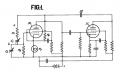
"Sinewave Oscillators ALSO precede the introduction of those "miniature " glass tubes.. I have, in my archives, a "Precision" brand compact audio oscillator that uses several OCTAL base tubes.
This demonstrates that some designs certainly are good enough to last through multiple generations of technology evolution..
 

Thread Starter

RosenDochev

Joined Dec 20, 2025
11
Haha great circuit (HP Model 200A or HP Model 200B) simple, efficient and very clean, but I can't power it with batteries :). I love these tube techniques, they have a great sound and are literally eternal. However, now the holidays are coming, I'm going home and I hope I have time to experiment with real components. I downloaded the LTspice simulator and it's really quite good. I want to thank you all and wish you happy holidays filled with many good moments, and then if anyone has the patience I'll bother you with more questions and eventually I'll share with you how far I've come with my project.
 

MisterBill2

Joined Jan 23, 2018
27,714
THE SAME TUBE CIRCUITS CAN BE ADAPTED TO FUNCTION WITH TRANSISTORS, and ALSO op-amps. The voltage swings may not be as great, but the operation should be similar. The grid would be replaced by the inverting input and the plate connection would be replaced by the op-amp output. And impedance levels will need adjustment as well. So the process is not a trivial effort.
 
Last edited:

brickster

Joined Oct 5, 2022
4
If by not liking the way the 8038 fashions its likeness of a sine wave or needs +/- 15V supply rails, I agree. Haven't ever used the Exar function generator chip; is it the same? I've been dreaming of a nice clean sine output VCO covering at least two audible octaves running on a single CR2032 3V source. Done by mixing two oscillators, one varactor tuned up in frequencies where that's practical. Stability could be an issue, but I suspect one I could live with.
 

MisterBill2

Joined Jan 23, 2018
27,714
If by not liking the way the 8038 fashions its likeness of a sine wave or needs +/- 15V supply rails, I agree. Haven't ever used the Exar function generator chip; is it the same? I've been dreaming of a nice clean sine output VCO covering at least two audible octaves running on a single CR2032 3V source. Done by mixing two oscillators, one varactor tuned up in frequencies where that's practical. Stability could be an issue, but I suspect one I could live with.
The 8038 device was the basis of a "POPULAR ELECTRONICS" "Lab Quality Function Generator" article A whole lot (at least 30) of years ago. So either there is still a demand,it seems to be currently available, or there is a lot of new-old stock still on hand.
BUT the TS asked for a simple circuit oscillator, which the 8038 is not even close.
 

AnalogKid

Joined Aug 1, 2013
12,174
"Audio Function Generator" - Hands-On Electronics, - November, 1986 - Uses the XR2206.

"E.Z. Signal Generator" - Popular Electronics - July, 1998 - All opamps, tons of passive components.

"Audio Signal Generator" - Poptronics - April, 2000 - Single-opamp Wein

ak
 
Top