Running Low-Ohm Meter circuit in parallel

Thread Starter

DrEgg

Joined Oct 7, 2024
8
Hi,

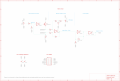
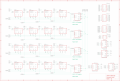
I created a low-ohm meter circuit similar to the one described here : https://www.allaboutcircuits.com/projects/build-your-own-low-resistance-meter/ for measuring the contact resistance on a Relay. However the relay's i'm checking have upto 16 contacts, so I created multiples of the circuit running in parallel.

The circuit itself works great, but as more contacts are closed the constant-current drops. This seems to be less 1mA per circuit, but over the full 16 this can significantly change the constant current from 100mA -> 85mA and therefore change the output values.

I've clearly missed something fundamental about how the constant-current circuit works, as adding addition load to the supply in the form of 50R resistor also causes a similar drop.

Any help appreciated please, as this is driving me nuts.

Dr Egg
 

boostbuck

Joined Oct 5, 2017
1,032
As a first guess, it sounds like your supply is not able to deliver the current all sixteen circuits require, particularly as you say that loading the supply with a resistor reproduces the problem.

A circuit showing how the sixteen are implemented would help - sixteen independent circuits sharing a common supply? Then it must be the supply in that case.

The circuit itself works great, but as more contacts are closed the constant-current drops. This seems to be less 1mA per circuit, but over the full 16 this can significantly change the constant current from 100mA -> 85mA and therefore change the output values.
THAT is not very clear at all.
 

Thread Starter

DrEgg

Joined Oct 7, 2024
8
As a first guess, it sounds like your supply is not able to deliver the current all sixteen circuits require, particularly as you say that loading the supply with a resistor reproduces the problem.

A circuit showing how the sixteen are implemented would help - sixteen independent circuits sharing a common supply? Then it must be the supply in that case.
I've tried with an alternative supply that can produce 5V 3A, which the circuit isn't drawing any more than 1.6A and not triggering any limits in the powersupply. The resistances I'm measuring are less than 1ohm, and ideally will be below 0.2 Ohms.

THAT is not very clear at all.
I'll try to rephrase : when the first circuit I posted is open, i.e. nothing is joining Contact 1 to Contact 2 the circuit draws neglible or no current; when adding a resistor the draw from the supply increases by ~100mA.

Whilst measuring the current between contact 1 and contact 2 on one circuit, I add resistors to the other circuits. For each subsequent circuit the mA on the circuit I'm measuring drops by ~1mA or slightly less. The size of the drop is consitant and independent of the resistance I add (at least between 0.1 - 1 Ohms)
 

BobTPH

Joined Jun 5, 2013
11,463
If all of the currents are going down, I would check the reference voltage of your constant current sources. (did not examine the schematic, so perhaps this is off the wall)
 

Thread Starter

DrEgg

Joined Oct 7, 2024
8
If all of the currents are going down, I would check the reference voltage of your constant current sources. (did not examine the schematic, so perhaps this is off the wall)
the reference is created by a potential divider with an adjustable pot for calibration. I'll see if I can get a measurement from the circuit

Is there a better way for my use case, that still allows for fine tuning?
 

BobTPH

Joined Jun 5, 2013
11,463
As you draw more current, your supply voltage drops. That is why it is not good as a reference. You need a preision reference like the TL431.
 

Thread Starter

DrEgg

Joined Oct 7, 2024
8
As you draw more current, your supply voltage drops. That is why it is not good as a reference. You need a preision reference like the TL431.
That makes sense.

Quick scan of Mouser seems most don't go down to ~0.1V,
is a potential divider now the right approach for dropping this reference voltage down further?
 

BobTPH

Joined Jun 5, 2013
11,463
You can use a divider after the reference. You just need a stable voltage that does not change with supply voltage. You could even use 3.3V regulator powering only the divider.
 

MisterBill2

Joined Jan 23, 2018
27,159
What are you using to measure the voltage across each contact?? or are you measuring the current thru each contact. 22 years ago I designed a system to verify that all four one ohm fuel injectors were connected to the wire harness in parallel. This was a production tester in the engine line of a major car company. That tester passed 100 milliamps thru the harness and read the voltage at the connector. It reduced the system price by about $1500 and never needed adjustment.
For checking multiple contact resistance values all at once it gets a bit more complex, but not bad.
So now the questions: What current do you want for the contact voltage drop measurement??
Should all of the contacts be tested at once??
Are the contacts isolated from each other and other connections?
Are you using Kelvin connections,(separate measurement and current supply circuits)
Are all of the contacts to be checked at the same time?
What degree of accuracy is required??
With the sensing hardware shown, an individual regulator for each contact testing at ten milliamps is easy, changing to testing at 100 milliamps is a bit more work and raises the cost a bit.
But results within +/- 1% are quite possible.
 

schmitt trigger

Joined Jul 12, 2010
2,027
My two yen, which you may choose to ignore.

Your offset null circuit is also referenced to the same supply that changes with the load. Either you use proper voltage references to supply it, or my choice, I would use an improved opamp with a lower Vos that may be low enough as to not require an offset adjustment.

EDIT; as mentioned before, you DO REQUIRE Kelvin (4 wire) sensing for accuracy.
 
Last edited:

MisterBill2

Joined Jan 23, 2018
27,159
To run the test with 100mA you can use individual LM7805 regulators with a resistor as a current regulator, one for each contact. You will need to use Kelvin connections, but that reduces the probability of faults producing errors. and the accuracy should easily be within 1%. And the great thing about it is that it is stable enough for a production tester , and if the mechanical construction is good enough it will work for years with no downtime, and probably not need re-calibrating. So it will certainly enhance your reputation. The testers I designed knocked over $1000 off our build cost, as well as several weeks of lead time for the build. And never needing adjustment certainly made a few friends.
 
Last edited:

Thread Starter

DrEgg

Joined Oct 7, 2024
8
My two yen, which you may choose to ignore.

Your offset null circuit is also referenced to the same supply that changes with the load. Either you use proper voltage references to supply it, or my choice, I would use an improved opamp with a lower Vos that may be low enough as to not require an offset adjustment.

EDIT; as mentioned before, you DO REQUIRE Kelvin (4 wire) sensing for accuracy.
Good shout, once I have some components to fix the current issue I should be able to see how much impact this is having as well.

Do the positive / negative reference need to be at the same level of the supply, or enough to set the offset range?

Is there a simple way to make a negative reference from the positive supply?
as this is the only part of the circuit it is needed for.
 

Thread Starter

DrEgg

Joined Oct 7, 2024
8
What current do you want for the contact voltage drop measurement??
100mA

Should all of the contacts be tested at once?? Are all of the contacts to be checked at the same time?
The relays I'm using the circuit to test have different arrangements of Normally Closed and Normally Open; the previous tester you had to press a button for each contact to check the resistance but the tester would give difference answer as on had a single calibration so didn't account for any difference between the wiring.

Are the contacts isolated from each other and other connections?
Yup

What degree of accuracy is required??
The system is only reporting back +/- 10%, but as close to 1% a reasonably feasible in the backend is ideal for quality. As mentioned, the system has been working great for my use case; its just the difference in load that has been causing the issue - which hasn't been spotted in almost 2 years.
 

sparky 1

Joined Nov 3, 2018
1,218
Parallel circuit testing is older than Kirchoff. If a low ohm test is accurate with a single element a parallel element will be accurate.
If you apply 50mA CC and have a long settling time the DUT is prone to give error. The TLE2426 trim process gets the op amp close.
Look for ultra low offset like 25uV and thermal drift like 2.5uV/ degree C
But it is a bandaid approach and not at a metrology level of test and measurement.
Those kind of low ohm instruments are very expensive. Five different less expensive instruments that cost over $800 are used
but in the end when the very expensive instrument is used to compare accuracy 0.001mΩ will decide which of the less expensive
instruments are reliable and could be more than 20% off. This is problematic when a business sets up quality control.
 
Last edited:

skstrobel

Joined Nov 29, 2023
25
You might already know this, but when considering some of the suggested circuit changes remember that the amount of current you use when testing relay contacts sometimes matters; it isn't as simple as just measuring the resistance with enough resolution. Changing from 100mA to 10mA, for example, might give different results. For more info, Google "wetting current". I have seen situations where silver plated contacts had high resistance as measured with a normal handheld multimeter (very low current), but the resistance would drop after passing a few 10s of mA through them for a second or two. As I recall, gold contacts have less trouble with this at low current, but can't handle high current as well.
 

MisterBill2

Joined Jan 23, 2018
27,159
The system that I designed, which I have already described, took over a thousand dollars out of the tester and in addition was much more reliable and never needed to be recalibrated. PLUS it was more accurate. And the meter read directly.
 
Top